







Iran, Russia ink MoUs, tech deals to boost digital cooperation
Iran and Russia finalized 20 memoranda of understanding (MOUs) and five formal contracts during the fifth session of their Joint Communications Working Group, marking a new phase in bilateral technological cooperation, officials said Saturday.
The agreements underscored a growing alignment between the two countries in strategic digital sectors, with Iranian private companies taking a leading role.
Five leading Iranian private tech firms signed cooperation agreements with their Russian counterparts following two days of bilateral talks in Moscow, IRNA reported.
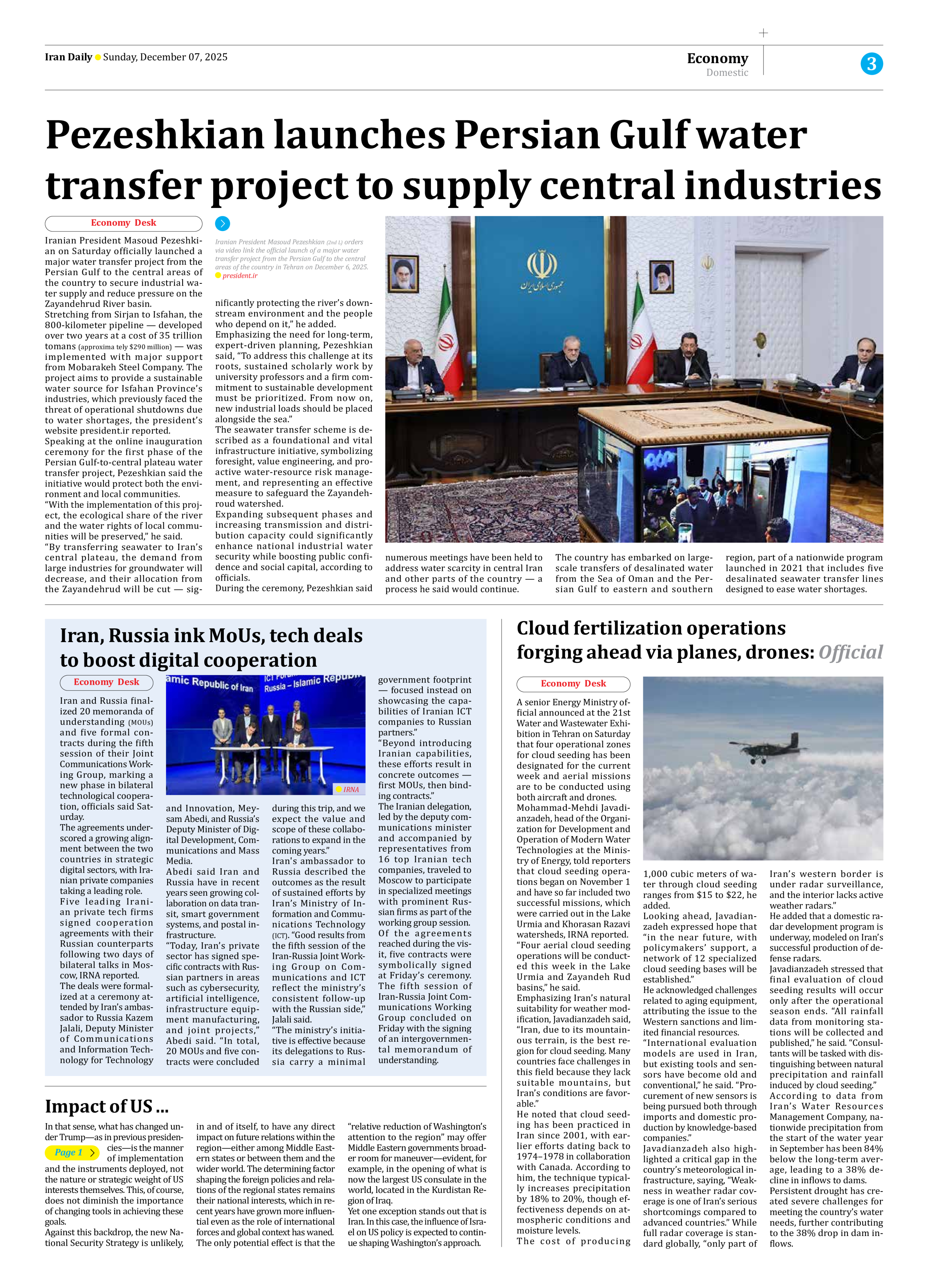
The deals were formalized at a ceremony attended by Iran’s ambassador to Russia Kazem Jalali, Deputy Minister of Communications and Information Technology for Technology and Innovation, Meysam Abedi, and Russia’s Deputy Minister of Digital Development, Communications and Mass Media.
Abedi said Iran and Russia have in recent years seen growing collaboration on data transit, smart government systems, and postal infrastructure.
“Today, Iran’s private sector has signed specific contracts with Russian partners in areas such as cybersecurity, artificial intelligence, infrastructure equipment manufacturing, and joint projects,” Abedi said. “In total, 20 MOUs and five contracts were concluded during this trip, and we expect the value and scope of these collaborations to expand in the coming years.”
Iran's ambassador to Russia described the outcomes as the result of sustained efforts by Iran’s Ministry of Information and Communications Technology (ICT). “Good results from the fifth session of the Iran-Russia Joint Working Group on Communications and ICT reflect the ministry’s consistent follow-up with the Russian side,” Jalali said.
“The ministry’s initiative is effective because its delegations to Russia carry a minimal government footprint — focused instead on showcasing the capabilities of Iranian ICT companies to Russian partners.”
“Beyond introducing Iranian capabilities, these efforts result in concrete outcomes — first MOUs, then binding contracts.”
The Iranian delegation, led by the deputy communications minister and accompanied by representatives from 16 top Iranian tech companies, traveled to Moscow to participate in specialized meetings with prominent Russian firms as part of the working group session.
Of the agreements reached during the visit, five contracts were symbolically signed at Friday’s ceremony. The fifth session of Iran-Russia Joint Communications Working Group concluded on Friday with the signing of an intergovernmental memorandum of understanding.