




Restored Safavid-era bathhouse reopens in Isfahan
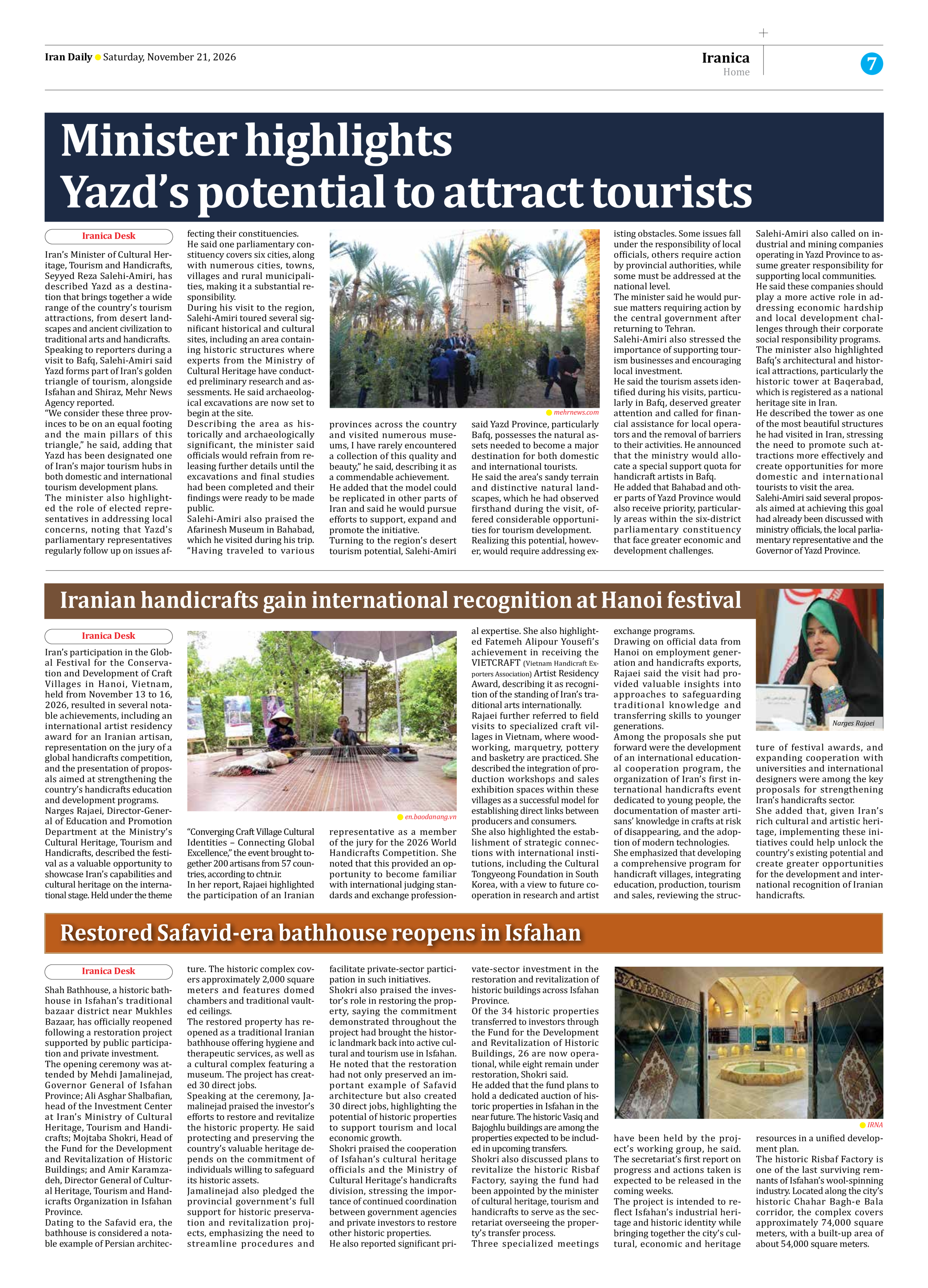
Shah Bathhouse, a historic bathhouse in Isfahan’s traditional bazaar district near Mukhles Bazaar, has officially reopened following a restoration project supported by public participation and private investment.
The opening ceremony was attended by Mehdi Jamalinejad, Governor General of Isfahan Province; Ali Asghar Shalbafian, head of the Investment Center at Iran’s Ministry of Cultural Heritage, Tourism and Handicrafts; Mojtaba Shokri, Head of the Fund for the Development and Revitalization of Historic Buildings; and Amir Karamzadeh, Director General of Cultural Heritage, Tourism and Handicrafts Organization in Isfahan Province.
Dating to the Safavid era, the bathhouse is considered a notable example of Persian architecture. The historic complex covers approximately 2,000 square meters and features domed chambers and traditional vaulted ceilings.
The restored property has reopened as a traditional Iranian bathhouse offering hygiene and therapeutic services, as well as a cultural complex featuring a museum. The project has created 30 direct jobs.
Speaking at the ceremony, Jamalinejad praised the investor’s efforts to restore and revitalize the historic property. He said protecting and preserving the country’s valuable heritage depends on the commitment of individuals willing to safeguard its historic assets.
Jamalinejad also pledged the provincial government’s full support for historic preservation and revitalization projects, emphasizing the need to streamline procedures and facilitate private-sector participation in such initiatives.
Shokri also praised the investor’s role in restoring the property, saying the commitment demonstrated throughout the project had brought the historic landmark back into active cultural and tourism use in Isfahan.
He noted that the restoration had not only preserved an important example of Safavid architecture but also created 30 direct jobs, highlighting the potential of historic properties to support tourism and local economic growth.
Shokri praised the cooperation of Isfahan’s cultural heritage officials and the Ministry of Cultural Heritage’s handicrafts division, stressing the importance of continued coordination between government agencies and private investors to restore other historic properties.
He also reported significant private-sector investment in the restoration and revitalization of historic buildings across Isfahan Province.
Of the 34 historic properties transferred to investors through the Fund for the Development and Revitalization of Historic Buildings, 26 are now operational, while eight remain under restoration, Shokri said.
He added that the fund plans to hold a dedicated auction of historic properties in Isfahan in the near future. The historic Vasiq and Bajoghlu buildings are among the properties expected to be included in upcoming transfers.
Shokri also discussed plans to revitalize the historic Risbaf Factory, saying the fund had been appointed by the minister of cultural heritage, tourism and handicrafts to serve as the secretariat overseeing the property’s transfer process.
Three specialized meetings have been held by the project’s working group, he said. The secretariat’s first report on progress and actions taken is expected to be released in the coming weeks.
The project is intended to reflect Isfahan’s industrial heritage and historic identity while bringing together the city’s cultural, economic and heritage resources in a unified development plan.
The historic Risbaf Factory is one of the last surviving remnants of Isfahan’s wool-spinning industry. Located along the city’s historic Chahar Bagh-e Bala corridor, the complex covers approximately 74,000 square meters, with a built-up area of about 54,000 square meters.