




Ilam’s Cham Jangal holds promise for nature tourism
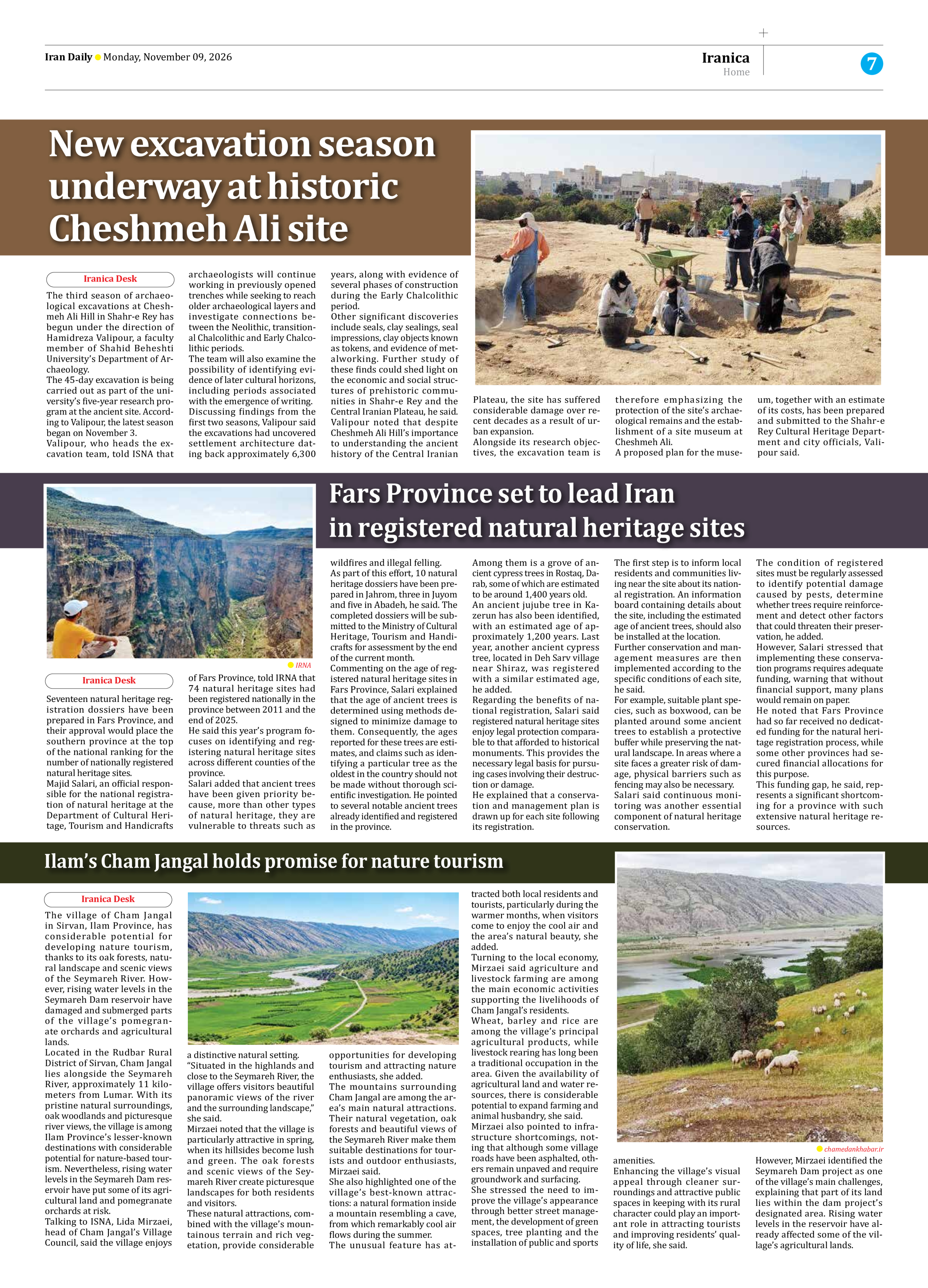
The village of Cham Jangal in Sirvan, Ilam Province, has considerable potential for developing nature tourism, thanks to its oak forests, natural landscape and scenic views of the Seymareh River. However, rising water levels in the Seymareh Dam reservoir have damaged and submerged parts of the village’s pomegranate orchards and agricultural lands.
Located in the Rudbar Rural District of Sirvan, Cham Jangal lies alongside the Seymareh River, approximately 11 kilometers from Lumar. With its pristine natural surroundings, oak woodlands and picturesque river views, the village is among Ilam Province’s lesser-known destinations with considerable potential for nature-based tourism. Nevertheless, rising water levels in the Seymareh Dam reservoir have put some of its agricultural land and pomegranate orchards at risk.
Talking to ISNA, Lida Mirzaei, head of Cham Jangal’s Village Council, said the village enjoys a distinctive natural setting.
“Situated in the highlands and close to the Seymareh River, the village offers visitors beautiful panoramic views of the river and the surrounding landscape,” she said.
Mirzaei noted that the village is particularly attractive in spring, when its hillsides become lush and green. The oak forests and scenic views of the Seymareh River create picturesque landscapes for both residents and visitors.
These natural attractions, combined with the village’s mountainous terrain and rich vegetation, provide considerable opportunities for developing tourism and attracting nature enthusiasts, she added.
The mountains surrounding Cham Jangal are among the area’s main natural attractions. Their natural vegetation, oak forests and beautiful views of the Seymareh River make them suitable destinations for tourists and outdoor enthusiasts, Mirzaei said.
She also highlighted one of the village’s best-known attractions: a natural formation inside a mountain resembling a cave, from which remarkably cool air flows during the summer.
The unusual feature has attracted both local residents and tourists, particularly during the warmer months, when visitors come to enjoy the cool air and the area’s natural beauty, she added.
Turning to the local economy, Mirzaei said agriculture and livestock farming are among the main economic activities supporting the livelihoods of Cham Jangal’s residents.
Wheat, barley and rice are among the village’s principal agricultural products, while livestock rearing has long been a traditional occupation in the area. Given the availability of agricultural land and water resources, there is considerable potential to expand farming and animal husbandry, she said.
Mirzaei also pointed to infrastructure shortcomings, noting that although some village roads have been asphalted, others remain unpaved and require groundwork and surfacing.
She stressed the need to improve the village’s appearance through better street management, the development of green spaces, tree planting and the installation of public and sports amenities.
Enhancing the village’s visual appeal through cleaner surroundings and attractive public spaces in keeping with its rural character could play an important role in attracting tourists and improving residents’ quality of life, she said.
However, Mirzaei identified the Seymareh Dam project as one of the village’s main challenges, explaining that part of its land lies within the dam project’s designated area. Rising water levels in the reservoir have already affected some of the village’s agricultural lands.