




Fars Province set to lead Iran in registered natural heritage sites
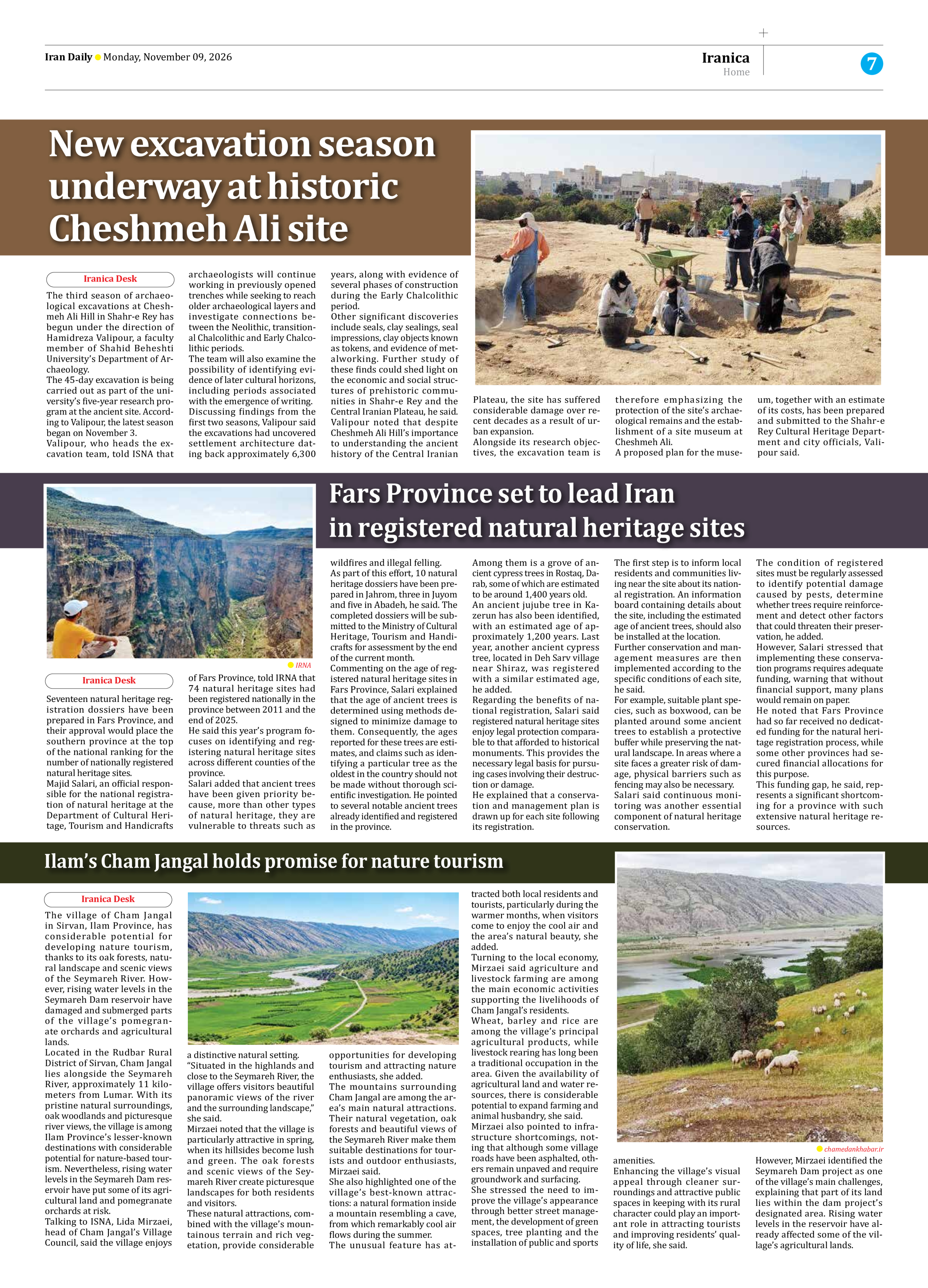
Seventeen natural heritage registration dossiers have been prepared in Fars Province, and their approval would place the southern province at the top of the national ranking for the number of nationally registered natural heritage sites.
Majid Salari, an official responsible for the national registration of natural heritage at the Department of Cultural Heritage, Tourism and Handicrafts of Fars Province, told IRNA that 74 natural heritage sites had been registered nationally in the province between 2011 and the end of 2025.
He said this year’s program focuses on identifying and registering natural heritage sites across different counties of the province.
Salari added that ancient trees have been given priority because, more than other types of natural heritage, they are vulnerable to threats such as wildfires and illegal felling.
As part of this effort, 10 natural heritage dossiers have been prepared in Jahrom, three in Juyom and five in Abadeh, he said. The completed dossiers will be submitted to the Ministry of Cultural Heritage, Tourism and Handicrafts for assessment by the end of the current month.
Commenting on the age of registered natural heritage sites in Fars Province, Salari explained that the age of ancient trees is determined using methods designed to minimize damage to them. Consequently, the ages reported for these trees are estimates, and claims such as identifying a particular tree as the oldest in the country should not be made without thorough scientific investigation. He pointed to several notable ancient trees already identified and registered in the province.
Among them is a grove of ancient cypress trees in Rostaq, Darab, some of which are estimated to be around 1,400 years old.
An ancient jujube tree in Kazerun has also been identified, with an estimated age of approximately 1,200 years. Last year, another ancient cypress tree, located in Deh Sarv village near Shiraz, was registered with a similar estimated age, he added.
Regarding the benefits of national registration, Salari said registered natural heritage sites enjoy legal protection comparable to that afforded to historical monuments. This provides the necessary legal basis for pursuing cases involving their destruction or damage.
He explained that a conservation and management plan is drawn up for each site following its registration.
The first step is to inform local residents and communities living near the site about its national registration. An information board containing details about the site, including the estimated age of ancient trees, should also be installed at the location.
Further conservation and management measures are then implemented according to the specific conditions of each site, he said.
For example, suitable plant species, such as boxwood, can be planted around some ancient trees to establish a protective buffer while preserving the natural landscape. In areas where a site faces a greater risk of damage, physical barriers such as fencing may also be necessary.
Salari said continuous monitoring was another essential component of natural heritage conservation.
The condition of registered sites must be regularly assessed to identify potential damage caused by pests, determine whether trees require reinforcement and detect other factors that could threaten their preservation, he added.
However, Salari stressed that implementing these conservation programs requires adequate funding, warning that without financial support, many plans would remain on paper.
He noted that Fars Province had so far received no dedicated funding for the natural heritage registration process, while some other provinces had secured financial allocations for this purpose.
This funding gap, he said, represents a significant shortcoming for a province with such extensive natural heritage resources.