




UNESCO backs Golestan Palace restoration
UNESCO will support emergency repairs at Tehran’s historic Golestan Palace, the head of its Iran office said during a visit to the war-damaged complex.
She said that Iranian specialists have the expertise to restore the site, IRNA reported.
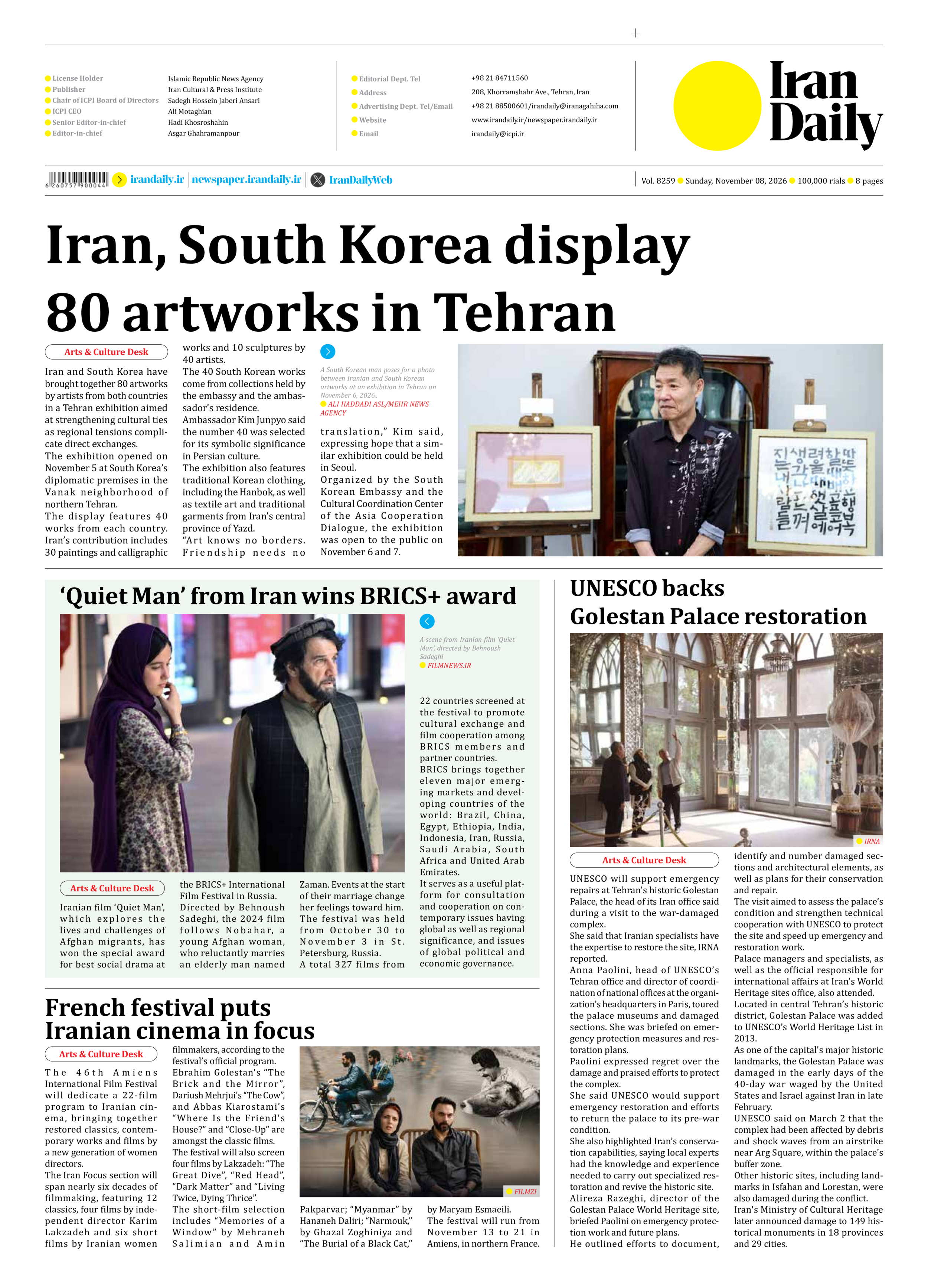
Anna Paolini, head of UNESCO’s Tehran office and director of coordination of national offices at the organization’s headquarters in Paris, toured the palace museums and damaged sections. She was briefed on emergency protection measures and restoration plans.
Paolini expressed regret over the damage and praised efforts to protect the complex.
She said UNESCO would support emergency restoration and efforts to return the palace to its pre-war condition.
She also highlighted Iran’s conservation capabilities, saying local experts had the knowledge and experience needed to carry out specialized restoration and revive the historic site.
Alireza Razeghi, director of the Golestan Palace World Heritage site, briefed Paolini on emergency protection work and future plans.
He outlined efforts to document, identify and number damaged sections and architectural elements, as well as plans for their conservation and repair.
The visit aimed to assess the palace’s condition and strengthen technical cooperation with UNESCO to protect the site and speed up emergency and restoration work.
Palace managers and specialists, as well as the official responsible for international affairs at Iran’s World Heritage sites office, also attended.
Located in central Tehran’s historic district, Golestan Palace was added to UNESCO’s World Heritage List in 2013.
As one of the capital’s major historic landmarks, the Golestan Palace was damaged in the early days of the 40-day war waged by the United States and Israel against Iran in late February.
UNESCO said on March 2 that the complex had been affected by debris and shock waves from an airstrike near Arg Square, within the palace's buffer zone.
Other historic sites, including landmarks in Isfahan and Lorestan, were also damaged during the conflict.
Iran's Ministry of Cultural Heritage later announced damage to 149 historical monuments in 18 provinces and 29 cities.