




Trade shift drives 76% increase in imports through northern ports
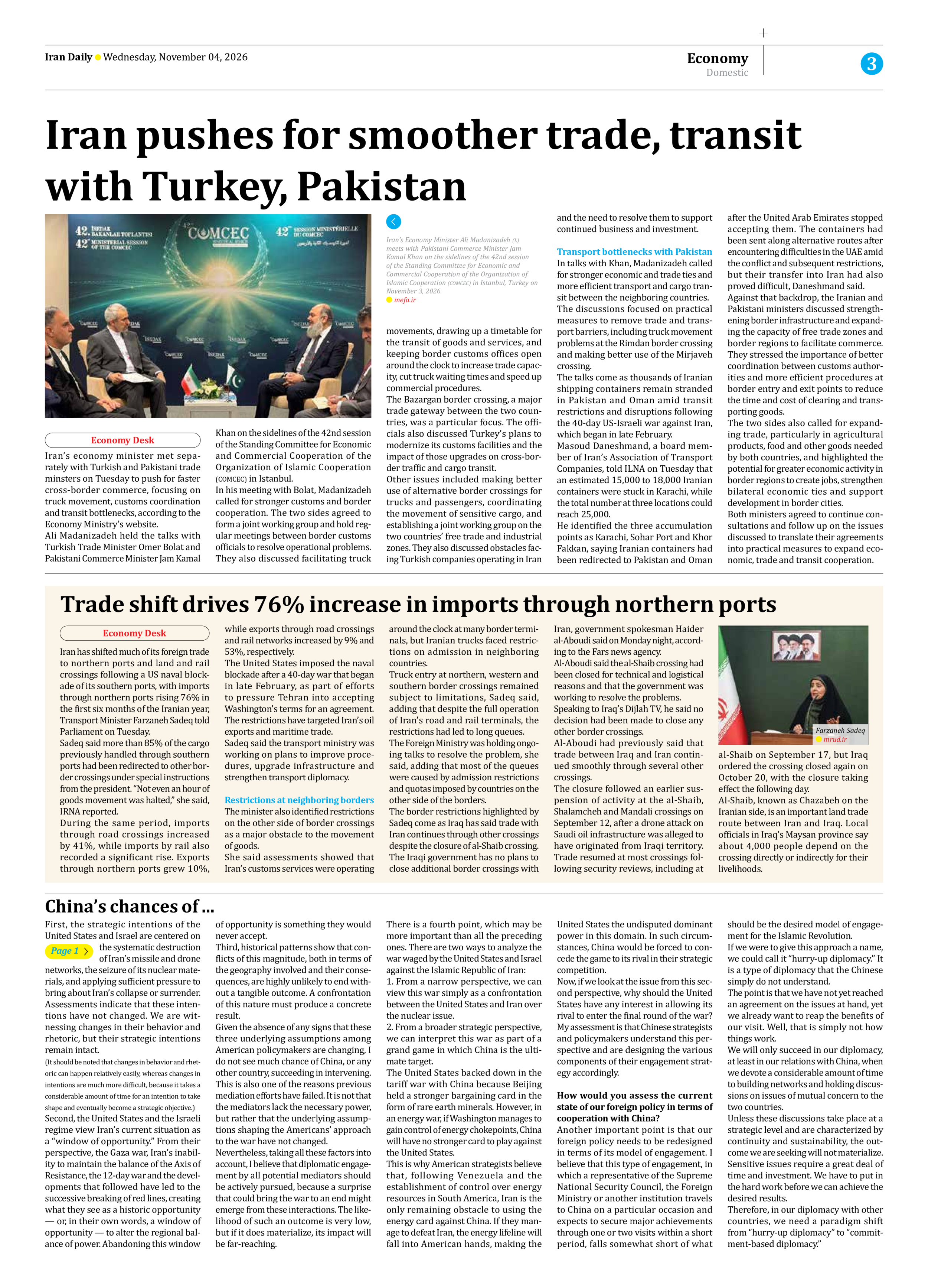
Iran has shifted much of its foreign trade to northern ports and land and rail crossings following a US naval blockade of its southern ports, with imports through northern ports rising 76% in the first six months of the Iranian year, Transport Minister Farzaneh Sadeq told Parliament on Tuesday.
Sadeq said more than 85% of the cargo previously handled through southern ports had been redirected to other border crossings under special instructions from the president. “Not even an hour of goods movement was halted,” she said, IRNA reported.
During the same period, imports through road crossings increased by 41%, while imports by rail also recorded a significant rise. Exports through northern ports grew 10%, while exports through road crossings and rail networks increased by 9% and 53%, respectively.
The United States imposed the naval blockade after a 40-day war that began in late February, as part of efforts to pressure Tehran into accepting Washington’s terms for an agreement. The restrictions have targeted Iran’s oil exports and maritime trade.
Sadeq said the transport ministry was working on plans to improve procedures, upgrade infrastructure and strengthen transport diplomacy.
Restrictions at neighboring borders
The minister also identified restrictions on the other side of border crossings as a major obstacle to the movement of goods.
She said assessments showed that Iran’s customs services were operating around the clock at many border terminals, but Iranian trucks faced restrictions on admission in neighboring countries.
Truck entry at northern, western and southern border crossings remained subject to limitations, Sadeq said, adding that despite the full operation of Iran’s road and rail terminals, the restrictions had led to long queues.
The Foreign Ministry was holding ongoing talks to resolve the problem, she said, adding that most of the queues were caused by admission restrictions and quotas imposed by countries on the other side of the borders.
The border restrictions highlighted by Sadeq come as Iraq has said trade with Iran continues through other crossings despite the closure of al-Shaib crossing. The Iraqi government has no plans to close additional border crossings with Iran, government spokesman Haider al-Aboudi said on Monday night, according to the Fars news agency.
Al-Aboudi said the al-Shaib crossing had been closed for technical and logistical reasons and that the government was working to resolve the problems.
Speaking to Iraq’s Dijlah TV, he said no decision had been made to close any other border crossings.
Al-Aboudi had previously said that trade between Iraq and Iran continued smoothly through several other crossings.
The closure followed an earlier suspension of activity at the al-Shaib, Shalamcheh and Mandali crossings on September 12, after a drone attack on Saudi oil infrastructure was alleged to have originated from Iraqi territory. Trade resumed at most crossings following security reviews, including at al-Shaib on September 17, but Iraq ordered the crossing closed again on October 20, with the closure taking effect the following day.
Al-Shaib, known as Chazabeh on the Iranian side, is an important land trade route between Iran and Iraq. Local officials in Iraq’s Maysan province say about 4,000 people depend on the crossing directly or indirectly for their livelihoods.