




Chalsara preserves its ancient heritage amid Ilam’s urban expansion
Chalsara, a village on the southwestern outskirts of Ilam, offers a rich combination of archaeological heritage and natural attractions. Home to around 7,500 people, the village covers approximately 110 hectares under its rural development plan.
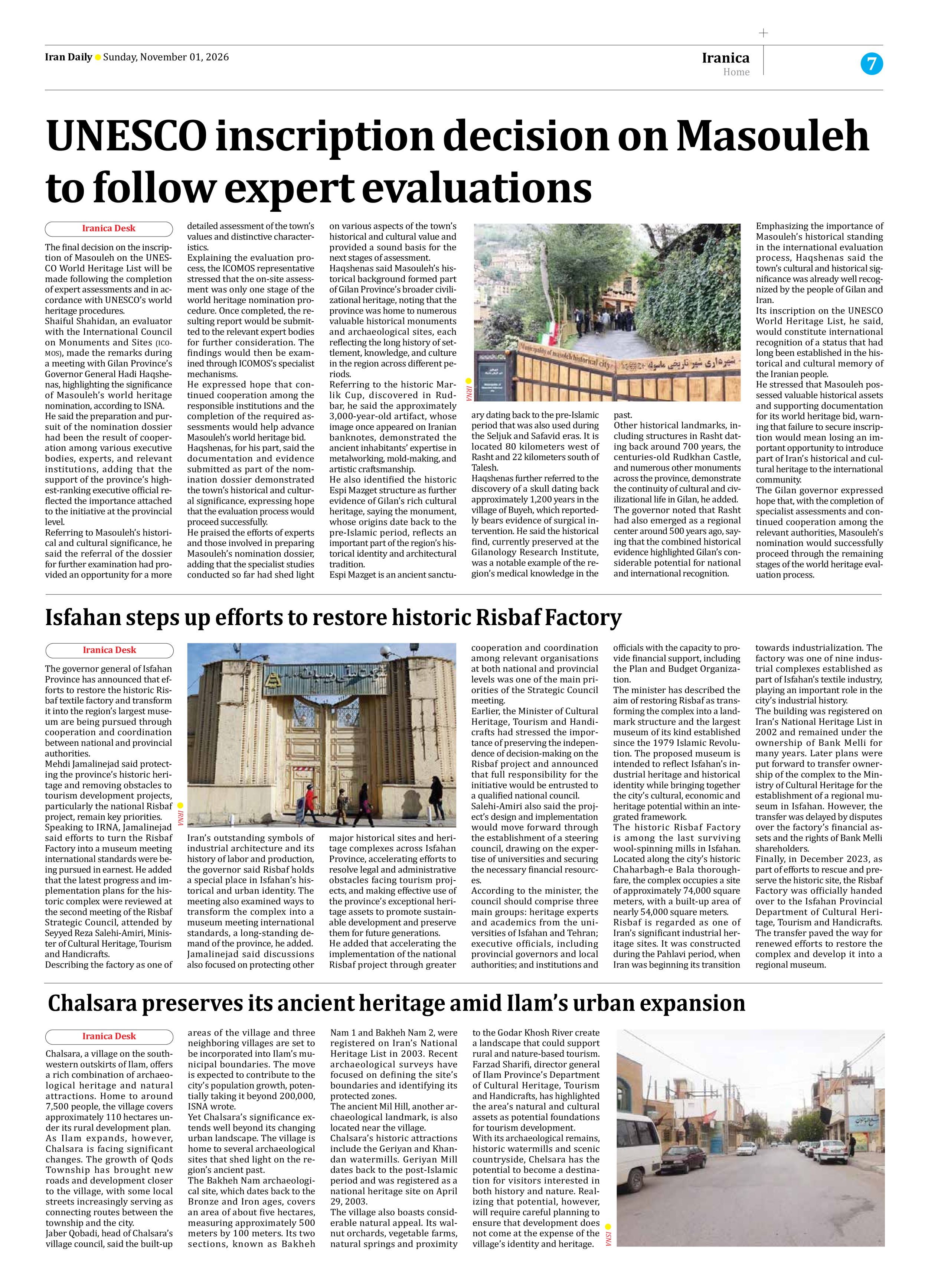
As Ilam expands, however, Chalsara is facing significant changes. The growth of Qods Township has brought new roads and development closer to the village, with some local streets increasingly serving as connecting routes between the township and the city.
Jaber Qobadi, head of Chalsara’s village council, said the built-up areas of the village and three neighboring villages are set to be incorporated into Ilam’s municipal boundaries. The move is expected to contribute to the city’s population growth, potentially taking it beyond 200,000, ISNA wrote.
Yet Chalsara’s significance extends well beyond its changing urban landscape. The village is home to several archaeological sites that shed light on the region’s ancient past.
The Bakheh Nam archaeological site, which dates back to the Bronze and Iron ages, covers an area of about five hectares, measuring approximately 500 meters by 100 meters. Its two sections, known as Bakheh Nam 1 and Bakheh Nam 2, were registered on Iran’s National Heritage List in 2003. Recent archaeological surveys have focused on defining the site’s boundaries and identifying its protected zones.
The ancient Mil Hill, another archaeological landmark, is also located near the village.
Chalsara’s historic attractions include the Geriyan and Khandan watermills. Geriyan Mill dates back to the post-Islamic period and was registered as a national heritage site on April 29, 2003.
The village also boasts considerable natural appeal. Its walnut orchards, vegetable farms, natural springs and proximity to the Godar Khosh River create a landscape that could support rural and nature-based tourism.
Farzad Sharifi, director general of Ilam Province’s Department of Cultural Heritage, Tourism and Handicrafts, has highlighted the area’s natural and cultural assets as potential foundations for tourism development.
With its archaeological remains, historic watermills and scenic countryside, Chelsara has the potential to become a destination for visitors interested in both history and nature. Realizing that potential, however, will require careful planning to ensure that development does not come at the expense of the village’s identity and heritage.