




Isfahan steps up efforts to restore historic Risbaf Factory
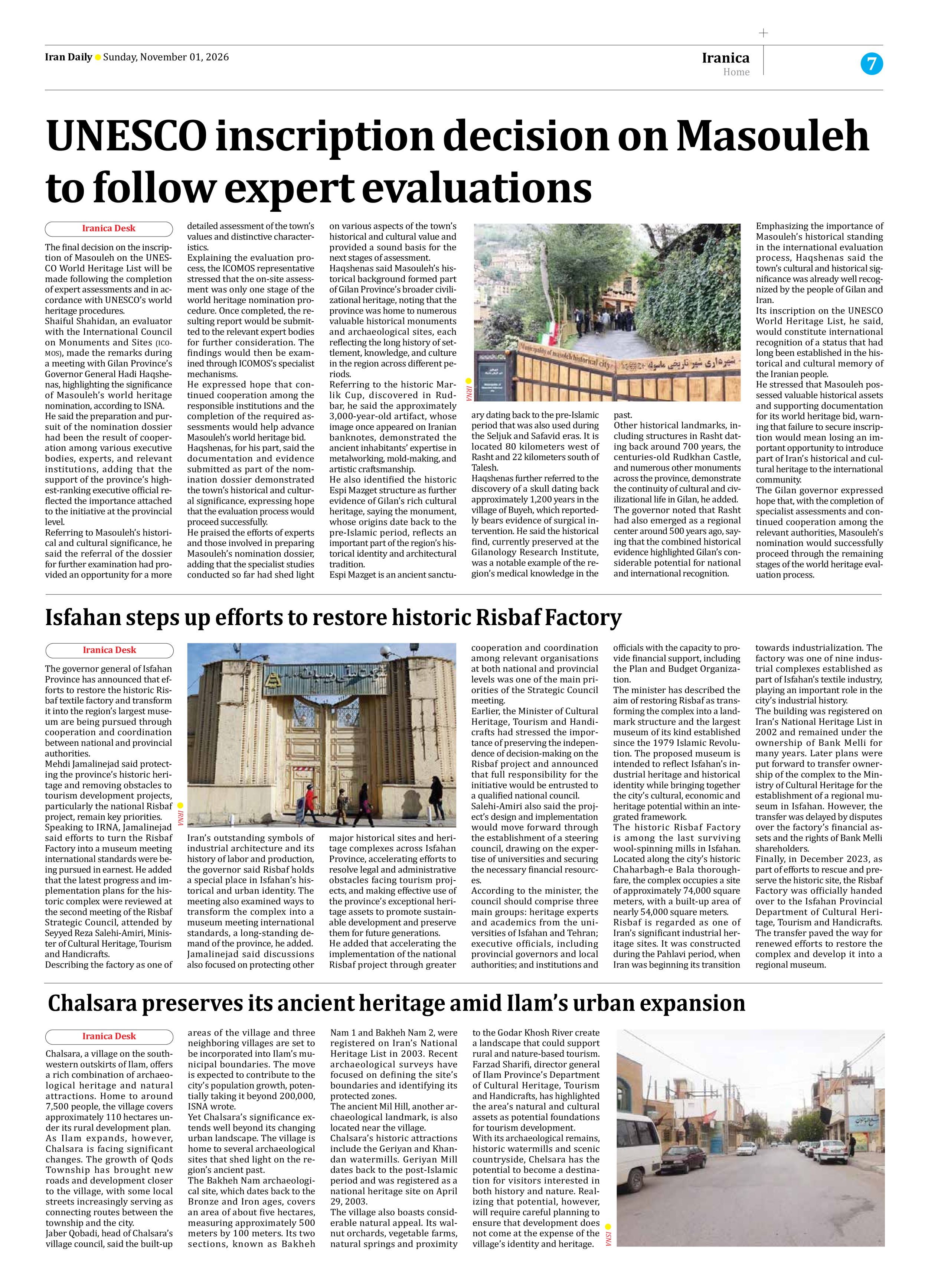
The governor general of Isfahan Province has announced that efforts to restore the historic Risbaf textile factory and transform it into the region’s largest museum are being pursued through cooperation and coordination between national and provincial authorities.
Mehdi Jamalinejad said protecting the province’s historic heritage and removing obstacles to tourism development projects, particularly the national Risbaf project, remain key priorities.
Speaking to IRNA, Jamalinejad said efforts to turn the Risbaf Factory into a museum meeting international standards were being pursued in earnest. He added that the latest progress and implementation plans for the historic complex were reviewed at the second meeting of the Risbaf Strategic Council, attended by Seyyed Reza Salehi-Amiri, Minister of Cultural Heritage, Tourism and Handicrafts.
Describing the factory as one of Iran’s outstanding symbols of industrial architecture and its history of labor and production, the governor said Risbaf holds a special place in Isfahan’s historical and urban identity. The meeting also examined ways to transform the complex into a museum meeting international standards, a long-standing demand of the province, he added.
Jamalinejad said discussions also focused on protecting other major historical sites and heritage complexes across Isfahan Province, accelerating efforts to resolve legal and administrative obstacles facing tourism projects, and making effective use of the province’s exceptional heritage assets to promote sustainable development and preserve them for future generations.
He added that accelerating the implementation of the national Risbaf project through greater cooperation and coordination among relevant organisations at both national and provincial levels was one of the main priorities of the Strategic Council meeting.
Earlier, the Minister of Cultural Heritage, Tourism and Handicrafts had stressed the importance of preserving the independence of decision-making on the Risbaf project and announced that full responsibility for the initiative would be entrusted to a qualified national council.
Salehi-Amiri also said the project’s design and implementation would move forward through the establishment of a steering council, drawing on the expertise of universities and securing the necessary financial resources.
According to the minister, the council should comprise three main groups: heritage experts and academics from the universities of Isfahan and Tehran; executive officials, including provincial governors and local authorities; and institutions and officials with the capacity to provide financial support, including the Plan and Budget Organization.
The minister has described the aim of restoring Risbaf as transforming the complex into a landmark structure and the largest museum of its kind established since the 1979 Islamic Revolution. The proposed museum is intended to reflect Isfahan’s industrial heritage and historical identity while bringing together the city’s cultural, economic and heritage potential within an integrated framework.
The historic Risbaf Factory is among the last surviving wool-spinning mills in Isfahan. Located along the city’s historic Chaharbagh-e Bala thoroughfare, the complex occupies a site of approximately 74,000 square meters, with a built-up area of nearly 54,000 square meters.
Risbaf is regarded as one of Iran’s significant industrial heritage sites. It was constructed during the Pahlavi period, when Iran was beginning its transition towards industrialization. The factory was one of nine industrial complexes established as part of Isfahan’s textile industry, playing an important role in the city’s industrial history.
The building was registered on Iran’s National Heritage List in 2002 and remained under the ownership of Bank Melli for many years. Later plans were put forward to transfer ownership of the complex to the Ministry of Cultural Heritage for the establishment of a regional museum in Isfahan. However, the transfer was delayed by disputes over the factory’s financial assets and the rights of Bank Melli shareholders.
Finally, in December 2023, as part of efforts to rescue and preserve the historic site, the Risbaf Factory was officially handed over to the Isfahan Provincial Department of Cultural Heritage, Tourism and Handicrafts. The transfer paved the way for renewed efforts to restore the complex and develop it into a regional museum.