







Iran, Russia, Azerbaijan discuss regional gas cooperation
NIGC proposes seasonal gas, electricity swaps to strengthen energy ties
Iran, Russia and Azerbaijan discussed regional energy cooperation, including the use of existing pipelines, seasonal gas and electricity swaps, and new energy corridors, at a meeting in Moscow on Friday, IRNA reported. The talks also examined the potential impact of a 2024 Iran-Russia memorandum on Russian gas supplies to Iran and its implications for peace and security in the South Caucasus.
The discussions brought together officials from Iran, Russia, Azerbaijan, Armenia and Georgia under the 3+3 regional framework.
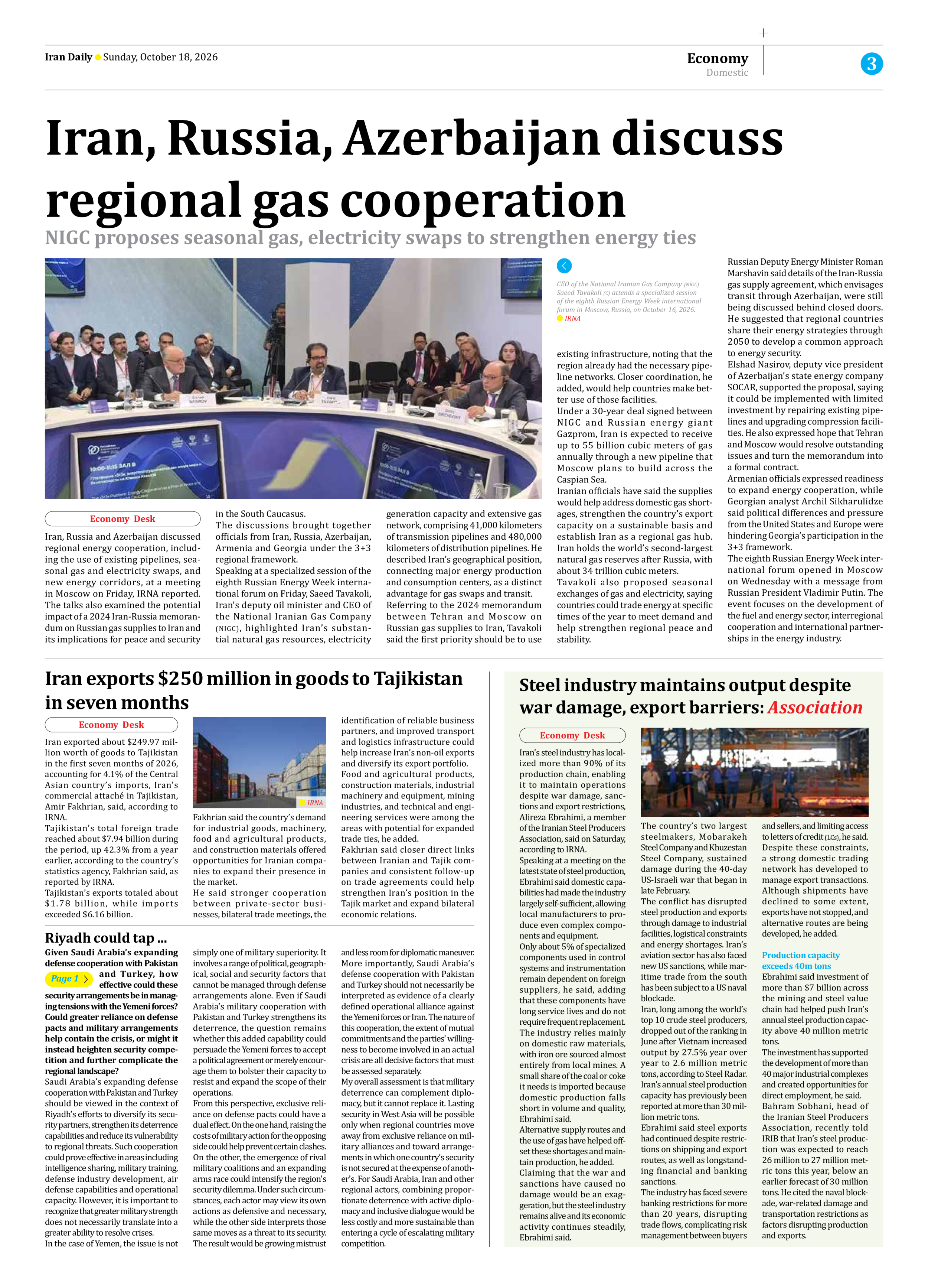
Speaking at a specialized session of the eighth Russian Energy Week international forum on Friday, Saeed Tavakoli, Iran’s deputy oil minister and CEO of the National Iranian Gas Company (NIGC), highlighted Iran’s substantial natural gas resources, electricity generation capacity and extensive gas network, comprising 41,000 kilometers of transmission pipelines and 480,000 kilometers of distribution pipelines. He described Iran’s geographical position, connecting major energy production and consumption centers, as a distinct advantage for gas swaps and transit.
Referring to the 2024 memorandum between Tehran and Moscow on Russian gas supplies to Iran, Tavakoli said the first priority should be to use existing infrastructure, noting that the region already had the necessary pipeline networks. Closer coordination, he added, would help countries make better use of those facilities.
Under a 30-year deal signed between NIGC and Russian energy giant Gazprom, Iran is expected to receive up to 55 billion cubic meters of gas annually through a new pipeline that Moscow plans to build across the Caspian Sea.
Iranian officials have said the supplies would help address domestic gas shortages, strengthen the country’s export capacity on a sustainable basis and establish Iran as a regional gas hub. Iran holds the world’s second-largest natural gas reserves after Russia, with about 34 trillion cubic meters.
Tavakoli also proposed seasonal exchanges of gas and electricity, saying countries could trade energy at specific times of the year to meet demand and help strengthen regional peace and stability.
Russian Deputy Energy Minister Roman Marshavin said details of the Iran-Russia gas supply agreement, which envisages transit through Azerbaijan, were still being discussed behind closed doors. He suggested that regional countries share their energy strategies through 2050 to develop a common approach to energy security.
Elshad Nasirov, deputy vice president of Azerbaijan’s state energy company SOCAR, supported the proposal, saying it could be implemented with limited investment by repairing existing pipelines and upgrading compression facilities. He also expressed hope that Tehran and Moscow would resolve outstanding issues and turn the memorandum into a formal contract.
Armenian officials expressed readiness to expand energy cooperation, while Georgian analyst Archil Sikharulidze said political differences and pressure from the United States and Europe were hindering Georgia’s participation in the 3+3 framework.
The eighth Russian Energy Week international forum opened in Moscow on Wednesday with a message from Russian President Vladimir Putin. The event focuses on the development of the fuel and energy sector, interregional cooperation and international partnerships in the energy industry.