







Tehran weighs transmitting wind power to Afghan cities
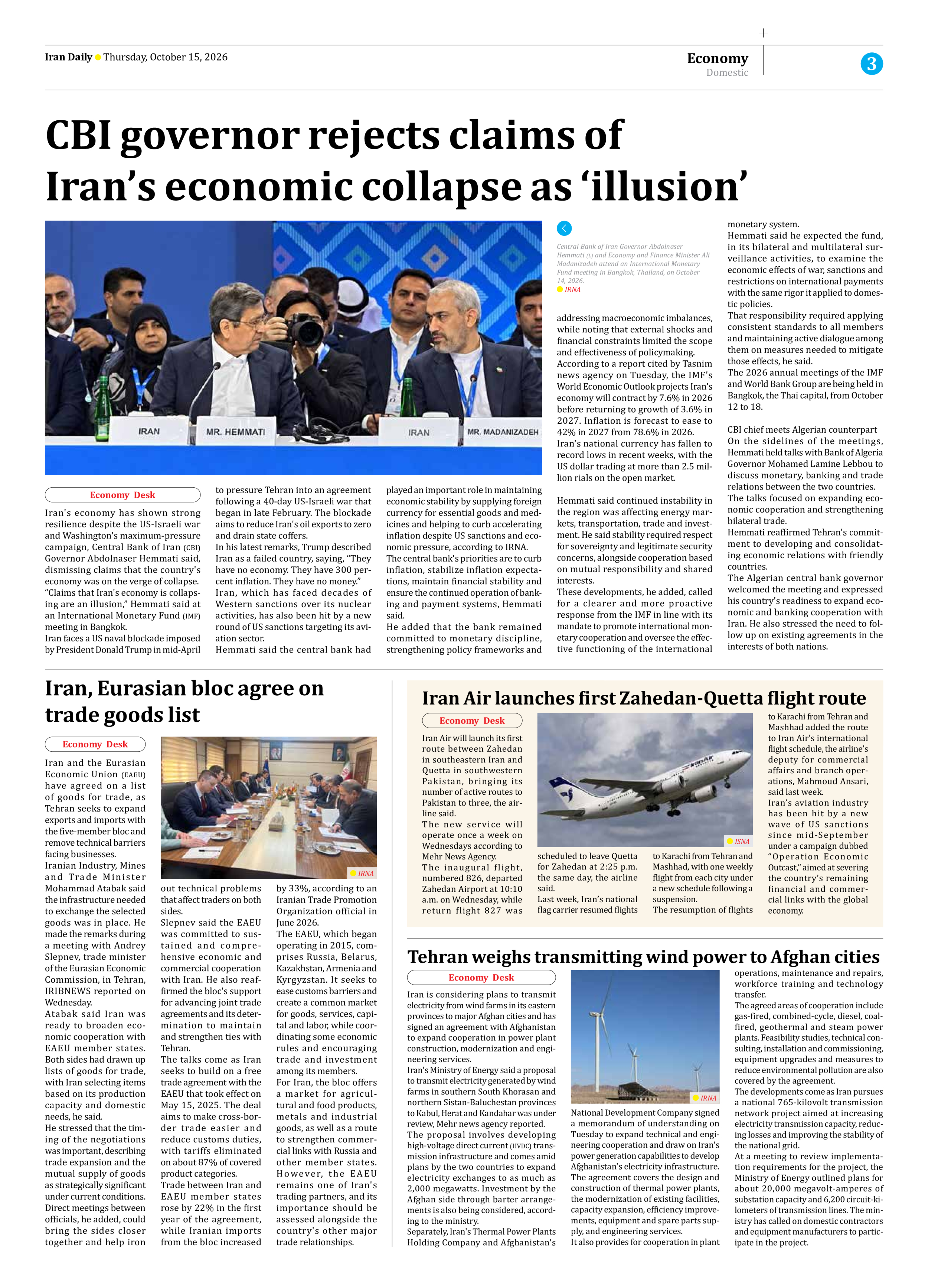
Iran is considering plans to transmit electricity from wind farms in its eastern provinces to major Afghan cities and has signed an agreement with Afghanistan to expand cooperation in power plant construction, modernization and engineering services.
Iran's Ministry of Energy said a proposal to transmit electricity generated by wind farms in southern South Khorasan and northern Sistan-Baluchestan provinces to Kabul, Herat and Kandahar was under review, Mehr news agency reported.
The proposal involves developing high-voltage direct current (HVDC) transmission infrastructure and comes amid plans by the two countries to expand electricity exchanges to as much as 2,000 megawatts. Investment by the Afghan side through barter arrangements is also being considered, according to the ministry.
Separately, Iran's Thermal Power Plants Holding Company and Afghanistan's National Development Company signed a memorandum of understanding on Tuesday to expand technical and engineering cooperation and draw on Iran's power generation capabilities to develop Afghanistan's electricity infrastructure.
The agreement covers the design and construction of thermal power plants, the modernization of existing facilities, capacity expansion, efficiency improvements, equipment and spare parts supply, and engineering services.
It also provides for cooperation in plant operations, maintenance and repairs, workforce training and technology transfer.
The agreed areas of cooperation include gas-fired, combined-cycle, diesel, coal-fired, geothermal and steam power plants. Feasibility studies, technical consulting, installation and commissioning, equipment upgrades and measures to reduce environmental pollution are also covered by the agreement.
The developments come as Iran pursues a national 765-kilovolt transmission network project aimed at increasing electricity transmission capacity, reducing losses and improving the stability of the national grid.
At a meeting to review implementation requirements for the project, the Ministry of Energy outlined plans for about 20,000 megavolt-amperes of substation capacity and 6,200 circuit-kilometers of transmission lines. The ministry has called on domestic contractors and equipment manufacturers to participate in the project.