







Iran, Eurasian bloc agree on trade goods list
Iran and the Eurasian Economic Union (EAEU) have agreed on a list of goods for trade, as Tehran seeks to expand exports and imports with the five-member bloc and remove technical barriers facing businesses.
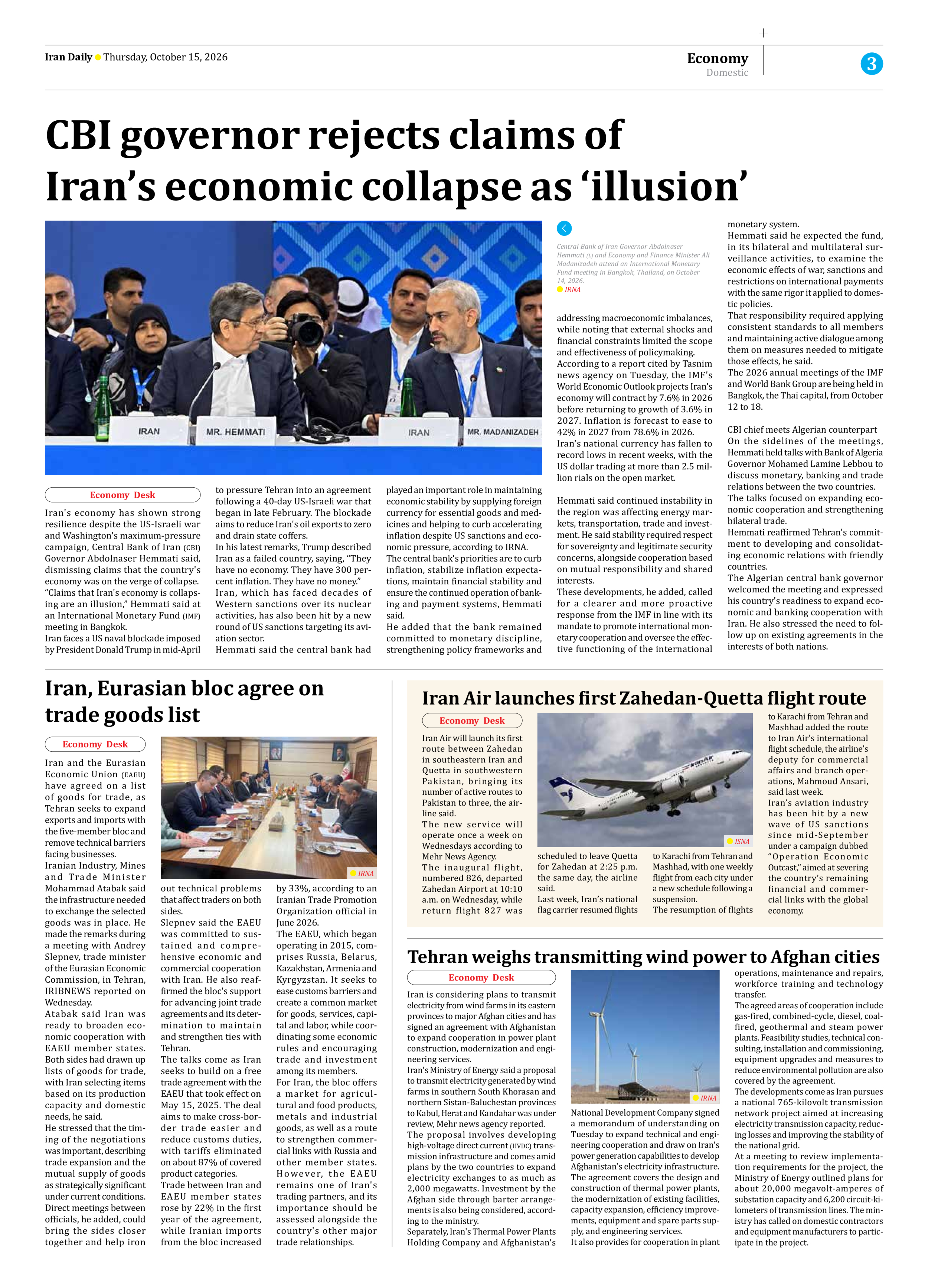
Iranian Industry, Mines and Trade Minister Mohammad Atabak said the infrastructure needed to exchange the selected goods was in place. He made the remarks during a meeting with Andrey Slepnev, trade minister of the Eurasian Economic Commission, in Tehran, IRIBNEWS reported on Wednesday.
Atabak said Iran was ready to broaden economic cooperation with EAEU member states. Both sides had drawn up lists of goods for trade, with Iran selecting items based on its production capacity and domestic needs, he said.
He stressed that the timing of the negotiations was important, describing trade expansion and the mutual supply of goods as strategically significant under current conditions. Direct meetings between officials, he added, could bring the sides closer together and help iron out technical problems that affect traders on both sides.
Slepnev said the EAEU was committed to sustained and comprehensive economic and commercial cooperation with Iran. He also reaffirmed the bloc's support for advancing joint trade agreements and its determination to maintain and strengthen ties with Tehran.
The talks come as Iran seeks to build on a free trade agreement with the EAEU that took effect on May 15, 2025. The deal aims to make cross-border trade easier and reduce customs duties, with tariffs eliminated on about 87% of covered product categories.
Trade between Iran and EAEU member states rose by 22% in the first year of the agreement, while Iranian imports from the bloc increased by 33%, according to an Iranian Trade Promotion Organization official in June 2026.
The EAEU, which began operating in 2015, comprises Russia, Belarus, Kazakhstan, Armenia and Kyrgyzstan. It seeks to ease customs barriers and create a common market for goods, services, capital and labor, while coordinating some economic rules and encouraging trade and investment among its members.
For Iran, the bloc offers a market for agricultural and food products, metals and industrial goods, as well as a route to strengthen commercial links with Russia and other member states. However, the EAEU remains one of Iran's trading partners, and its importance should be assessed alongside the country's other major trade relationships.