







Iran turns to rural tourism to boost local economies
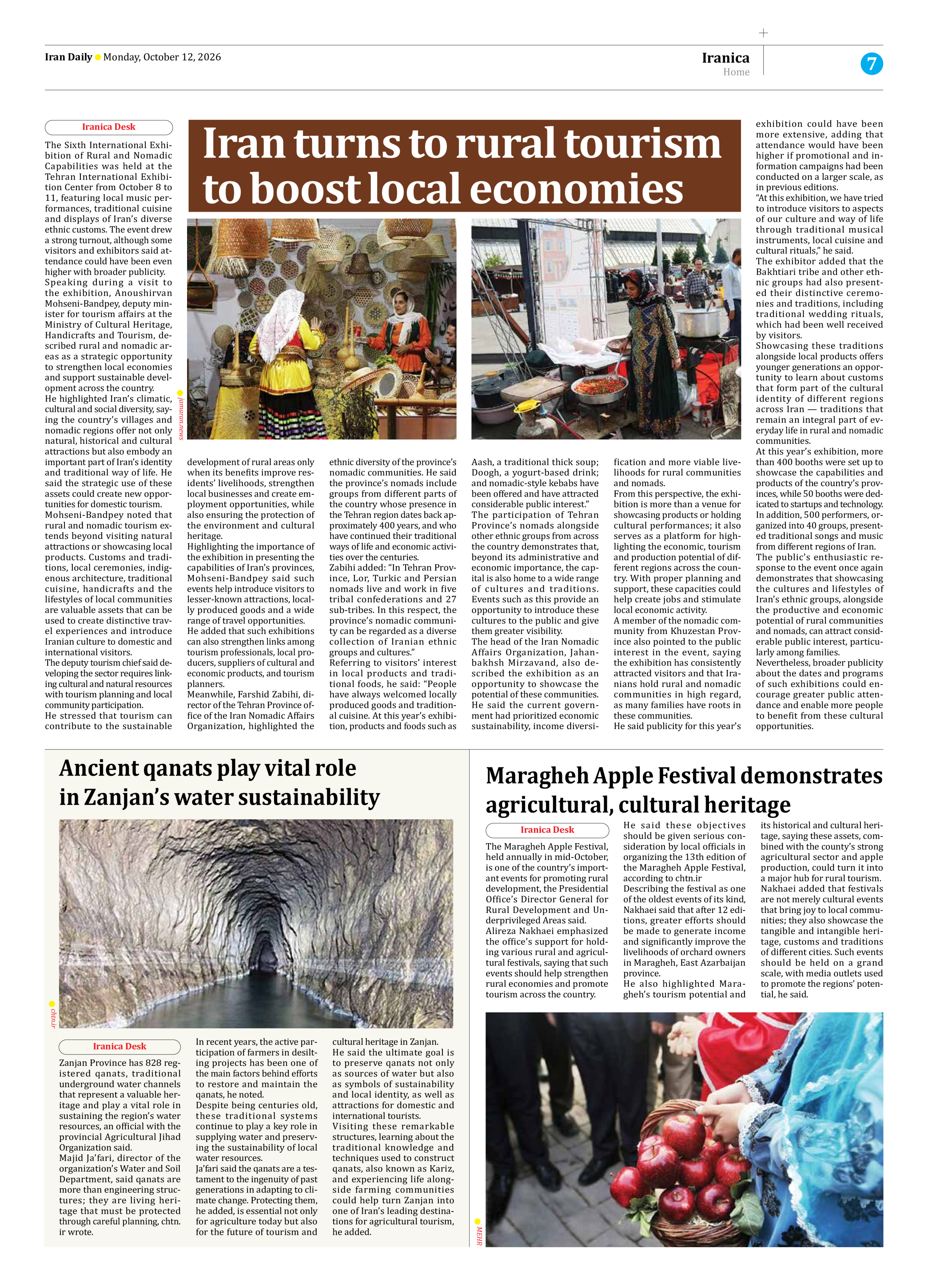
The Sixth International Exhibition of Rural and Nomadic Capabilities was held at the Tehran International Exhibition Center from October 8 to 11, featuring local music performances, traditional cuisine and displays of Iran’s diverse ethnic customs. The event drew a strong turnout, although some visitors and exhibitors said attendance could have been even higher with broader publicity.
Speaking during a visit to the exhibition, Anoushirvan Mohseni-Bandpey, deputy minister for tourism affairs at the Ministry of Cultural Heritage, Handicrafts and Tourism, described rural and nomadic areas as a strategic opportunity to strengthen local economies and support sustainable development across the country.
He highlighted Iran’s climatic, cultural and social diversity, saying the country’s villages and nomadic regions offer not only natural, historical and cultural attractions but also embody an important part of Iran’s identity and traditional way of life. He said the strategic use of these assets could create new opportunities for domestic tourism.
Mohseni-Bandpey noted that rural and nomadic tourism extends beyond visiting natural attractions or showcasing local products. Customs and traditions, local ceremonies, indigenous architecture, traditional cuisine, handicrafts and the lifestyles of local communities are valuable assets that can be used to create distinctive travel experiences and introduce Iranian culture to domestic and international visitors.
The deputy tourism chief said developing the sector requires linking cultural and natural resources with tourism planning and local community participation.
He stressed that tourism can contribute to the sustainable development of rural areas only when its benefits improve residents’ livelihoods, strengthen local businesses and create employment opportunities, while also ensuring the protection of the environment and cultural heritage.
Highlighting the importance of the exhibition in presenting the capabilities of Iran’s provinces, Mohseni-Bandpey said such events help introduce visitors to lesser-known attractions, locally produced goods and a wide range of travel opportunities.
He added that such exhibitions can also strengthen links among tourism professionals, local producers, suppliers of cultural and economic products, and tourism planners.
Meanwhile, Farshid Zabihi, director of the Tehran Province office of the Iran Nomadic Affairs Organization, highlighted the ethnic diversity of the province’s nomadic communities. He said the province’s nomads include groups from different parts of the country whose presence in the Tehran region dates back approximately 400 years, and who have continued their traditional ways of life and economic activities over the centuries.
Zabihi added: “In Tehran Province, Lor, Turkic and Persian nomads live and work in five tribal confederations and 27 sub-tribes. In this respect, the province’s nomadic community can be regarded as a diverse collection of Iranian ethnic groups and cultures.”
Referring to visitors’ interest in local products and traditional foods, he said: “People have always welcomed locally produced goods and traditional cuisine. At this year’s exhibition, products and foods such as Aash, a traditional thick soup; Doogh, a yogurt-based drink; and nomadic-style kebabs have been offered and have attracted considerable public interest.”
The participation of Tehran Province’s nomads alongside other ethnic groups from across the country demonstrates that, beyond its administrative and economic importance, the capital is also home to a wide range of cultures and traditions. Events such as this provide an opportunity to introduce these cultures to the public and give them greater visibility.
The head of the Iran Nomadic Affairs Organization, Jahanbakhsh Mirzavand, also described the exhibition as an opportunity to showcase the potential of these communities.
He said the current government had prioritized economic sustainability, income diversification and more viable livelihoods for rural communities and nomads.
From this perspective, the exhibition is more than a venue for showcasing products or holding cultural performances; it also serves as a platform for highlighting the economic, tourism and production potential of different regions across the country. With proper planning and support, these capacities could help create jobs and stimulate local economic activity.
A member of the nomadic community from Khuzestan Province also pointed to the public interest in the event, saying the exhibition has consistently attracted visitors and that Iranians hold rural and nomadic communities in high regard, as many families have roots in these communities.
He said publicity for this year’s exhibition could have been more extensive, adding that attendance would have been higher if promotional and information campaigns had been conducted on a larger scale, as in previous editions.
“At this exhibition, we have tried to introduce visitors to aspects of our culture and way of life through traditional musical instruments, local cuisine and cultural rituals,” he said.
The exhibitor added that the Bakhtiari tribe and other ethnic groups had also presented their distinctive ceremonies and traditions, including traditional wedding rituals, which had been well received by visitors.
Showcasing these traditions alongside local products offers younger generations an opportunity to learn about customs that form part of the cultural identity of different regions across Iran — traditions that remain an integral part of everyday life in rural and nomadic communities.
At this year’s exhibition, more than 400 booths were set up to showcase the capabilities and products of the country’s provinces, while 50 booths were dedicated to startups and technology.
In addition, 500 performers, organized into 40 groups, presented traditional songs and music from different regions of Iran.
The public’s enthusiastic response to the event once again demonstrates that showcasing the cultures and lifestyles of Iran’s ethnic groups, alongside the productive and economic potential of rural communities and nomads, can attract considerable public interest, particularly among families.
Nevertheless, broader publicity about the dates and programs of such exhibitions could encourage greater public attendance and enable more people to benefit from these cultural opportunities.