







Steel output seen at 26-27m tons as exports face disruptions
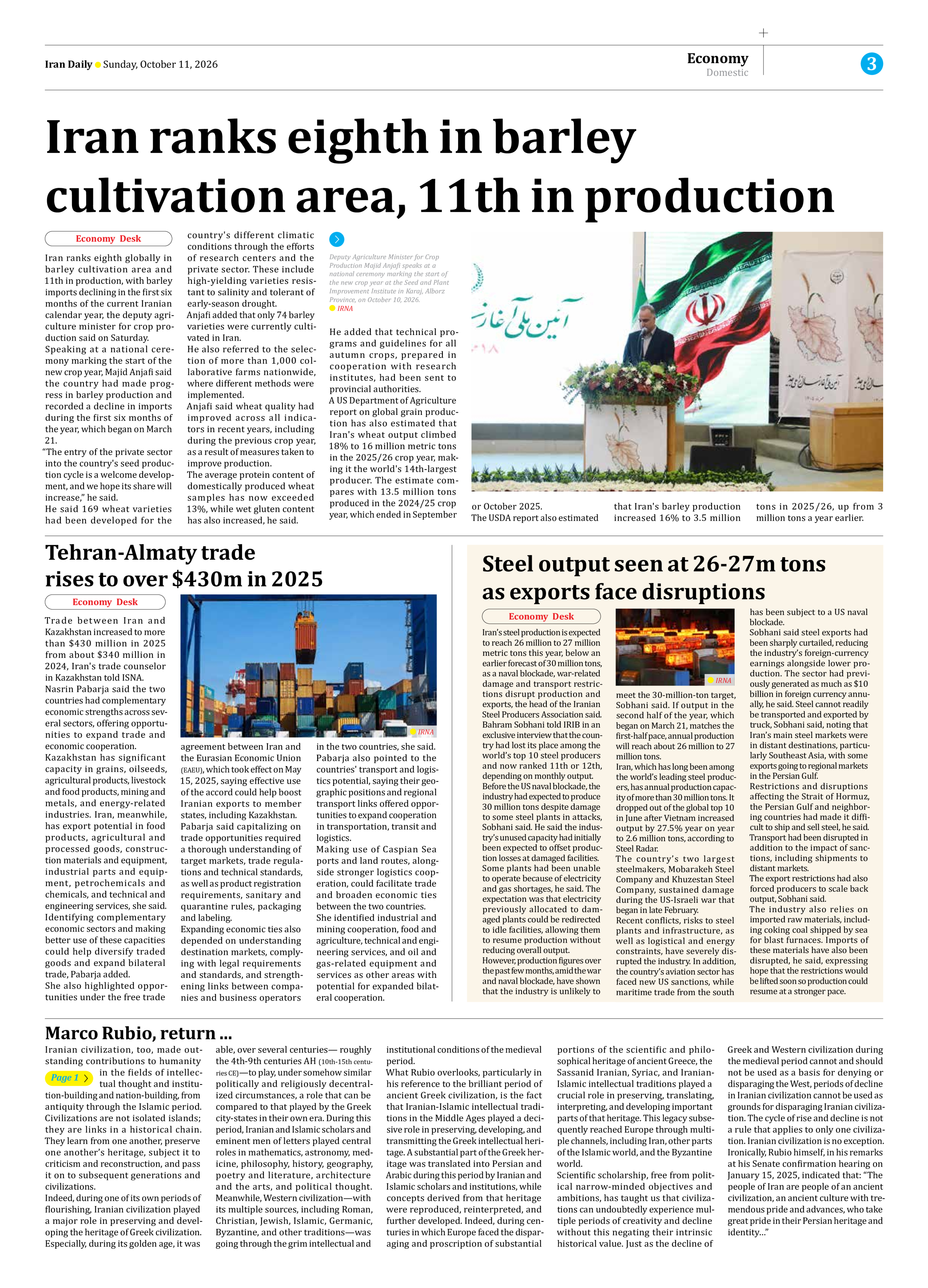
Iran’s steel production is expected to reach 26 million to 27 million metric tons this year, below an earlier forecast of 30 million tons, as a naval blockade, war-related damage and transport restrictions disrupt production and exports, the head of the Iranian Steel Producers Association said.
Bahram Sobhani told IRIB in an exclusive interview that the country had lost its place among the world’s top 10 steel producers and now ranked 11th or 12th, depending on monthly output.
Before the US naval blockade, the industry had expected to produce 30 million tons despite damage to some steel plants in attacks, Sobhani said. He said the industry’s unused capacity had initially been expected to offset production losses at damaged facilities.
Some plants had been unable to operate because of electricity and gas shortages, he said. The expectation was that electricity previously allocated to damaged plants could be redirected to idle facilities, allowing them to resume production without reducing overall output.
However, production figures over the past few months, amid the war and naval blockade, have shown that the industry is unlikely to meet the 30-million-ton target, Sobhani said. If output in the second half of the year, which began on March 21, matches the first-half pace, annual production will reach about 26 million to 27 million tons.
Iran, which has long been among the world’s leading steel producers, has annual production capacity of more than 30 million tons. It dropped out of the global top 10 in June after Vietnam increased output by 27.5% year on year to 2.6 million tons, according to Steel Radar.
The country’s two largest steelmakers, Mobarakeh Steel Company and Khuzestan Steel Company, sustained damage during the US-Israeli war that began in late February.
Recent conflicts, risks to steel plants and infrastructure, as well as logistical and energy constraints, have severely disrupted the industry. In addition, the country’s aviation sector has faced new US sanctions, while maritime trade from the south has been subject to a US naval blockade.
Sobhani said steel exports had been sharply curtailed, reducing the industry’s foreign-currency earnings alongside lower production. The sector had previously generated as much as $10 billion in foreign currency annually, he said. Steel cannot readily be transported and exported by truck, Sobhani said, noting that Iran’s main steel markets were in distant destinations, particularly Southeast Asia, with some exports going to regional markets in the Persian Gulf.
Restrictions and disruptions affecting the Strait of Hormuz, the Persian Gulf and neighboring countries had made it difficult to ship and sell steel, he said. Transport had been disrupted in addition to the impact of sanctions, including shipments to distant markets.
The export restrictions had also forced producers to scale back output, Sobhani said.
The industry also relies on imported raw materials, including coking coal shipped by sea for blast furnaces. Imports of these materials have also been disrupted, he said, expressing hope that the restrictions would be lifted soon so production could resume at a stronger pace.