







Iran ranks eighth in barley cultivation area, 11th in production
Iran ranks eighth globally in barley cultivation area and 11th in production, with barley imports declining in the first six months of the current Iranian calendar year, the deputy agriculture minister for crop production said on Saturday.
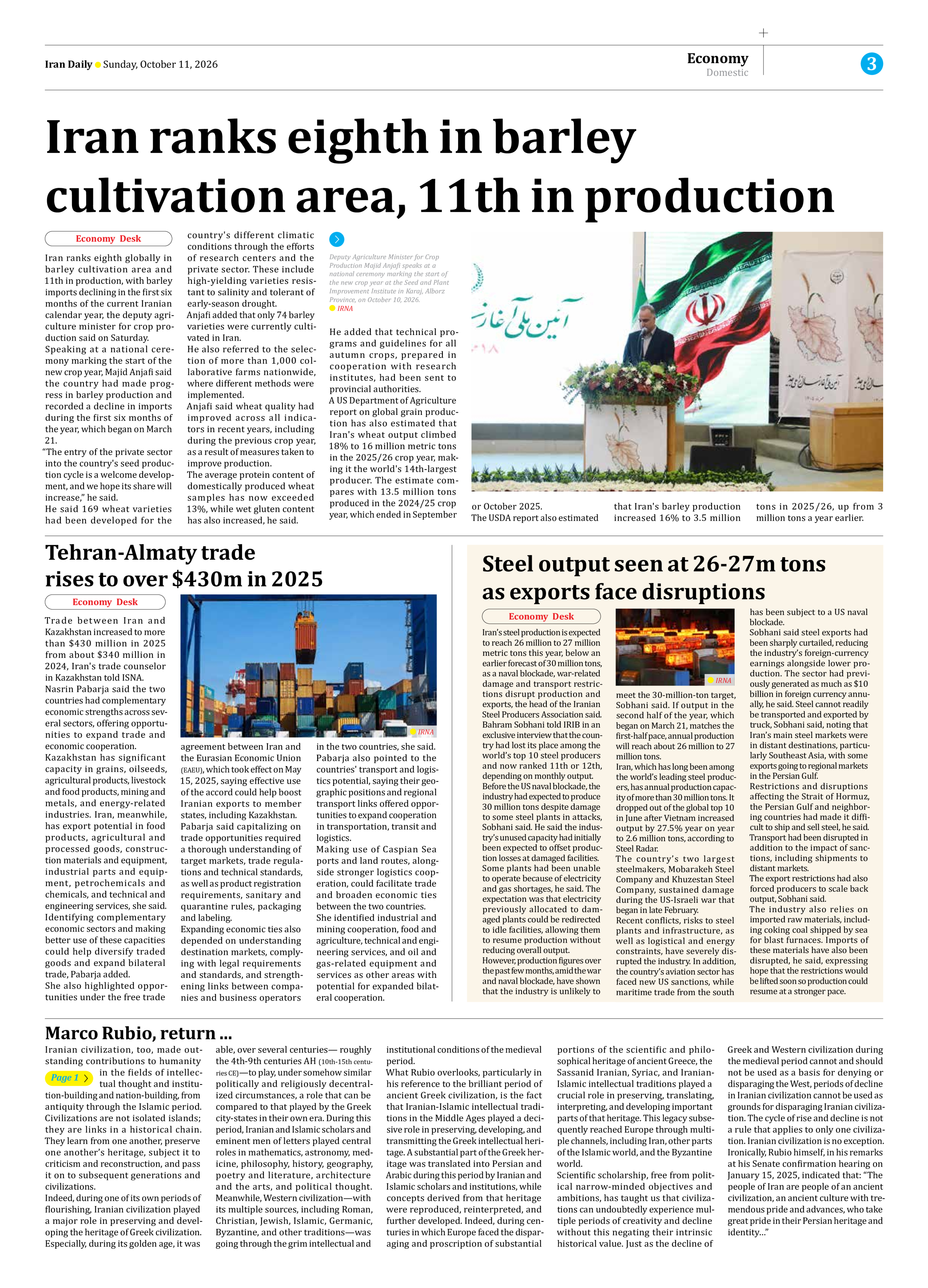
Speaking at a national ceremony marking the start of the new crop year, Majid Anjafi said the country had made progress in barley production and recorded a decline in imports during the first six months of the year, which began on March 21.
“The entry of the private sector into the country's seed production cycle is a welcome development, and we hope its share will increase,” he said.
He said 169 wheat varieties had been developed for the country's different climatic conditions through the efforts of research centers and the private sector. These include high-yielding varieties resistant to salinity and tolerant of early-season drought.
Anjafi added that only 74 barley varieties were currently cultivated in Iran.
He also referred to the selection of more than 1,000 collaborative farms nationwide, where different methods were implemented.
Anjafi said wheat quality had improved across all indicators in recent years, including during the previous crop year, as a result of measures taken to improve production.
The average protein content of domestically produced wheat samples has now exceeded 13%, while wet gluten content has also increased, he said.
He added that technical programs and guidelines for all autumn crops, prepared in cooperation with research institutes, had been sent to provincial authorities.
A US Department of Agriculture report on global grain production has also estimated that Iran's wheat output climbed 18% to 16 million metric tons in the 2025/26 crop year, making it the world's 14th-largest producer. The estimate compares with 13.5 million tons produced in the 2024/25 crop year, which ended in September or October 2025.
The USDA report also estimated that Iran's barley production increased 16% to 3.5 million tons in 2025/26, up from 3 million tons a year earlier.