





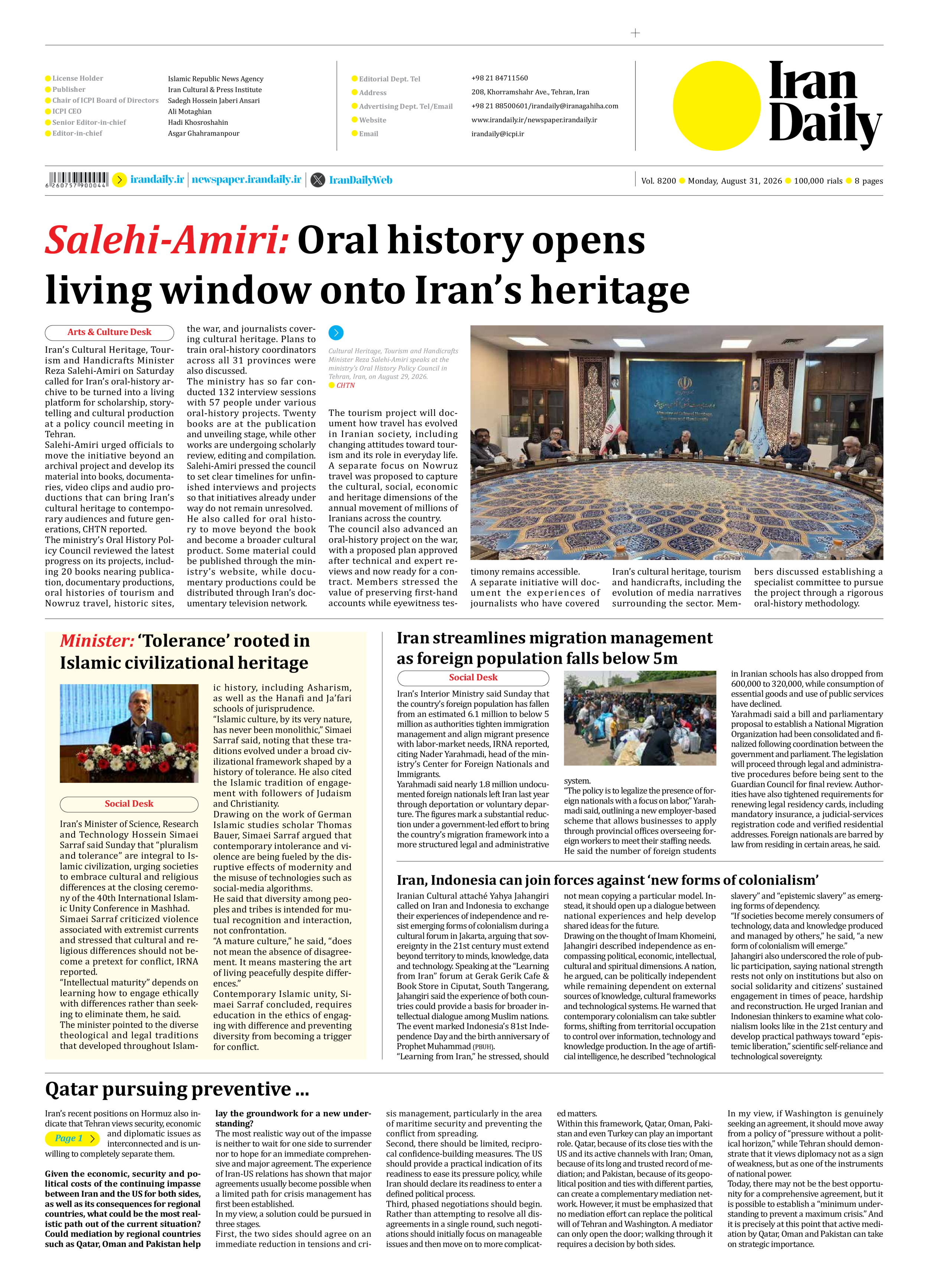


Minister: ‘Tolerance’ rooted in Islamic civilizational heritage
Iran’s Minister of Science, Research and Technology Hossein Simaei Sarraf said Sunday that “pluralism and tolerance” are integral to Islamic civilization, urging societies to embrace cultural and religious differences at the closing ceremony of the 40th International Islamic Unity Conference in Mashhad.
Simaei Sarraf criticized violence associated with extremist currents and stressed that cultural and religious differences should not become a pretext for conflict, IRNA reported.
“Intellectual maturity” depends on learning how to engage ethically with differences rather than seeking to eliminate them, he said.
The minister pointed to the diverse theological and legal traditions that developed throughout Islamic history, including Asharism, as well as the Hanafi and Ja’fari schools of jurisprudence.
“Islamic culture, by its very nature, has never been monolithic,” Simaei Sarraf said, noting that these traditions evolved under a broad civilizational framework shaped by a history of tolerance. He also cited the Islamic tradition of engagement with followers of Judaism and Christianity.
Drawing on the work of German Islamic studies scholar Thomas Bauer, Simaei Sarraf argued that contemporary intolerance and violence are being fueled by the disruptive effects of modernity and the misuse of technologies such as social-media algorithms.
He said that diversity among peoples and tribes is intended for mutual recognition and interaction, not confrontation.
“A mature culture,” he said, “does not mean the absence of disagreement. It means mastering the art of living peacefully despite differences.”
Contemporary Islamic unity, Simaei Sarraf concluded, requires education in the ethics of engaging with difference and preventing diversity from becoming a trigger for conflict.