







Salehi-Amiri: Oral history opens living window onto Iran’s heritage
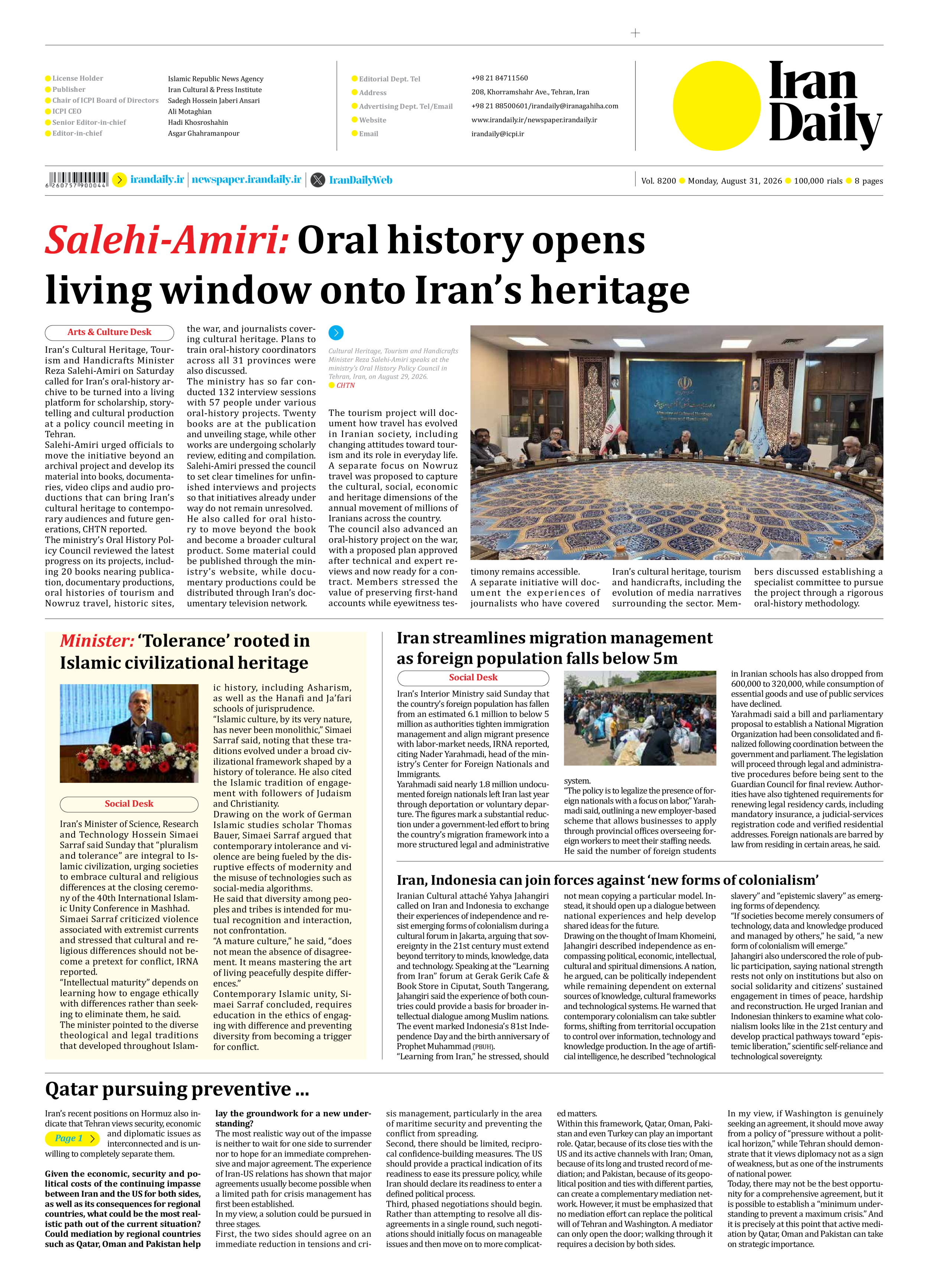
Iran’s Cultural Heritage, Tourism and Handicrafts Minister Reza Salehi-Amiri on Saturday called for Iran’s oral-history archive to be turned into a living platform for scholarship, storytelling and cultural production at a policy council meeting in Tehran.
Salehi-Amiri urged officials to move the initiative beyond an archival project and develop its material into books, documentaries, video clips and audio productions that can bring Iran’s cultural heritage to contemporary audiences and future generations, CHTN reported.
The ministry’s Oral History Policy Council reviewed the latest progress on its projects, including 20 books nearing publication, documentary productions, oral histories of tourism and Nowruz travel, historic sites, the war, and journalists covering cultural heritage. Plans to train oral-history coordinators across all 31 provinces were also discussed.
The ministry has so far conducted 132 interview sessions with 57 people under various oral-history projects. Twenty books are at the publication and unveiling stage, while other works are undergoing scholarly review, editing and compilation.
Salehi-Amiri pressed the council to set clear timelines for unfinished interviews and projects so that initiatives already under way do not remain unresolved.
He also called for oral history to move beyond the book and become a broader cultural product. Some material could be published through the ministry’s website, while documentary productions could be distributed through Iran’s documentary television network.
The tourism project will document how travel has evolved in Iranian society, including changing attitudes toward tourism and its role in everyday life. A separate focus on Nowruz travel was proposed to capture the cultural, social, economic and heritage dimensions of the annual movement of millions of Iranians across the country.
The council also advanced an oral-history project on the war, with a proposed plan approved after technical and expert reviews and now ready for a contract. Members stressed the value of preserving first-hand accounts while eyewitness testimony remains accessible.
A separate initiative will document the experiences of journalists who have covered Iran’s cultural heritage, tourism and handicrafts, including the evolution of media narratives surrounding the sector. Members discussed establishing a specialist committee to pursue the project through a rigorous oral-history methodology.