





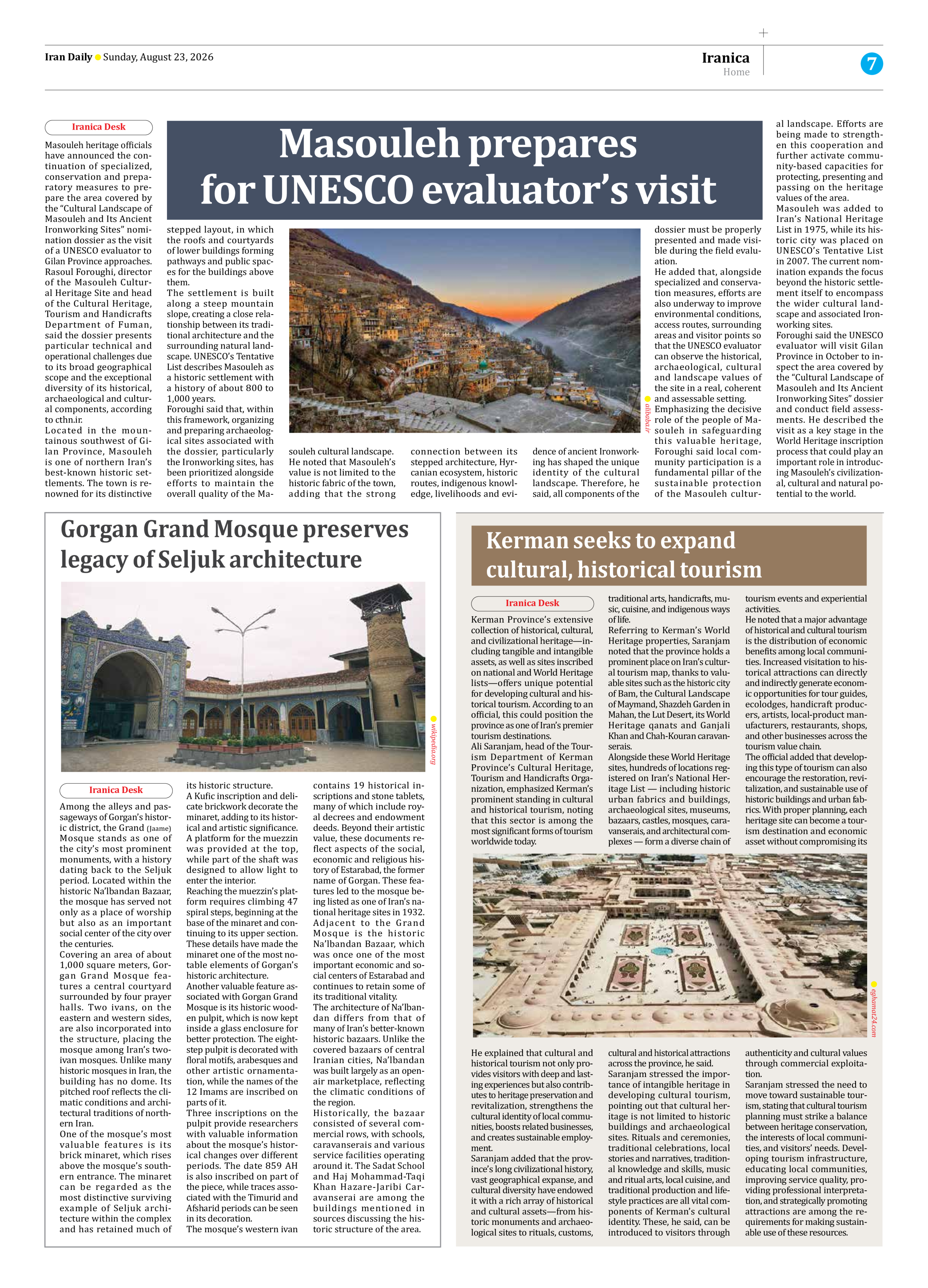


Kerman seeks to expand cultural, historical tourism
Kerman Province’s extensive collection of historical, cultural, and civilizational heritage—including tangible and intangible assets, as well as sites inscribed on national and World Heritage lists—offers unique potential for developing cultural and historical tourism. According to an official, this could position the province as one of Iran’s premier tourism destinations.
Ali Saranjam, head of the Tourism Department of Kerman Province’s Cultural Heritage, Tourism and Handicrafts Organization, emphasized Kerman’s prominent standing in cultural and historical tourism, noting that this sector is among the most significant forms of tourism worldwide today.
He explained that cultural and historical tourism not only provides visitors with deep and lasting experiences but also contributes to heritage preservation and revitalization, strengthens the cultural identity of local communities, boosts related businesses, and creates sustainable employment.
Saranjam added that the province’s long civilizational history, vast geographical expanse, and cultural diversity have endowed it with a rich array of historical and cultural assets—from historic monuments and archaeological sites to rituals, customs, traditional arts, handicrafts, music, cuisine, and indigenous ways of life.
Referring to Kerman’s World Heritage properties, Saranjam noted that the province holds a prominent place on Iran’s cultural tourism map, thanks to valuable sites such as the historic city of Bam, the Cultural Landscape of Maymand, Shazdeh Garden in Mahan, the Lut Desert, its World Heritage qanats and Ganjali Khan and Chah-Kouran caravanserais.
Alongside these World Heritage sites, hundreds of locations registered on Iran’s National Heritage List — including historic urban fabrics and buildings, archaeological sites, museums, bazaars, castles, mosques, caravanserais, and architectural complexes — form a diverse chain of cultural and historical attractions across the province, he said.
Saranjam stressed the importance of intangible heritage in developing cultural tourism, pointing out that cultural heritage is not limited to historic buildings and archaeological sites. Rituals and ceremonies, traditional celebrations, local stories and narratives, traditional knowledge and skills, music and ritual arts, local cuisine, and traditional production and lifestyle practices are all vital components of Kerman’s cultural identity. These, he said, can be introduced to visitors through tourism events and experiential activities.
He noted that a major advantage of historical and cultural tourism is the distribution of economic benefits among local communities. Increased visitation to historical attractions can directly and indirectly generate economic opportunities for tour guides, ecolodges, handicraft producers, artists, local-product manufacturers, restaurants, shops, and other businesses across the tourism value chain.
The official added that developing this type of tourism can also encourage the restoration, revitalization, and sustainable use of historic buildings and urban fabrics. With proper planning, each heritage site can become a tourism destination and economic asset without compromising its authenticity and cultural values through commercial exploitation.
Saranjam stressed the need to move toward sustainable tourism, stating that cultural tourism planning must strike a balance between heritage conservation, the interests of local communities, and visitors’ needs. Developing tourism infrastructure, educating local communities, improving service quality, providing professional interpretation, and strategically promoting attractions are among the requirements for making sustainable use of these resources.