







Avicenna institute unveils poultry vaccine with high efficacy
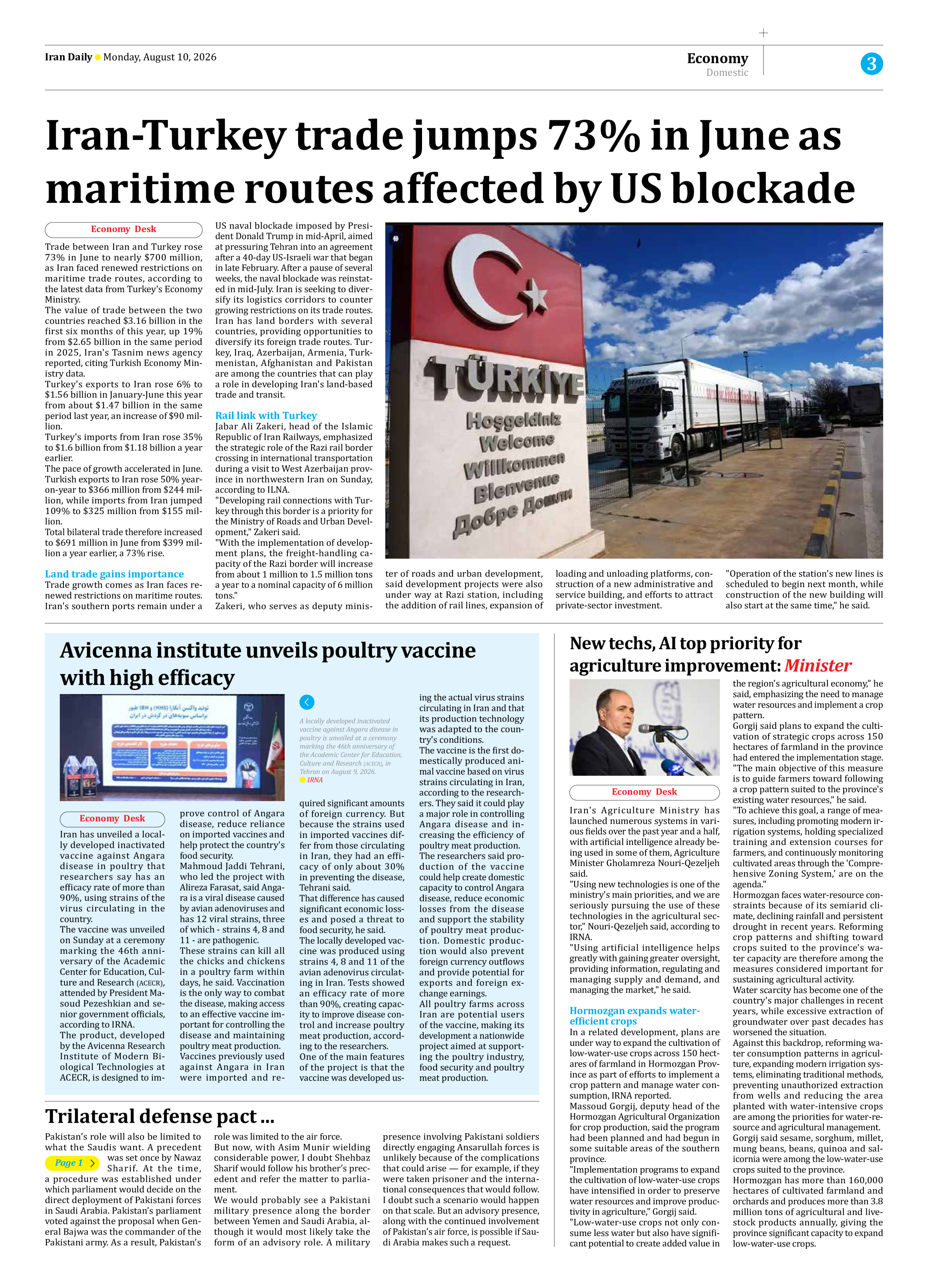
Iran has unveiled a locally developed inactivated vaccine against Angara disease in poultry that researchers say has an efficacy rate of more than 90%, using strains of the virus circulating in the country.
The vaccine was unveiled on Sunday at a ceremony marking the 46th anniversary of the Academic Center for Education, Culture and Research (ACECR), attended by President Masoud Pezeshkian and senior government officials, according to IRNA.
The product, developed by the Avicenna Research Institute of Modern Biological Technologies at ACECR, is designed to improve control of Angara disease, reduce reliance on imported vaccines and help protect the country's food security.
Mahmoud Jaddi Tehrani, who led the project with Alireza Farasat, said Angara is a viral disease caused by avian adenoviruses and has 12 viral strains, three of which - strains 4, 8 and 11 - are pathogenic.
These strains can kill all the chicks and chickens in a poultry farm within days, he said. Vaccination is the only way to combat the disease, making access to an effective vaccine important for controlling the disease and maintaining poultry meat production.
Vaccines previously used against Angara in Iran were imported and required significant amounts of foreign currency. But because the strains used in imported vaccines differ from those circulating in Iran, they had an efficacy of only about 30% in preventing the disease, Tehrani said.
That difference has caused significant economic losses and posed a threat to food security, he said.
The locally developed vaccine was produced using strains 4, 8 and 11 of the avian adenovirus circulating in Iran. Tests showed an efficacy rate of more than 90%, creating capacity to improve disease control and increase poultry meat production, according to the researchers.
One of the main features of the project is that the vaccine was developed using the actual virus strains circulating in Iran and that its production technology was adapted to the country's conditions.
The vaccine is the first domestically produced animal vaccine based on virus strains circulating in Iran, according to the researchers. They said it could play a major role in controlling Angara disease and increasing the efficiency of poultry meat production.
The researchers said production of the vaccine could help create domestic capacity to control Angara disease, reduce economic losses from the disease and support the stability of poultry meat production. Domestic production would also prevent foreign currency outflows and provide potential for exports and foreign exchange earnings.
All poultry farms across Iran are potential users of the vaccine, making its development a nationwide project aimed at supporting the poultry industry, food security and poultry meat production.