







Threads of heritage weave through Kohgiluyeh and Boyer-Ahmad’s handicrafts
Handicrafts in Kohgiluyeh and Boyer-Ahmad Province, as an inseparable part of the region’s economy and cultural identity, play a significant role in preserving indigenous heritage and promoting sustainable development in nomadic areas. Among the province’s most notable crafts are kilim, Gachmeh, and black tents, each representing centuries-old traditions and the creativity of local communities.
In the past, handicrafts were not only a major source of livelihood for the people of Kohgiluyeh and Boyer-Ahmad but were also deeply intertwined with the everyday life of nomadic and rural communities. These unique handwoven products form an essential part of the province’s cultural heritage, carrying stories of past generations through their patterns, colors, and designs.
This report introduces three of the province’s most distinctive handicrafts — arts that represent only a small part of the remarkable skills of the Lor-speaking men and women of Kohgiluyeh and Boyer-Ahmad and reflect the deep roots of an ancient and authentic culture.
Almas Ghobadi, deputy head of handicrafts at the province’s Cultural Heritage, Tourism and Handicrafts Organization, said these woven arts embody the region’s turbulent history and that protecting them is a historical responsibility.
Kilim
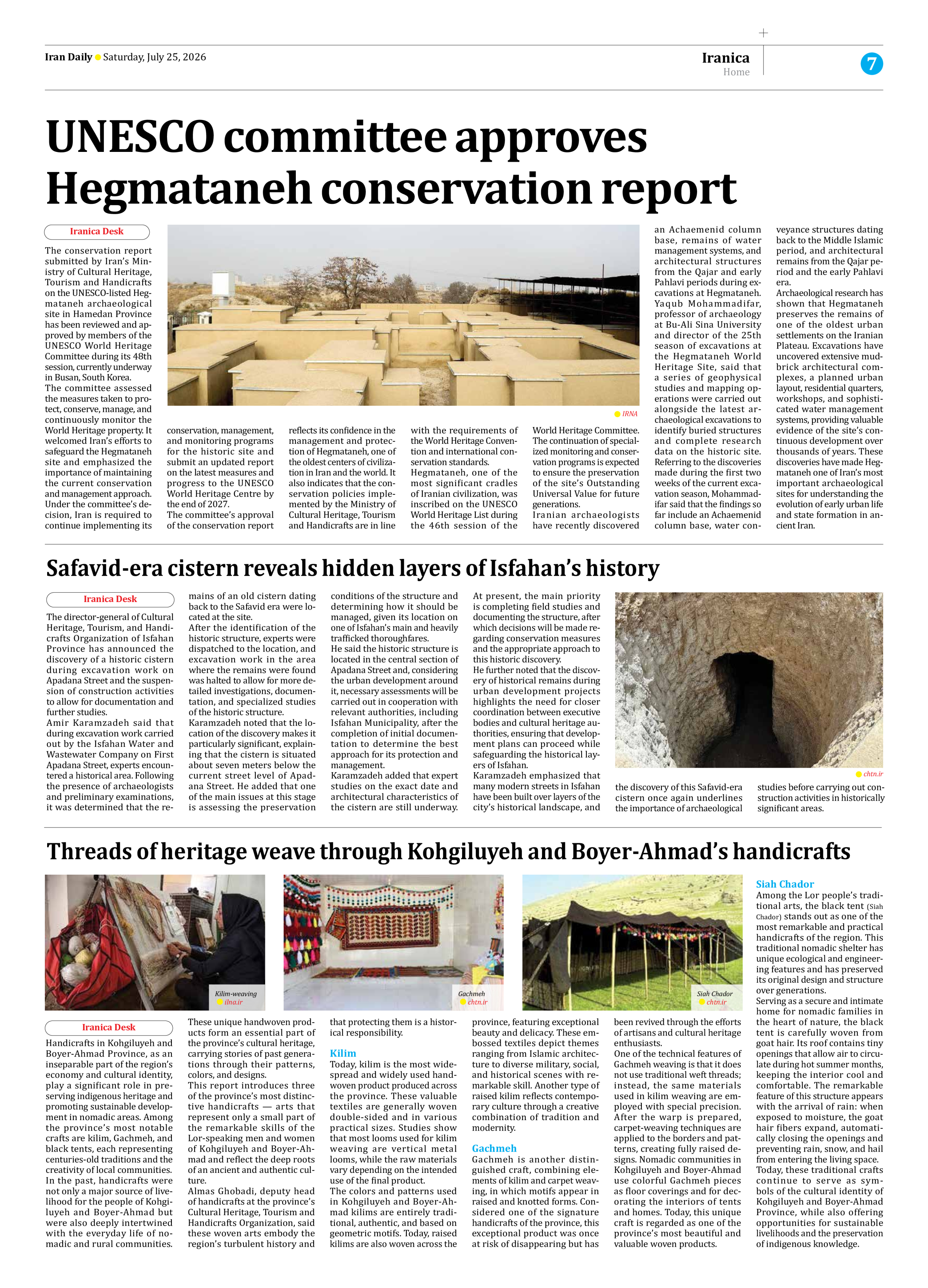
Today, kilim is the most widespread and widely used handwoven product produced across the province. These valuable textiles are generally woven double-sided and in various practical sizes. Studies show that most looms used for kilim weaving are vertical metal looms, while the raw materials vary depending on the intended use of the final product.
The colors and patterns used in Kohgiluyeh and Boyer-Ahmad kilims are entirely traditional, authentic, and based on geometric motifs. Today, raised kilims are also woven across the province, featuring exceptional beauty and delicacy. These embossed textiles depict themes ranging from Islamic architecture to diverse military, social, and historical scenes with remarkable skill. Another type of raised kilim reflects contemporary culture through a creative combination of tradition and modernity.
Gachmeh
Gachmeh is another distinguished craft, combining elements of kilim and carpet weaving, in which motifs appear in raised and knotted forms. Considered one of the signature handicrafts of the province, this exceptional product was once at risk of disappearing but has been revived through the efforts of artisans and cultural heritage enthusiasts.
One of the technical features of Gachmeh weaving is that it does not use traditional weft threads; instead, the same materials used in kilim weaving are employed with special precision. After the warp is prepared, carpet-weaving techniques are applied to the borders and patterns, creating fully raised designs. Nomadic communities in Kohgiluyeh and Boyer-Ahmad use colorful Gachmeh pieces as floor coverings and for decorating the interiors of tents and homes. Today, this unique craft is regarded as one of the province’s most beautiful and valuable woven products.
Siah Chador
Among the Lor people’s traditional arts, the black tent (Siah Chador) stands out as one of the most remarkable and practical handicrafts of the region. This traditional nomadic shelter has unique ecological and engineering features and has preserved its original design and structure over generations.
Serving as a secure and intimate home for nomadic families in the heart of nature, the black tent is carefully woven from goat hair. Its roof contains tiny openings that allow air to circulate during hot summer months, keeping the interior cool and comfortable. The remarkable feature of this structure appears with the arrival of rain: when exposed to moisture, the goat hair fibers expand, automatically closing the openings and preventing rain, snow, and hail from entering the living space.
Today, these traditional crafts continue to serve as symbols of the cultural identity of Kohgiluyeh and Boyer-Ahmad Province, while also offering opportunities for sustainable livelihoods and the preservation of indigenous knowledge.