







Safavid-era cistern reveals hidden layers of Isfahan’s history
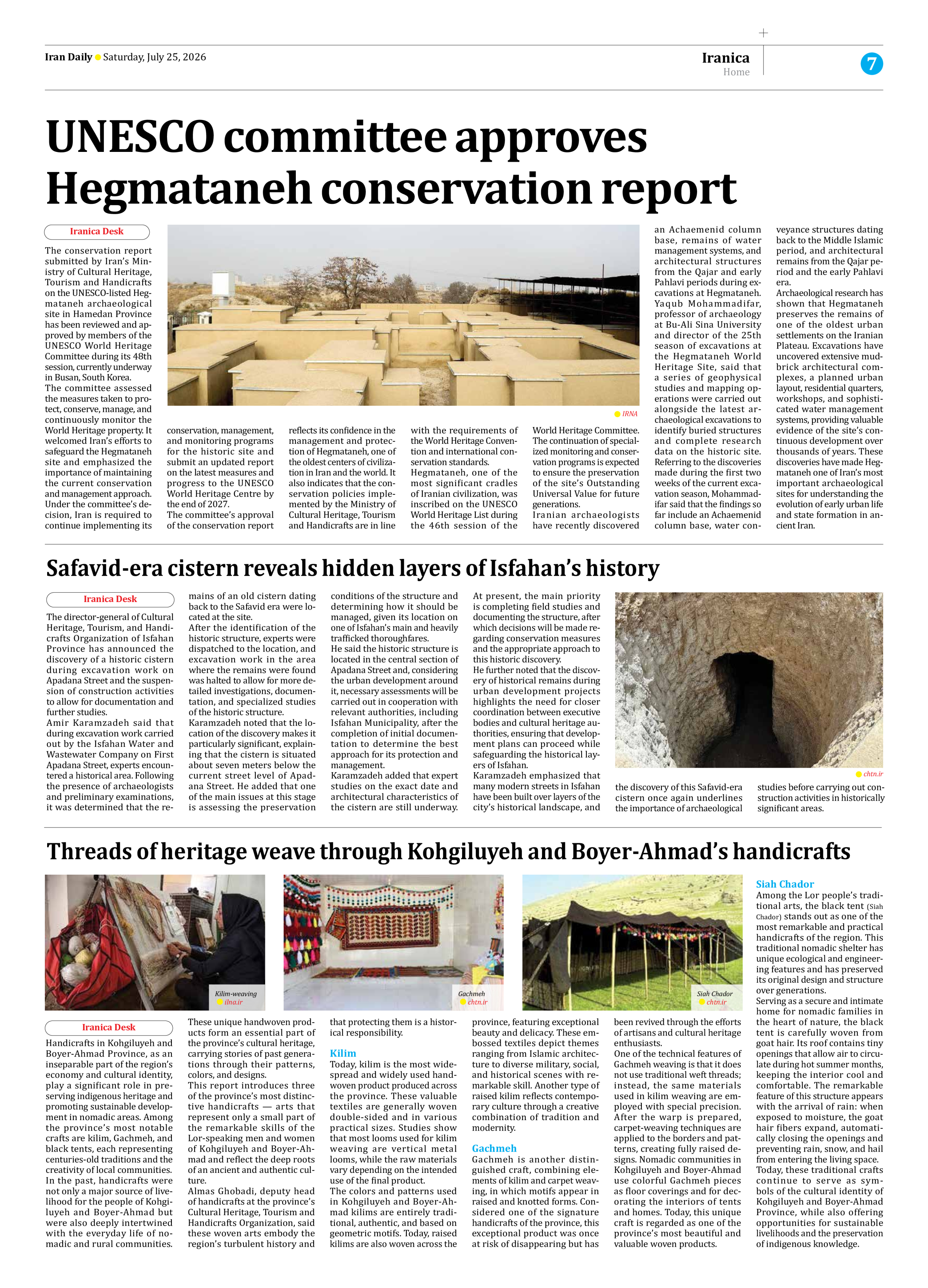
The director-general of Cultural Heritage, Tourism, and Handicrafts Organization of Isfahan Province has announced the discovery of a historic cistern during excavation work on Apadana Street and the suspension of construction activities to allow for documentation and further studies.
Amir Karamzadeh said that during excavation work carried out by the Isfahan Water and Wastewater Company on First Apadana Street, experts encountered a historical area. Following the presence of archaeologists and preliminary examinations, it was determined that the remains of an old cistern dating back to the Safavid era were located at the site.
After the identification of the historic structure, experts were dispatched to the location, and excavation work in the area where the remains were found was halted to allow for more detailed investigations, documentation, and specialized studies of the historic structure.
Karamzadeh noted that the location of the discovery makes it particularly significant, explaining that the cistern is situated about seven meters below the current street level of Apadana Street. He added that one of the main issues at this stage is assessing the preservation conditions of the structure and determining how it should be managed, given its location on one of Isfahan’s main and heavily trafficked thoroughfares.
He said the historic structure is located in the central section of Apadana Street and, considering the urban development around it, necessary assessments will be carried out in cooperation with relevant authorities, including Isfahan Municipality, after the completion of initial documentation to determine the best approach for its protection and management.
Karamzadeh added that expert studies on the exact date and architectural characteristics of the cistern are still underway. At present, the main priority is completing field studies and documenting the structure, after which decisions will be made regarding conservation measures and the appropriate approach to this historic discovery.
He further noted that the discovery of historical remains during urban development projects highlights the need for closer coordination between executive bodies and cultural heritage authorities, ensuring that development plans can proceed while safeguarding the historical layers of Isfahan.
Karamzadeh emphasized that many modern streets in Isfahan have been built over layers of the city’s historical landscape, and the discovery of this Safavid-era cistern once again underlines the importance of archaeological studies before carrying out construction activities in historically significant areas.