







Golil; North Khorasan Province’s natural, nomadic heritage
Nestled in the mountainous landscapes of North Khorasan Province, Golil is one of Iran’s most pristine natural areas, renowned for its rich biodiversity, cool summer climate, and deep cultural significance among the region’s Kurdish Kormanj nomads.
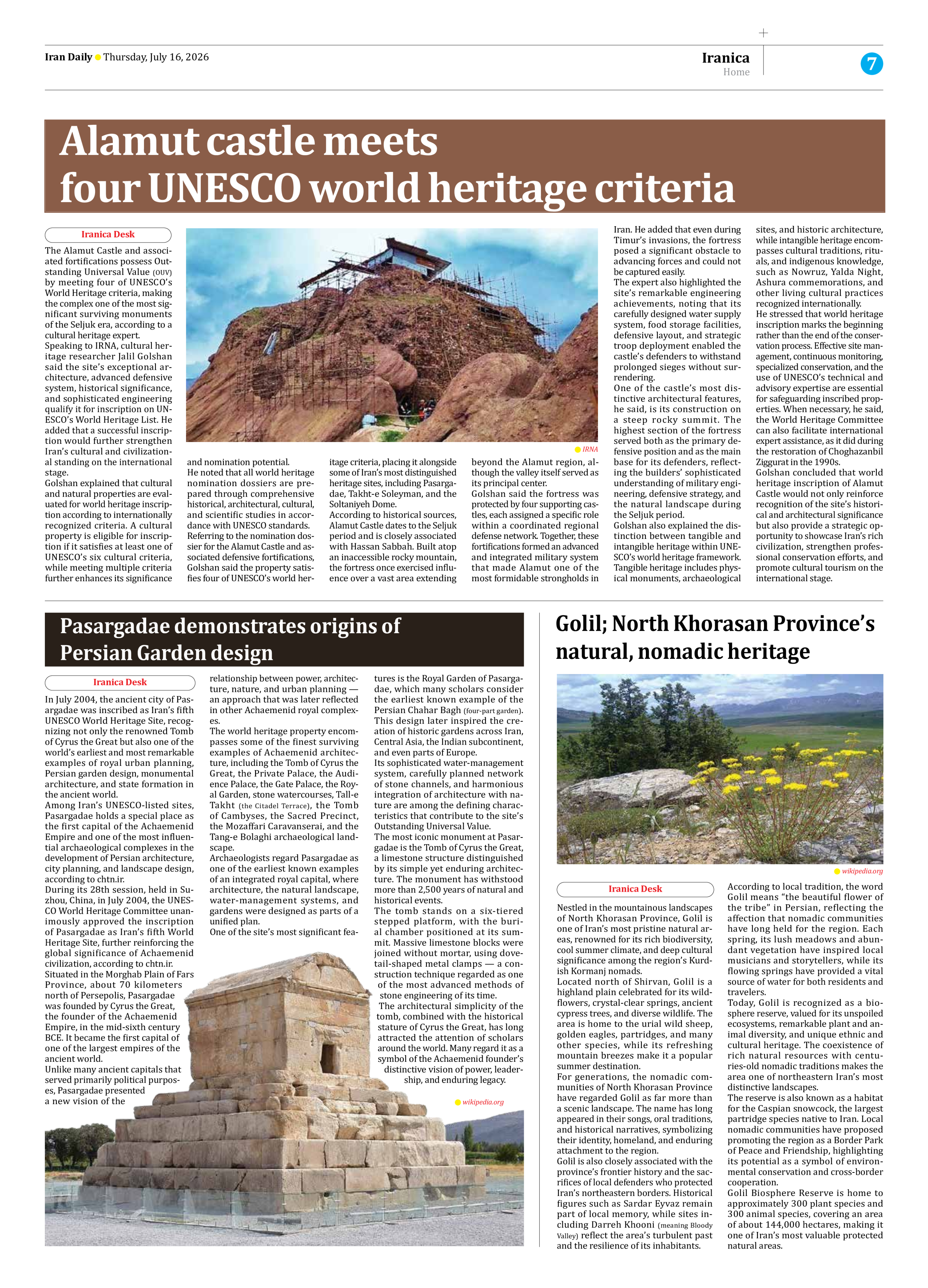
Located north of Shirvan, Golil is a highland plain celebrated for its wildflowers, crystal-clear springs, ancient cypress trees, and diverse wildlife. The area is home to the urial wild sheep, golden eagles, partridges, and many other species, while its refreshing mountain breezes make it a popular summer destination.
For generations, the nomadic communities of North Khorasan Province have regarded Golil as far more than a scenic landscape. The name has long appeared in their songs, oral traditions, and historical narratives, symbolizing their identity, homeland, and enduring attachment to the region.
Golil is also closely associated with the province’s frontier history and the sacrifices of local defenders who protected Iran’s northeastern borders. Historical figures such as Sardar Eyvaz remain part of local memory, while sites including Darreh Khooni (meaning Bloody Valley) reflect the area’s turbulent past and the resilience of its inhabitants.
According to local tradition, the word Golil means “the beautiful flower of the tribe” in Persian, reflecting the affection that nomadic communities have long held for the region. Each spring, its lush meadows and abundant vegetation have inspired local musicians and storytellers, while its flowing springs have provided a vital source of water for both residents and travelers.
Today, Golil is recognized as a biosphere reserve, valued for its unspoiled ecosystems, remarkable plant and animal diversity, and unique ethnic and cultural heritage. The coexistence of rich natural resources with centuries-old nomadic traditions makes the area one of northeastern Iran’s most distinctive landscapes.
The reserve is also known as a habitat for the Caspian snowcock, the largest partridge species native to Iran. Local nomadic communities have proposed promoting the region as a Border Park of Peace and Friendship, highlighting its potential as a symbol of environmental conservation and cross-border cooperation.
Golil Biosphere Reserve is home to approximately 300 plant species and 300 animal species, covering an area of about 144,000 hectares, making it one of Iran’s most valuable protected natural areas.