







Kazakh logistics hub at Iran’s port to bolster regional supply chains
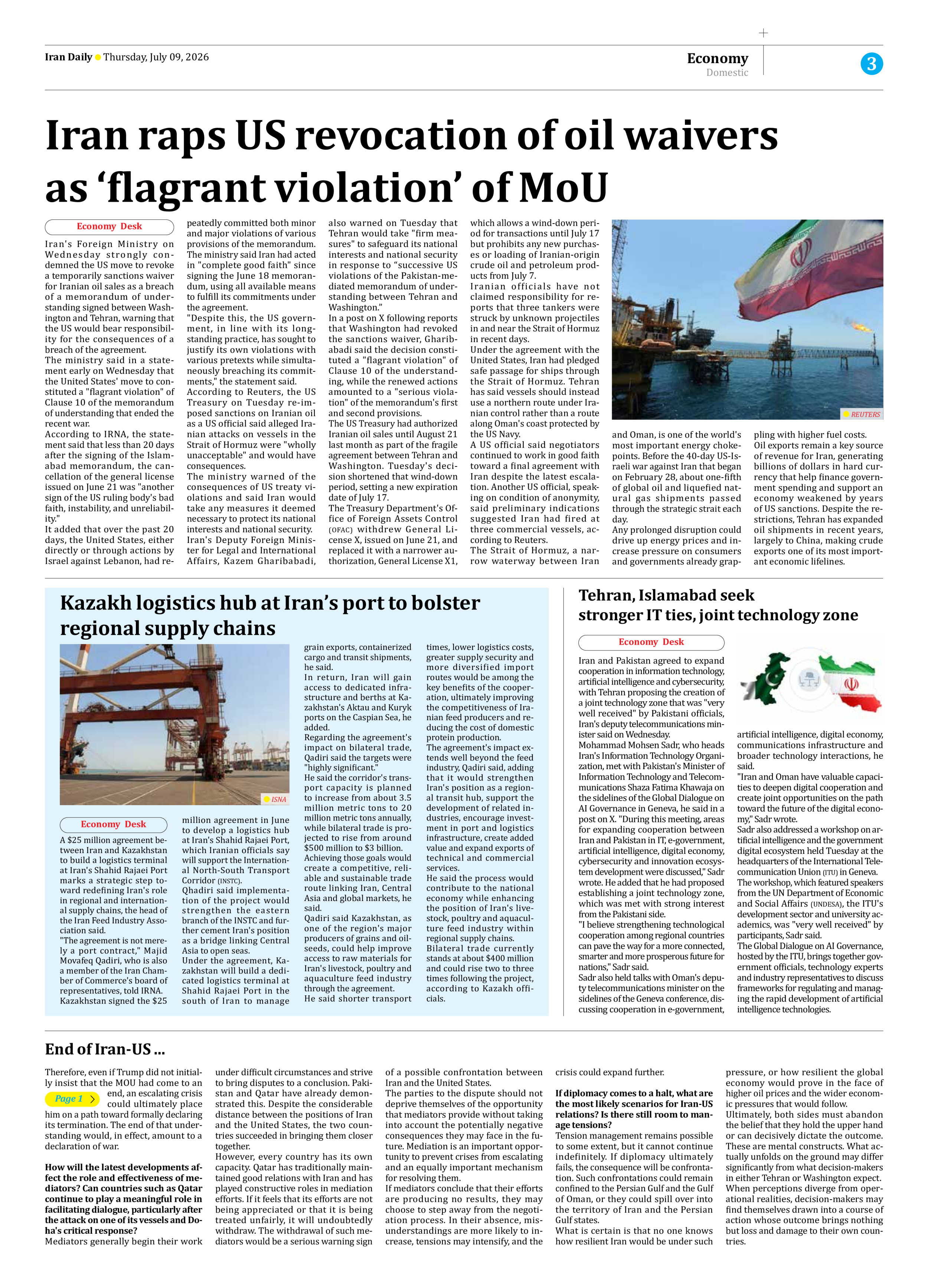
A $25 million agreement between Iran and Kazakhstan to build a logistics terminal at Iran's Shahid Rajaei Port marks a strategic step toward redefining Iran's role in regional and international supply chains, the head of the Iran Feed Industry Association said.
"The agreement is not merely a port contract," Majid Movafeq Qadiri, who is also a member of the Iran Chamber of Commerce's board of representatives, told IRNA.
Kazakhstan signed the $25 million agreement in June to develop a logistics hub at Iran's Shahid Rajaei Port, which Iranian officials say will support the International North-South Transport Corridor (INSTC).
Qhadiri said implementation of the project would strengthen the eastern branch of the INSTC and further cement Iran's position as a bridge linking Central Asia to open seas.
Under the agreement, Kazakhstan will build a dedicated logistics terminal at Shahid Rajaei Port in the south of Iran to manage grain exports, containerized cargo and transit shipments, he said.
In return, Iran will gain access to dedicated infrastructure and berths at Kazakhstan's Aktau and Kuryk ports on the Caspian Sea, he added.
Regarding the agreement's impact on bilateral trade, Qadiri said the targets were "highly significant."
He said the corridor's transport capacity is planned to increase from about 3.5 million metric tons to 20 million metric tons annually, while bilateral trade is projected to rise from around $500 million to $3 billion.
Achieving those goals would create a competitive, reliable and sustainable trade route linking Iran, Central Asia and global markets, he said.
Qadiri said Kazakhstan, as one of the region's major producers of grains and oilseeds, could help improve access to raw materials for Iran's livestock, poultry and aquaculture feed industry through the agreement.
He said shorter transport times, lower logistics costs, greater supply security and more diversified import routes would be among the key benefits of the cooperation, ultimately improving the competitiveness of Iranian feed producers and reducing the cost of domestic protein production.
The agreement's impact extends well beyond the feed industry, Qadiri said, adding that it would strengthen Iran's position as a regional transit hub, support the development of related industries, encourage investment in port and logistics infrastructure, create added value and expand exports of technical and commercial services.
He said the process would contribute to the national economy while enhancing the position of Iran's livestock, poultry and aquaculture feed industry within regional supply chains.
Bilateral trade currently stands at about $400 million and could rise two to three times following the project, according to Kazakh officials.