







Qerveh village blends heritage with sustainable tourism
Across the vast landscape of Zanjan Province, on the outskirts of Abhar, lies a village where time seems to have stood still. The historic village of Qerveh is a perfect example of the harmonious coexistence of Iranian architectural ingenuity and a mountainous natural setting.
Today, the village has become one of the region’s most attractive tourism destinations, not only because of its unique historical monuments but also due to its pioneering role in revitalizing deteriorated areas and promoting sustainable tourism.
The most distinctive feature of Qerveh is its rock-cut architecture. In this style, ancient craftsmen and builders, with a deep understanding of the environmental potential, carved their living and service spaces out of massive rocks.
In addition to its technical features in terms of sustainability and natural insulation, this architecture has created a visual spectacle that inspires admiration in every visitor. The houses, which appear to have grown from the heart of the mountain, are a testament to the resilience and adaptability of the people of this land to their geographical conditions.
At the heart of this historic village stand two prominent monuments that narrate the history and culture of its inhabitants:
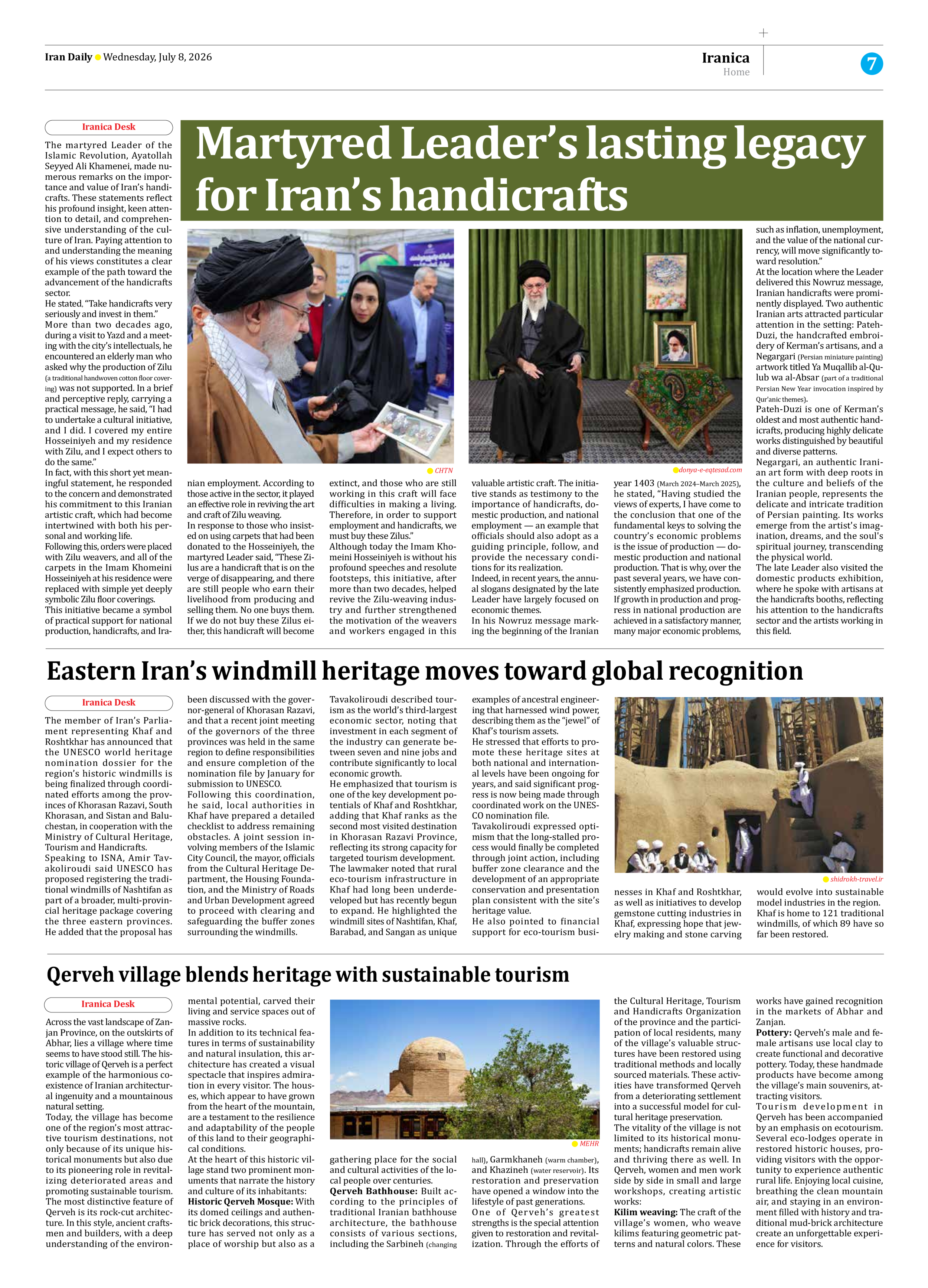
Historic Qerveh Mosque: With its domed ceilings and authentic brick decorations, this structure has served not only as a place of worship but also as a gathering place for the social and cultural activities of the local people over centuries.
Qerveh Bathhouse: Built according to the principles of traditional Iranian bathhouse architecture, the bathhouse consists of various sections, including the Sarbineh (changing hall), Garmkhaneh (warm chamber), and Khazineh (water reservoir). Its restoration and preservation have opened a window into the lifestyle of past generations.
One of Qerveh’s greatest strengths is the special attention given to restoration and revitalization. Through the efforts of the Cultural Heritage, Tourism and Handicrafts Organization of the province and the participation of local residents, many of the village’s valuable structures have been restored using traditional methods and locally sourced materials. These activities have transformed Qerveh from a deteriorating settlement into a successful model for cultural heritage preservation.
The vitality of the village is not limited to its historical monuments; handicrafts remain alive and thriving there as well. In Qerveh, women and men work side by side in small and large workshops, creating artistic works:
Kilim weaving: The craft of the village’s women, who weave kilims featuring geometric patterns and natural colors. These works have gained recognition in the markets of Abhar and Zanjan.
Pottery: Qerveh’s male and female artisans use local clay to create functional and decorative pottery. Today, these handmade products have become among the village’s main souvenirs, attracting visitors.
Tourism development in Qerveh has been accompanied by an emphasis on ecotourism. Several eco-lodges operate in restored historic houses, providing visitors with the opportunity to experience authentic rural life. Enjoying local cuisine, breathing the clean mountain air, and staying in an environment filled with history and traditional mud-brick architecture create an unforgettable experience for visitors.