





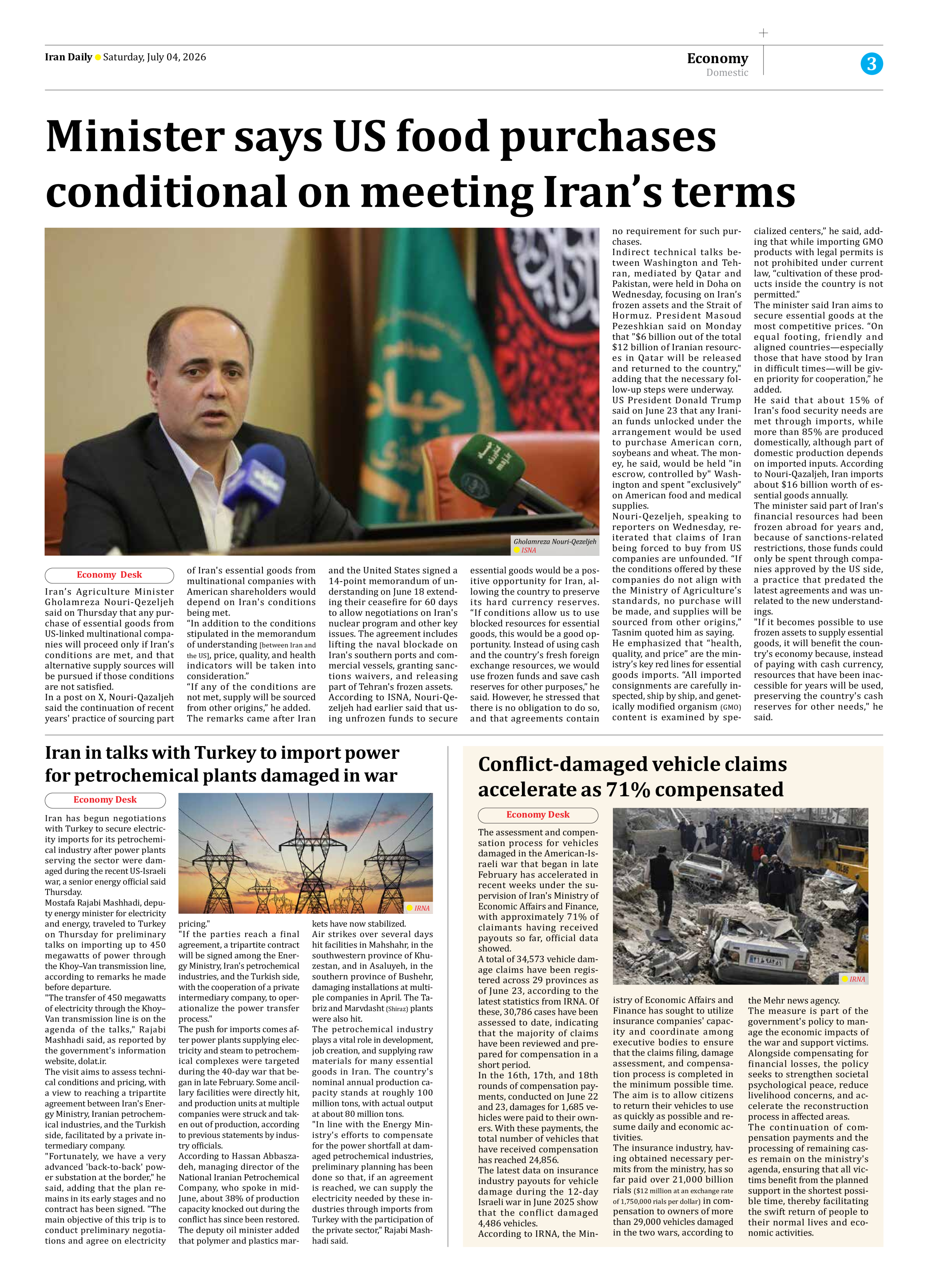


Conflict-damaged vehicle claims accelerate as 71% compensated
The assessment and compensation process for vehicles damaged in the American-Israeli war that began in late February has accelerated in recent weeks under the supervision of Iran's Ministry of Economic Affairs and Finance, with approximately 71% of claimants having received payouts so far, official data showed.
A total of 34,573 vehicle damage claims have been registered across 29 provinces as of June 23, according to the latest statistics from IRNA. Of these, 30,786 cases have been assessed to date, indicating that the majority of claims have been reviewed and prepared for compensation in a short period.
In the 16th, 17th, and 18th rounds of compensation payments, conducted on June 22 and 23, damages for 1,685 vehicles were paid to their owners. With these payments, the total number of vehicles that have received compensation has reached 24,856.
The latest data on insurance industry payouts for vehicle damage during the 12-day Israeli war in June 2025 show that the conflict damaged 4,486 vehicles.
According to IRNA, the Ministry of Economic Affairs and Finance has sought to utilize insurance companies' capacity and coordinate among executive bodies to ensure that the claims filing, damage assessment, and compensation process is completed in the minimum possible time. The aim is to allow citizens to return their vehicles to use as quickly as possible and resume daily and economic activities.
The insurance industry, having obtained necessary permits from the ministry, has so far paid over 21,000 billion rials ($12 million at an exchange rate of 1,750,000 rials per dollar) in compensation to owners of more than 29,000 vehicles damaged in the two wars, according to the Mehr news agency.
The measure is part of the government's policy to manage the economic impacts of the war and support victims. Alongside compensating for financial losses, the policy seeks to strengthen societal psychological peace, reduce livelihood concerns, and accelerate the reconstruction process in affected areas.
The continuation of compensation payments and the processing of remaining cases remain on the ministry's agenda, ensuring that all victims benefit from the planned support in the shortest possible time, thereby facilitating the swift return of people to their normal lives and economic activities.