







Takht-e Soleyman sees strong spring tourism
The director of the Takht-e Soleyman World Heritage Site in Takab, West Azarbaijan Province, announced that 32,643 tourists visited the historic complex during the first quarter of the Iranian year (March 21–June 21, 2026).
Afrasiab Geravand said that keeping the site open during the recent war was aimed at fostering hope, peace, national solidarity, and social cohesion. The initiative was well received by visitors and demonstrated that the civilizational and cultural roots of ancient Iran remain resilient and enduring even in times of crisis, according to chtn.ir.
He added that the Takht-e Soleyman World Heritage Site, which contains cultural and historical remains dating from the first millennium BCE to the medieval Islamic period, is one of Iran’s most significant archaeological complexes and is widely known as the “turquoise jewel” of northwestern Iran.
Referring to the site’s geographical location, Geravand noted that Takht-e Soleyman is situated 40 kilometers northeast of Takab in West Azarbaijan Province. The site was inscribed on UNESCO’s World Heritage List in 2003 as Iran’s fourth registered World Heritage property.
He further stated that, in addition to exploring the historical monuments within the complex, visitors can enjoy handicraft stalls, the region’s mineral springs and thermal waters, and Qeynarjeh Waterfall, while gaining a deeper understanding of the area’s natural and cultural attractions.
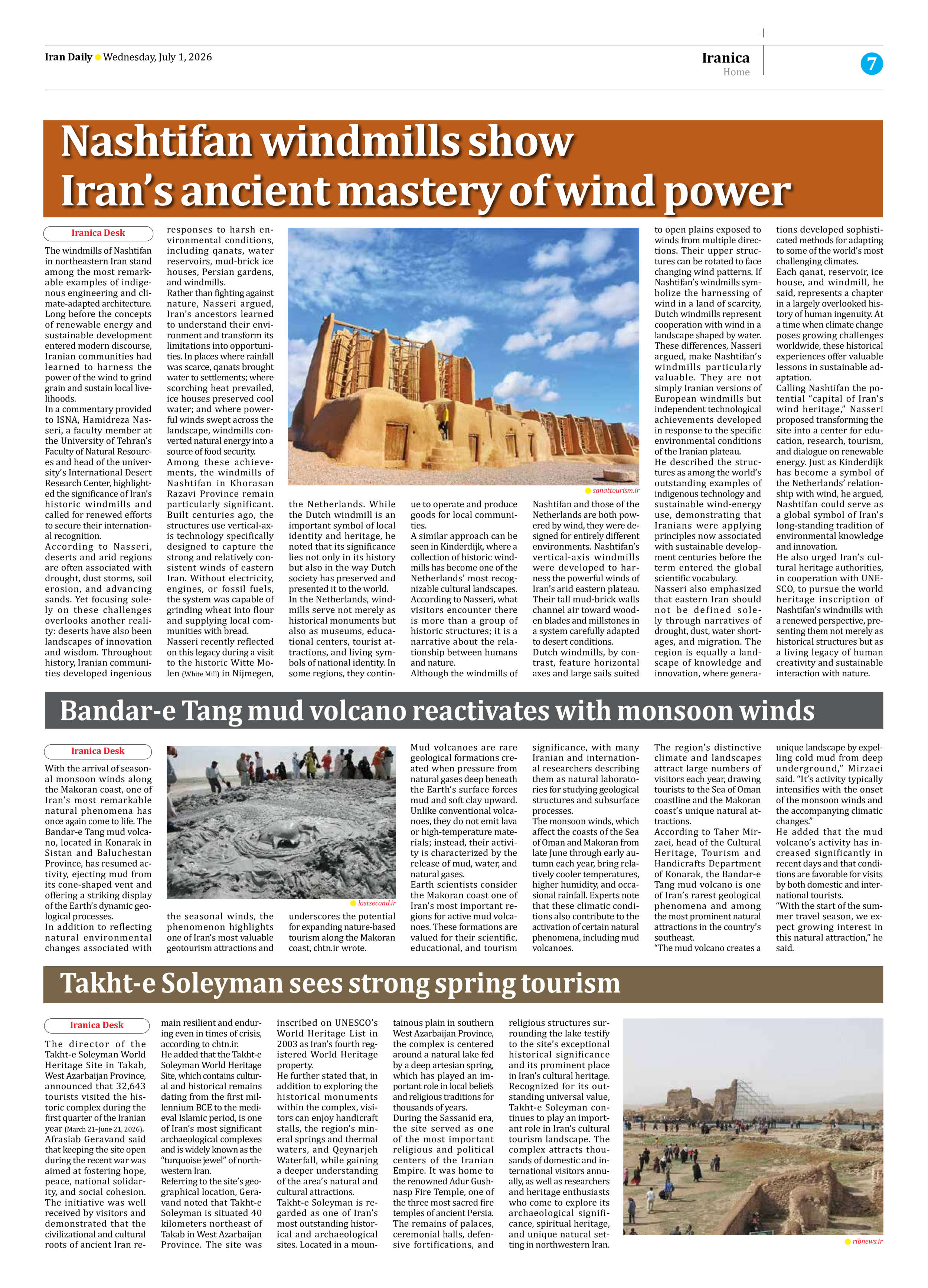
Takht-e Soleyman is regarded as one of Iran’s most outstanding historical and archaeological sites. Located in a mountainous plain in southern West Azarbaijan Province, the complex is centered around a natural lake fed by a deep artesian spring, which has played an important role in local beliefs and religious traditions for thousands of years.
During the Sassanid era, the site served as one of the most important religious and political centers of the Iranian Empire. It was home to the renowned Adur Gushnasp Fire Temple, one of the three most sacred fire temples of ancient Persia. The remains of palaces, ceremonial halls, defensive fortifications, and religious structures surrounding the lake testify to the site’s exceptional historical significance and its prominent place in Iran’s cultural heritage.
Recognized for its outstanding universal value, Takht-e Soleyman continues to play an important role in Iran’s cultural tourism landscape. The complex attracts thousands of domestic and international visitors annually, as well as researchers and heritage enthusiasts who come to explore its archaeological significance, spiritual heritage, and unique natural setting in northwestern Iran.