







Bandar-e Tang mud volcano reactivates with monsoon winds
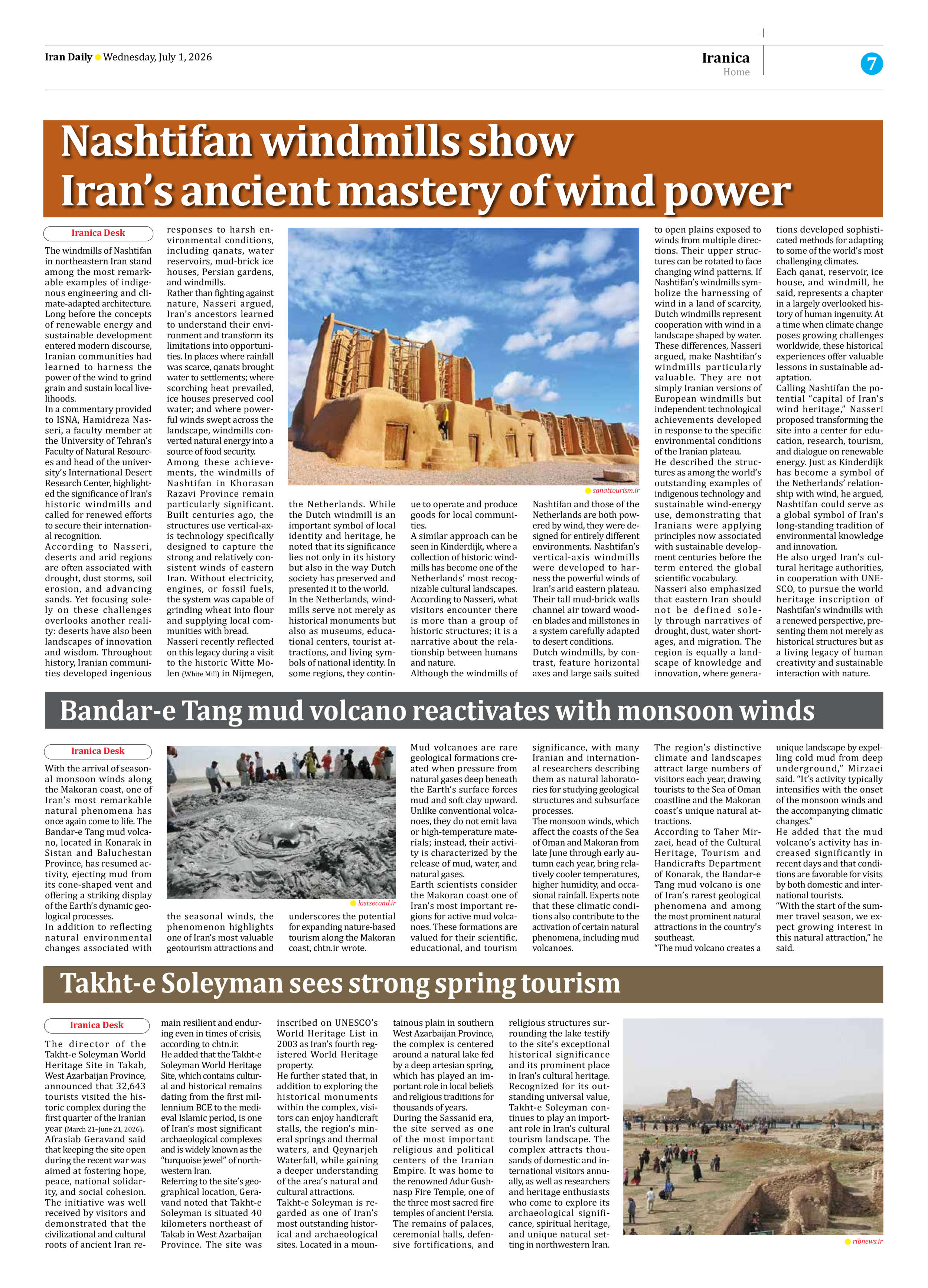
With the arrival of seasonal monsoon winds along the Makoran coast, one of Iran’s most remarkable natural phenomena has once again come to life. The Bandar-e Tang mud volcano, located in Konarak in Sistan and Baluchestan Province, has resumed activity, ejecting mud from its cone-shaped vent and offering a striking display of the Earth’s dynamic geological processes.
In addition to reflecting natural environmental changes associated with the seasonal winds, the phenomenon highlights one of Iran’s most valuable geotourism attractions and underscores the potential for expanding nature-based tourism along the Makoran coast, chtn.ir wrote.
Mud volcanoes are rare geological formations created when pressure from natural gases deep beneath the Earth’s surface forces mud and soft clay upward. Unlike conventional volcanoes, they do not emit lava or high-temperature materials; instead, their activity is characterized by the release of mud, water, and natural gases.
Earth scientists consider the Makoran coast one of Iran’s most important regions for active mud volcanoes. These formations are valued for their scientific, educational, and tourism significance, with many Iranian and international researchers describing them as natural laboratories for studying geological structures and subsurface processes.
The monsoon winds, which affect the coasts of the Sea of Oman and Makoran from late June through early autumn each year, bring relatively cooler temperatures, higher humidity, and occasional rainfall. Experts note that these climatic conditions also contribute to the activation of certain natural phenomena, including mud volcanoes.
The region’s distinctive climate and landscapes attract large numbers of visitors each year, drawing tourists to the Sea of Oman coastline and the Makoran coast’s unique natural attractions.
According to Taher Mirzaei, head of the Cultural Heritage, Tourism and Handicrafts Department of Konarak, the Bandar-e Tang mud volcano is one of Iran’s rarest geological phenomena and among the most prominent natural attractions in the country’s southeast.
“The mud volcano creates a unique landscape by expelling cold mud from deep underground,” Mirzaei said. “It’s activity typically intensifies with the onset of the monsoon winds and the accompanying climatic changes.”
He added that the mud volcano’s activity has increased significantly in recent days and that conditions are favorable for visits by both domestic and international tourists.
“With the start of the summer travel season, we expect growing interest in this natural attraction,” he said.