





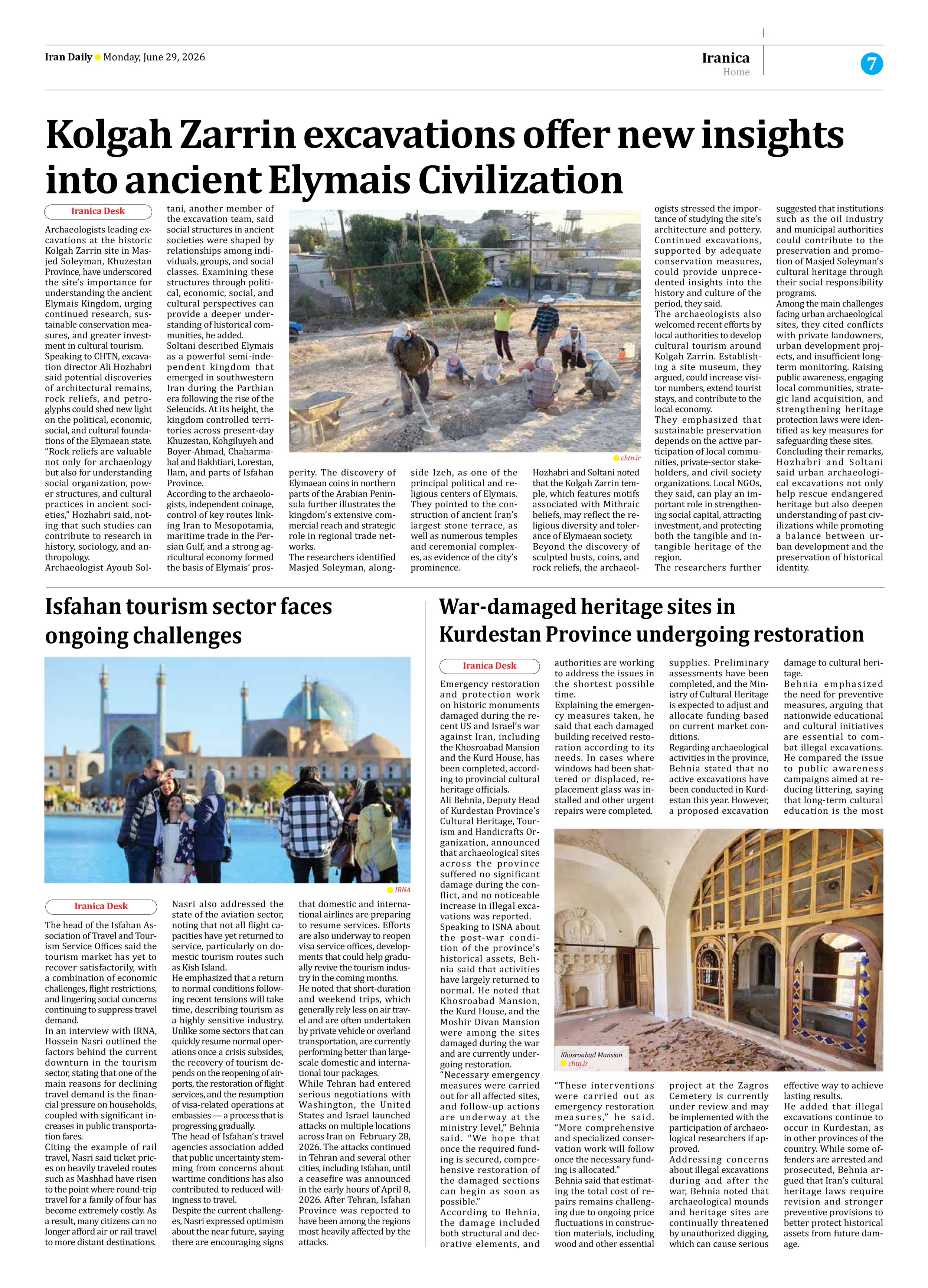


Isfahan tourism sector faces ongoing challenges
The head of the Isfahan Association of Travel and Tourism Service Offices said the tourism market has yet to recover satisfactorily, with a combination of economic challenges, flight restrictions, and lingering social concerns continuing to suppress travel demand.
In an interview with IRNA, Hossein Nasri outlined the factors behind the current downturn in the tourism sector, stating that one of the main reasons for declining travel demand is the financial pressure on households, coupled with significant increases in public transportation fares.
Citing the example of rail travel, Nasri said ticket prices on heavily traveled routes such as Mashhad have risen to the point where round-trip travel for a family of four has become extremely costly. As a result, many citizens can no longer afford air or rail travel to more distant destinations.
Nasri also addressed the state of the aviation sector, noting that not all flight capacities have yet returned to service, particularly on domestic tourism routes such as Kish Island.
He emphasized that a return to normal conditions following recent tensions will take time, describing tourism as a highly sensitive industry. Unlike some sectors that can quickly resume normal operations once a crisis subsides, the recovery of tourism depends on the reopening of airports, the restoration of flight services, and the resumption of visa-related operations at embassies — a process that is progressing gradually.
The head of Isfahan’s travel agencies association added that public uncertainty stemming from concerns about wartime conditions has also contributed to reduced willingness to travel.
Despite the current challenges, Nasri expressed optimism about the near future, saying there are encouraging signs that domestic and international airlines are preparing to resume services. Efforts are also underway to reopen visa service offices, developments that could help gradually revive the tourism industry in the coming months.
He noted that short-duration and weekend trips, which generally rely less on air travel and are often undertaken by private vehicle or overland transportation, are currently performing better than large-scale domestic and international tour packages.
While Tehran had entered serious negotiations with Washington, the United States and Israel launched attacks on multiple locations across Iran on February 28, 2026. The attacks continued in Tehran and several other cities, including Isfahan, until a ceasefire was announced in the early hours of April 8, 2026. After Tehran, Isfahan Province was reported to have been among the regions most heavily affected by the attacks.