







War-damaged heritage sites in Kurdestan Province undergoing restoration
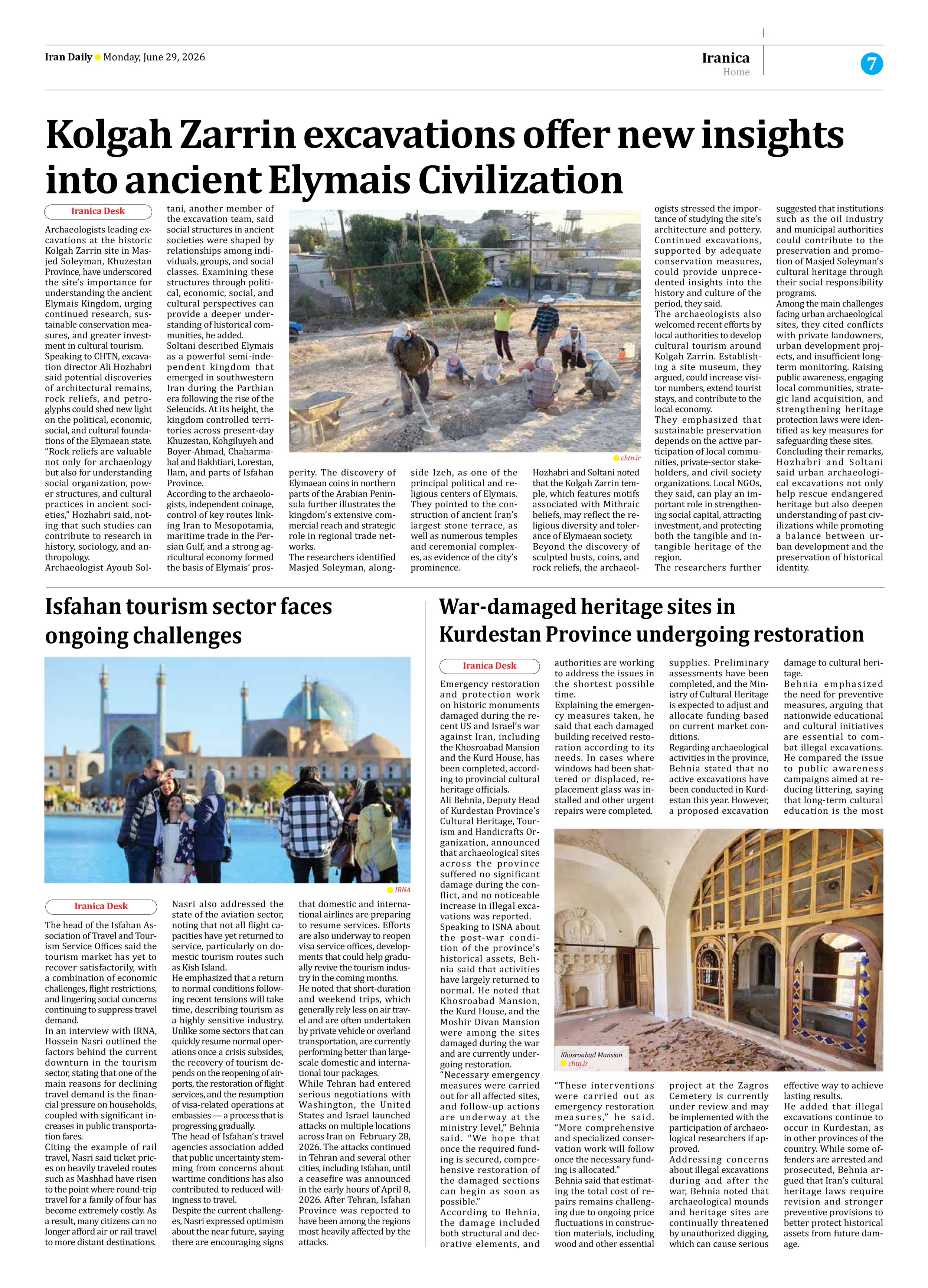
Emergency restoration and protection work on historic monuments damaged during the recent US and Israel’s war against Iran, including the Khosroabad Mansion and the Kurd House, has been completed, according to provincial cultural heritage officials.
Ali Behnia, Deputy Head of Kurdestan Province’s Cultural Heritage, Tourism and Handicrafts Organization, announced that archaeological sites across the province suffered no significant damage during the conflict, and no noticeable increase in illegal excavations was reported.
Speaking to ISNA about the post-war condition of the province’s historical assets, Behnia said that activities have largely returned to normal. He noted that Khosroabad Mansion, the Kurd House, and the Moshir Divan Mansion were among the sites damaged during the war and are currently undergoing restoration.
“Necessary emergency measures were carried out for all affected sites, and follow-up actions are underway at the ministry level,” Behnia said. “We hope that once the required funding is secured, comprehensive restoration of the damaged sections can begin as soon as possible.”
According to Behnia, the damage included both structural and decorative elements, and authorities are working to address the issues in the shortest possible time.
Explaining the emergency measures taken, he said that each damaged building received restoration according to its needs. In cases where windows had been shattered or displaced, replacement glass was installed and other urgent repairs were completed.
“These interventions were carried out as emergency restoration measures,” he said. “More comprehensive and specialized conservation work will follow once the necessary funding is allocated.”
Behnia said that estimating the total cost of repairs remains challenging due to ongoing price fluctuations in construction materials, including wood and other essential supplies. Preliminary assessments have been completed, and the Ministry of Cultural Heritage is expected to adjust and allocate funding based on current market conditions.
Regarding archaeological activities in the province, Behnia stated that no active excavations have been conducted in Kurdestan this year. However, a proposed excavation project at the Zagros Cemetery is currently under review and may be implemented with the participation of archaeological researchers if approved.
Addressing concerns about illegal excavations during and after the war, Behnia noted that archaeological mounds and heritage sites are continually threatened by unauthorized digging, which can cause serious damage to cultural heritage.
Behnia emphasized the need for preventive measures, arguing that nationwide educational and cultural initiatives are essential to combat illegal excavations. He compared the issue to public awareness campaigns aimed at reducing littering, saying that long-term cultural education is the most effective way to achieve lasting results.
He added that illegal excavations continue to occur in Kurdestan, as in other provinces of the country. While some offenders are arrested and prosecuted, Behnia argued that Iran’s cultural heritage laws require revision and stronger preventive provisions to better protect historical assets from future damage.