







Cultural continuity, economic potential in Izeh kilim weaving
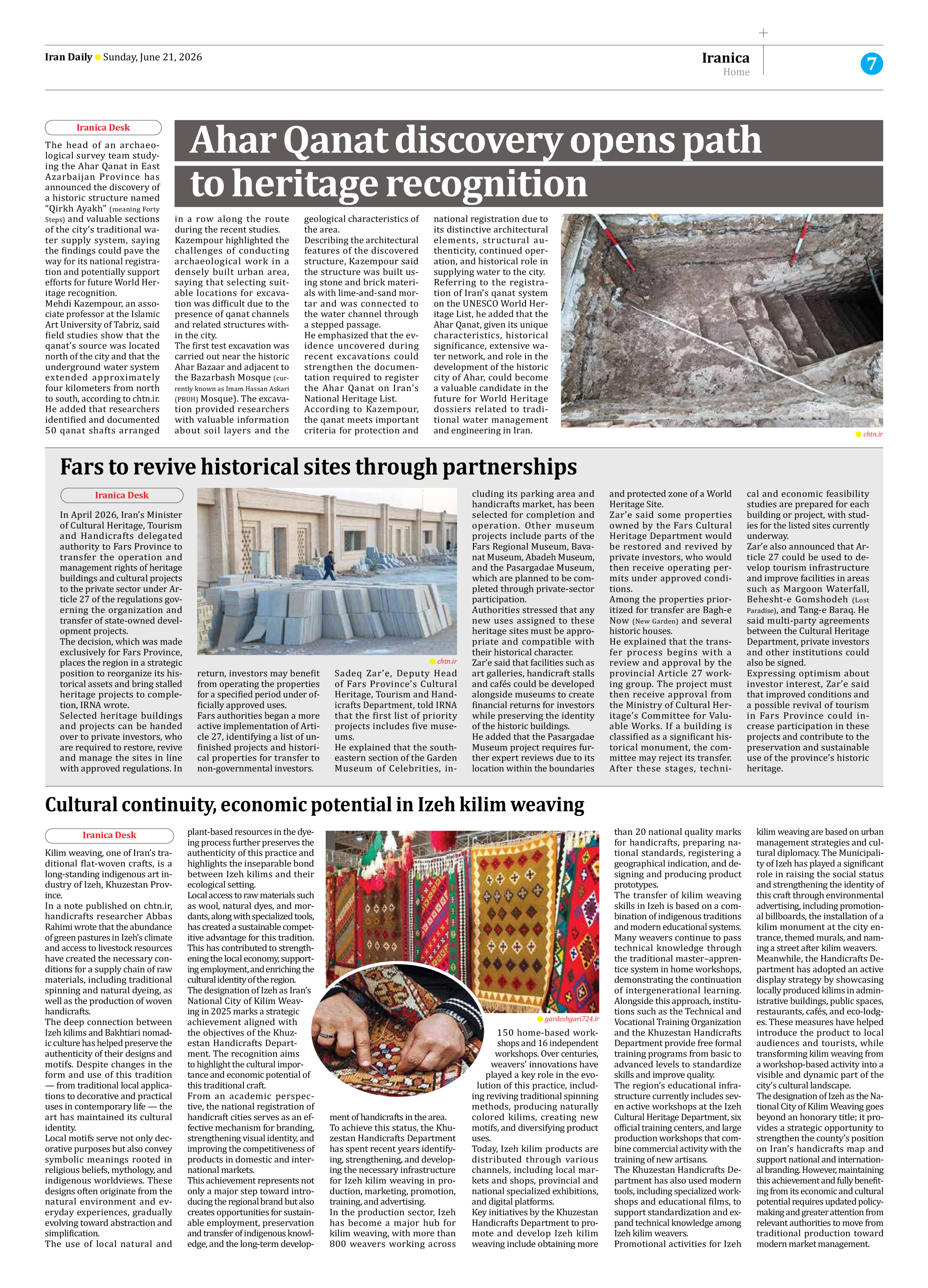
Kilim weaving, one of Iran’s traditional flat-woven crafts, is a long-standing indigenous art industry of Izeh, Khuzestan Province.
In a note published on chtn.ir, handicrafts researcher Abbas Rahimi wrote that the abundance of green pastures in Izeh’s climate and access to livestock resources have created the necessary conditions for a supply chain of raw materials, including traditional spinning and natural dyeing, as well as the production of woven handicrafts.
The deep connection between Izeh kilims and Bakhtiari nomadic culture has helped preserve the authenticity of their designs and motifs. Despite changes in the form and use of this tradition — from traditional local applications to decorative and practical uses in contemporary life — the art has maintained its cultural identity.
Local motifs serve not only decorative purposes but also convey symbolic meanings rooted in religious beliefs, mythology, and indigenous worldviews. These designs often originate from the natural environment and everyday experiences, gradually evolving toward abstraction and simplification.
The use of local natural and plant-based resources in the dyeing process further preserves the authenticity of this practice and highlights the inseparable bond between Izeh kilims and their ecological setting.
Local access to raw materials such as wool, natural dyes, and mordants, along with specialized tools, has created a sustainable competitive advantage for this tradition. This has contributed to strengthening the local economy, supporting employment, and enriching the cultural identity of the region.
The designation of Izeh as Iran’s National City of Kilim Weaving in 2025 marks a strategic achievement aligned with the objectives of the Khuzestan Handicrafts Department. The recognition aims to highlight the cultural importance and economic potential of this traditional craft.
From an academic perspective, the national registration of handicraft cities serves as an effective mechanism for branding, strengthening visual identity, and improving the competitiveness of products in domestic and international markets.
This achievement represents not only a major step toward introducing the regional brand but also creates opportunities for sustainable employment, preservation and transfer of indigenous knowledge, and the long-term development of handicrafts in the area.
To achieve this status, the Khuzestan Handicrafts Department has spent recent years identifying, strengthening, and developing the necessary infrastructure for Izeh kilim weaving in production, marketing, promotion, training, and advertising.
In the production sector, Izeh has become a major hub for kilim weaving, with more than 800 weavers working across 150 home-based workshops and 16 independent workshops. Over centuries, weavers’ innovations have played a key role in the evolution of this practice, including reviving traditional spinning methods, producing naturally colored kilims, creating new motifs, and diversifying product uses.
Today, Izeh kilim products are distributed through various channels, including local markets and shops, provincial and national specialized exhibitions, and digital platforms.
Key initiatives by the Khuzestan Handicrafts Department to promote and develop Izeh kilim weaving include obtaining more than 20 national quality marks for handicrafts, preparing national standards, registering a geographical indication, and designing and producing product prototypes.
The transfer of kilim weaving skills in Izeh is based on a combination of indigenous traditions and modern educational systems. Many weavers continue to pass technical knowledge through the traditional master–apprentice system in home workshops, demonstrating the continuation of intergenerational learning. Alongside this approach, institutions such as the Technical and Vocational Training Organization and the Khuzestan Handicrafts Department provide free formal training programs from basic to advanced levels to standardize skills and improve quality.
The region’s educational infrastructure currently includes seven active workshops at the Izeh Cultural Heritage Department, six official training centers, and large production workshops that combine commercial activity with the training of new artisans.
The Khuzestan Handicrafts Department has also used modern tools, including specialized workshops and educational films, to support standardization and expand technical knowledge among Izeh kilim weavers.
Promotional activities for Izeh kilim weaving are based on urban management strategies and cultural diplomacy. The Municipality of Izeh has played a significant role in raising the social status and strengthening the identity of this craft through environmental advertising, including promotional billboards, the installation of a kilim monument at the city entrance, themed murals, and naming a street after kilim weavers.
Meanwhile, the Handicrafts Department has adopted an active display strategy by showcasing locally produced kilims in administrative buildings, public spaces, restaurants, cafés, and eco-lodges. These measures have helped introduce the product to local audiences and tourists, while transforming kilim weaving from a workshop-based activity into a visible and dynamic part of the city’s cultural landscape.
The designation of Izeh as the National City of Kilim Weaving goes beyond an honorary title; it provides a strategic opportunity to strengthen the county’s position on Iran’s handicrafts map and support national and international branding. However, maintaining this achievement and fully benefiting from its economic and cultural potential requires updated policymaking and greater attention from relevant authorities to move from traditional production toward modern market management.