







Fars to revive historical sites through partnerships
In April 2026, Iran’s Minister of Cultural Heritage, Tourism and Handicrafts delegated authority to Fars Province to transfer the operation and management rights of heritage buildings and cultural projects to the private sector under Article 27 of the regulations governing the organization and transfer of state-owned development projects.
The decision, which was made exclusively for Fars Province, places the region in a strategic position to reorganize its historical assets and bring stalled heritage projects to completion, IRNA wrote.
Selected heritage buildings and projects can be handed over to private investors, who are required to restore, revive and manage the sites in line with approved regulations. In return, investors may benefit from operating the properties for a specified period under officially approved uses.
Fars authorities began a more active implementation of Article 27, identifying a list of unfinished projects and historical properties for transfer to non-governmental investors.
Sadeq Zar’e, Deputy Head of Fars Province’s Cultural Heritage, Tourism and Handicrafts Department, told IRNA that the first list of priority projects includes five museums.
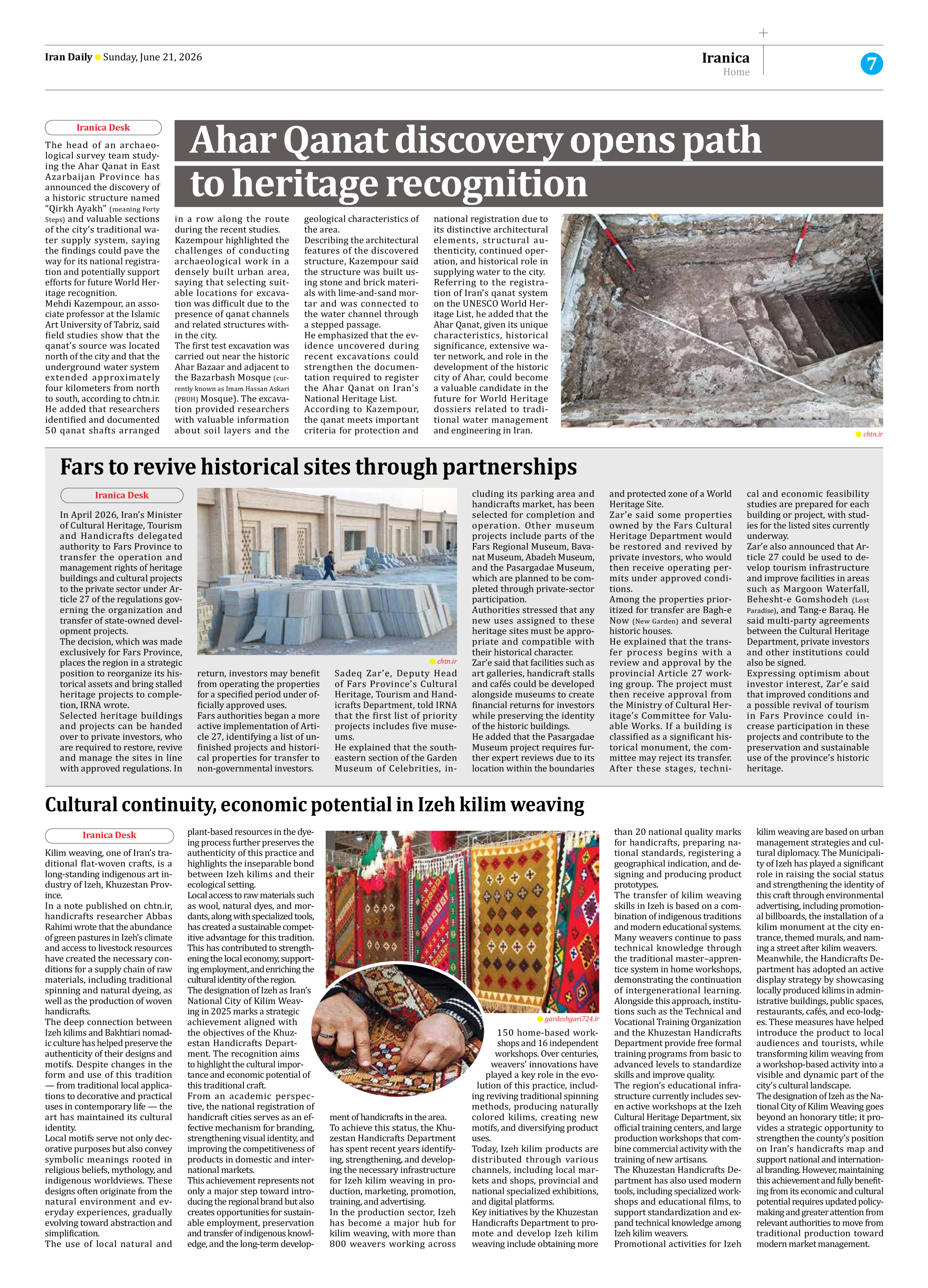
He explained that the southeastern section of the Garden Museum of Celebrities, including its parking area and handicrafts market, has been selected for completion and operation. Other museum projects include parts of the Fars Regional Museum, Bavanat Museum, Abadeh Museum, and the Pasargadae Museum, which are planned to be completed through private-sector participation.
Authorities stressed that any new uses assigned to these heritage sites must be appropriate and compatible with their historical character.
Zar’e said that facilities such as art galleries, handicraft stalls and cafés could be developed alongside museums to create financial returns for investors while preserving the identity of the historic buildings.
He added that the Pasargadae Museum project requires further expert reviews due to its location within the boundaries and protected zone of a World Heritage Site.
Zar’e said some properties owned by the Fars Cultural Heritage Department would be restored and revived by private investors, who would then receive operating permits under approved conditions.
Among the properties prioritized for transfer are Bagh-e Now (New Garden) and several historic houses.
He explained that the transfer process begins with a review and approval by the provincial Article 27 working group. The project must then receive approval from the Ministry of Cultural Heritage’s Committee for Valuable Works. If a building is classified as a significant historical monument, the committee may reject its transfer.
After these stages, technical and economic feasibility studies are prepared for each building or project, with studies for the listed sites currently underway.
Zar’e also announced that Article 27 could be used to develop tourism infrastructure and improve facilities in areas such as Margoon Waterfall, Behesht-e Gomshodeh (Lost Paradise), and Tang-e Baraq. He said multi-party agreements between the Cultural Heritage Department, private investors and other institutions could also be signed.
Expressing optimism about investor interest, Zar’e said that improved conditions and a possible revival of tourism in Fars Province could increase participation in these projects and contribute to the preservation and sustainable use of the province’s historic heritage.