







Copy in clipboard...
Ahar Qanat discovery opens path to heritage recognition
Mehdi Kazempour, an associate professor at the Islamic Art University of Tabriz, said field studies show that the qanat’s source was located north of the city and that the underground water system extended approximately four kilometers from north to south, according to chtn.ir.
He added that researchers identified and documented 50 qanat shafts arranged in a row along the route during the recent studies.
Kazempour highlighted the challenges of conducting archaeological work in a densely built urban area, saying that selecting suitable locations for excavation was difficult due to the presence of qanat channels and related structures within the city.
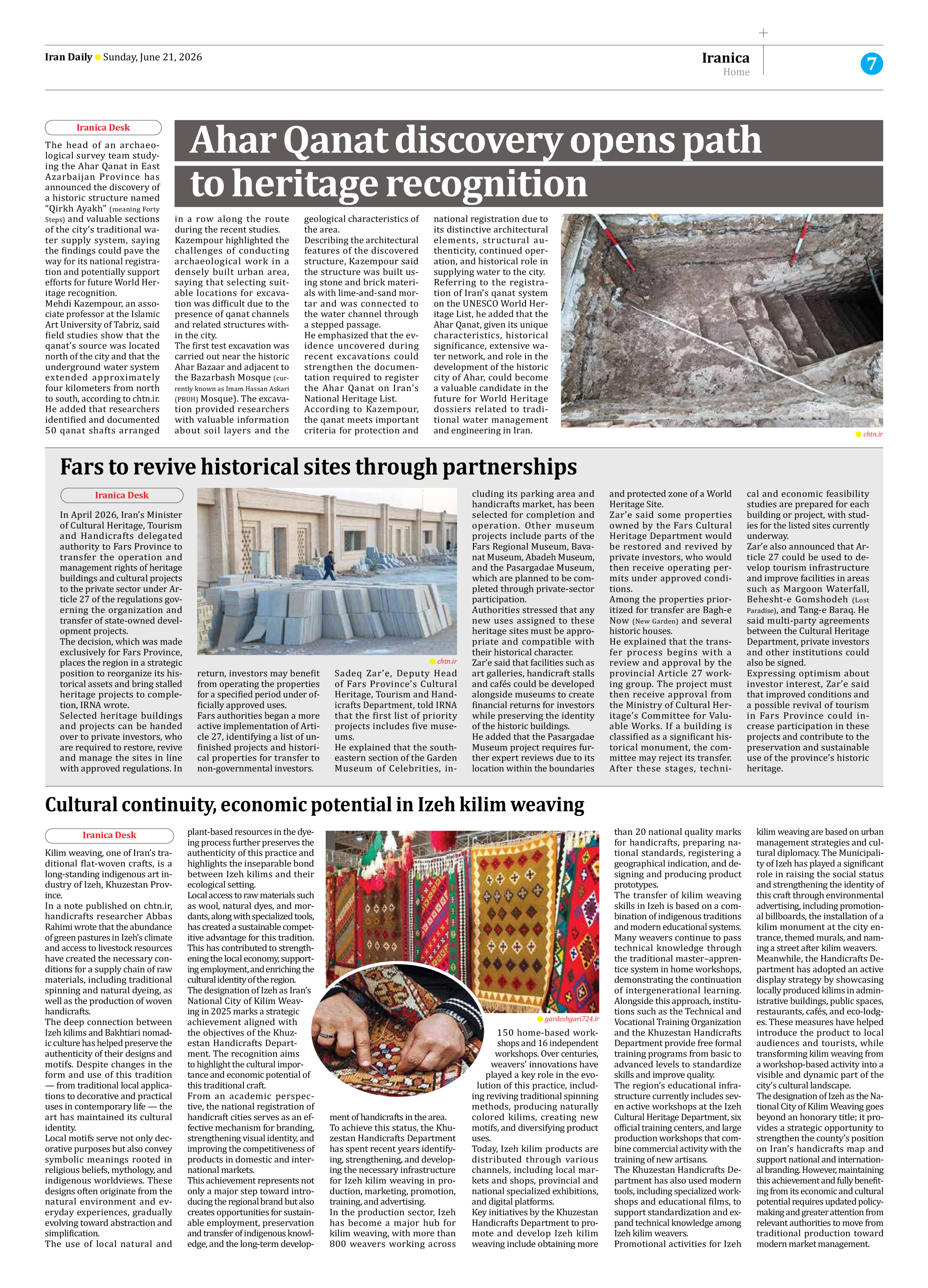
The first test excavation was carried out near the historic Ahar Bazaar and adjacent to the Bazarbash Mosque (currently known as Imam Hassan Askari (PBUH) Mosque). The excavation provided researchers with valuable information about soil layers and the geological characteristics of the area.
Describing the architectural features of the discovered structure, Kazempour said the structure was built using stone and brick materials with lime-and-sand mortar and was connected to the water channel through a stepped passage.
He emphasized that the evidence uncovered during recent excavations could strengthen the documentation required to register the Ahar Qanat on Iran’s National Heritage List.
According to Kazempour, the qanat meets important criteria for protection and national registration due to its distinctive architectural elements, structural authenticity, continued operation, and historical role in supplying water to the city.
Referring to the registration of Iran’s qanat system on the UNESCO World Heritage List, he added that the Ahar Qanat, given its unique characteristics, historical significance, extensive water network, and role in the development of the historic city of Ahar, could become a valuable candidate in the future for World Heritage dossiers related to traditional water management and engineering in Iran.