







CBI urges stronger banking ties with Moscow, more INSTC financing
‘Iran-Russia payment link phase 3 due in two months’
The governor of the Central Bank of Iran (CBI) called on Wednesday for expanded banking cooperation with Russia, urging greater financing capacity for bilateral trade and a stronger role for a Russian bank in supporting a key international transport corridor.
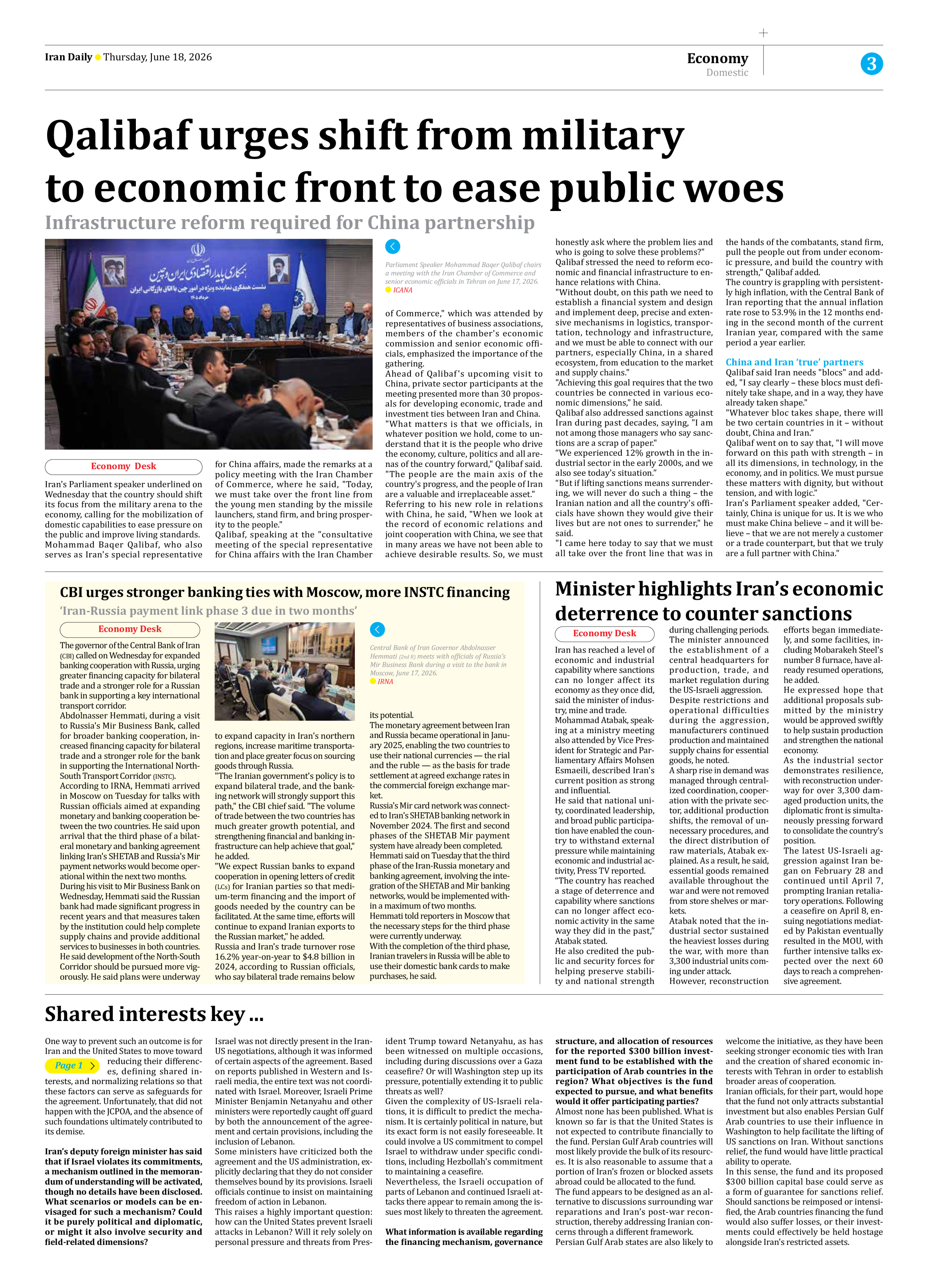
Abdolnasser Hemmati, during a visit to Russia's Mir Business Bank, called for broader banking cooperation, increased financing capacity for bilateral trade and a stronger role for the bank in supporting the International North-South Transport Corridor (INSTC).
According to IRNA, Hemmati arrived in Moscow on Tuesday for talks with Russian officials aimed at expanding monetary and banking cooperation between the two countries. He said upon arrival that the third phase of a bilateral monetary and banking agreement linking Iran's SHETAB and Russia's Mir payment networks would become operational within the next two months.
During his visit to Mir Business Bank on Wednesday, Hemmati said the Russian bank had made significant progress in recent years and that measures taken by the institution could help complete supply chains and provide additional services to businesses in both countries.
He said development of the North-South Corridor should be pursued more vigorously. He said plans were underway to expand capacity in Iran's northern regions, increase maritime transportation and place greater focus on sourcing goods through Russia.
"The Iranian government's policy is to expand bilateral trade, and the banking network will strongly support this path," the CBI chief said. "The volume of trade between the two countries has much greater growth potential, and strengthening financial and banking infrastructure can help achieve that goal," he added.
"We expect Russian banks to expand cooperation in opening letters of credit (LCs) for Iranian parties so that medium-term financing and the import of goods needed by the country can be facilitated. At the same time, efforts will continue to expand Iranian exports to the Russian market," he added.
Russia and Iran's trade turnover rose 16.2% year-on-year to $4.8 billion in 2024, according to Russian officials, who say bilateral trade remains below its potential.
The monetary agreement between Iran and Russia became operational in January 2025, enabling the two countries to use their national currencies — the rial and the ruble — as the basis for trade settlement at agreed exchange rates in the commercial foreign exchange market.
Russia's Mir card network was connected to Iran's SHETAB banking network in November 2024. The first and second phases of the SHETAB Mir payment system have already been completed.
Hemmati said on Tuesday that the third phase of the Iran-Russia monetary and banking agreement, involving the integration of the SHETAB and Mir banking networks, would be implemented within a maximum of two months.
Hemmati told reporters in Moscow that the necessary steps for the third phase were currently underway.
With the completion of the third phase, Iranian travelers in Russia will be able to use their domestic bank cards to make purchases, he said.