







Isfahan draws UNESCO restoration mission after damage to historic landmarks
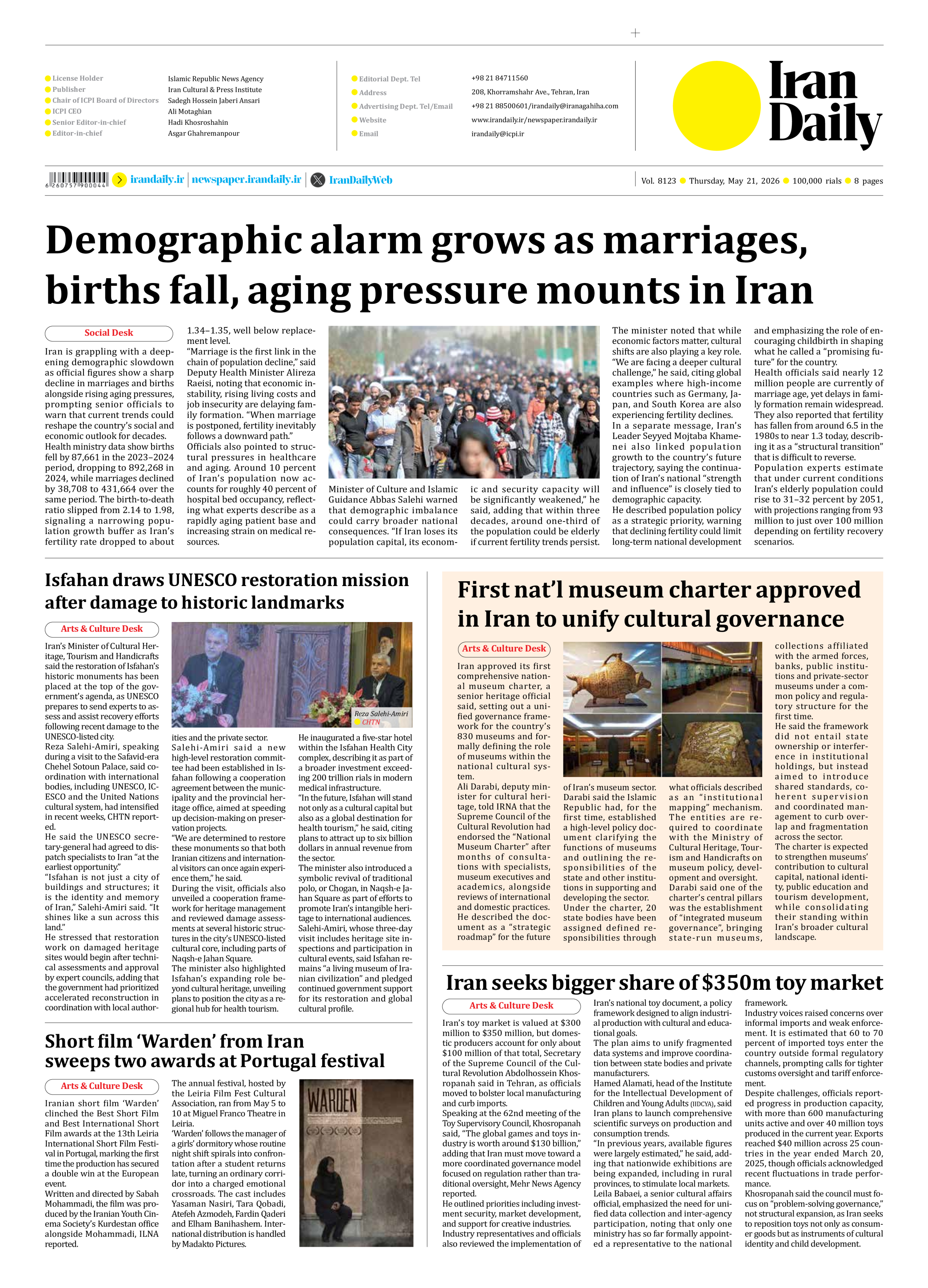
Iran’s Minister of Cultural Heritage, Tourism and Handicrafts said the restoration of Isfahan’s historic monuments has been placed at the top of the government’s agenda, as UNESCO prepares to send experts to assess and assist recovery efforts following recent damage to the UNESCO-listed city.
Reza Salehi-Amiri, speaking during a visit to the Safavid-era Chehel Sotoun Palace, said coordination with international bodies, including UNESCO, ICESCO and the United Nations cultural system, had intensified in recent weeks, CHTN reported.
He said the UNESCO secretary-general had agreed to dispatch specialists to Iran “at the earliest opportunity.”
“Isfahan is not just a city of buildings and structures; it is the identity and memory of Iran,” Salehi-Amiri said. “It shines like a sun across this land.”
He stressed that restoration work on damaged heritage sites would begin after technical assessments and approval by expert councils, adding that the government had prioritized accelerated reconstruction in coordination with local authorities and the private sector.
Salehi-Amiri said a new high-level restoration committee had been established in Isfahan following a cooperation agreement between the municipality and the provincial heritage office, aimed at speeding up decision-making on preservation projects.
“We are determined to restore these monuments so that both Iranian citizens and international visitors can once again experience them,” he said.
During the visit, officials also unveiled a cooperation framework for heritage management and reviewed damage assessments at several historic structures in the city’s UNESCO-listed cultural core, including parts of Naqsh-e Jahan Square.
The minister also highlighted Isfahan’s expanding role beyond cultural heritage, unveiling plans to position the city as a regional hub for health tourism.
He inaugurated a five-star hotel within the Isfahan Health City complex, describing it as part of a broader investment exceeding 200 trillion rials in modern medical infrastructure.
“In the future, Isfahan will stand not only as a cultural capital but also as a global destination for health tourism,” he said, citing plans to attract up to six billion dollars in annual revenue from the sector.
The minister also introduced a symbolic revival of traditional polo, or Chogan, in Naqsh-e Jahan Square as part of efforts to promote Iran’s intangible heritage to international audiences.
Salehi-Amiri, whose three-day visit includes heritage site inspections and participation in cultural events, said Isfahan remains “a living museum of Iranian civilization” and pledged continued government support for its restoration and global cultural profile.