





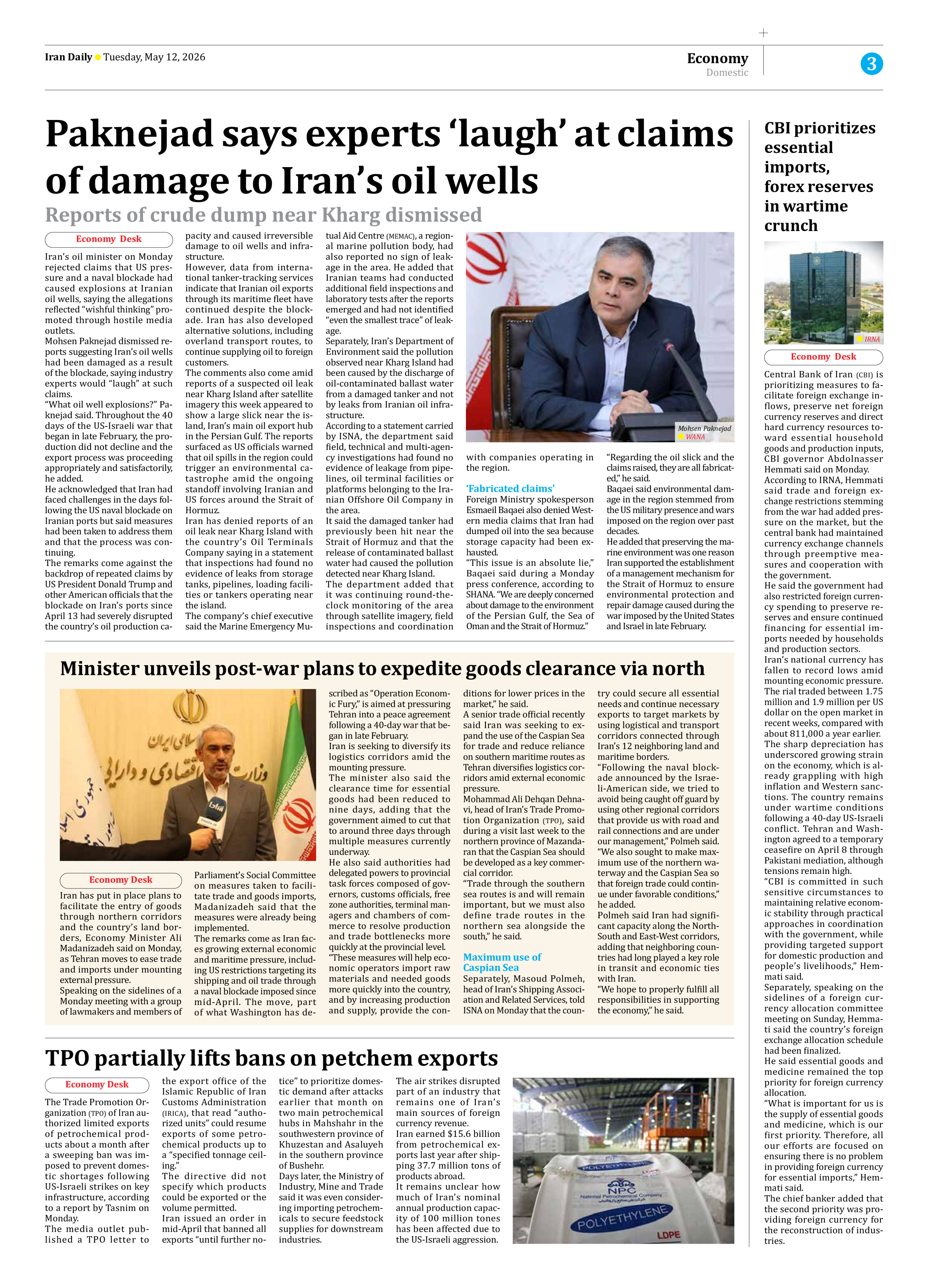


CBI prioritizes essential imports, forex reserves in wartime crunch
Central Bank of Iran (CBI) is prioritizing measures to facilitate foreign exchange inflows, preserve net foreign currency reserves and direct hard currency resources toward essential household goods and production inputs, CBI governor Abdolnasser Hemmati said on Monday.
According to IRNA, Hemmati said trade and foreign exchange restrictions stemming from the war had added pressure on the market, but the central bank had maintained currency exchange channels through preemptive measures and cooperation with the government.
He said the government had also restricted foreign currency spending to preserve reserves and ensure continued financing for essential imports needed by households and production sectors.
Iran’s national currency has fallen to record lows amid mounting economic pressure. The rial traded between 1.75 million and 1.9 million per US dollar on the open market in recent weeks, compared with about 811,000 a year earlier.
The sharp depreciation has underscored growing strain on the economy, which is already grappling with high inflation and Western sanctions. The country remains under wartime conditions following a 40-day US-Israeli conflict. Tehran and Washington agreed to a temporary ceasefire on April 8 through Pakistani mediation, although tensions remain high.
“CBI is committed in such sensitive circumstances to maintaining relative economic stability through practical approaches in coordination with the government, while providing targeted support for domestic production and people’s livelihoods,” Hemmati said.
Separately, speaking on the sidelines of a foreign currency allocation committee meeting on Sunday, Hemmati said the country’s foreign exchange allocation schedule had been finalized.
He said essential goods and medicine remained the top priority for foreign currency allocation.
“What is important for us is the supply of essential goods and medicine, which is our first priority. Therefore, all our efforts are focused on ensuring there is no problem in providing foreign currency for essential imports,” Hemmati said.
The chief banker added that the second priority was providing foreign currency for the reconstruction of industries.