







Iran doubles blood reserves as donor drive shields thalassemia care nationwide
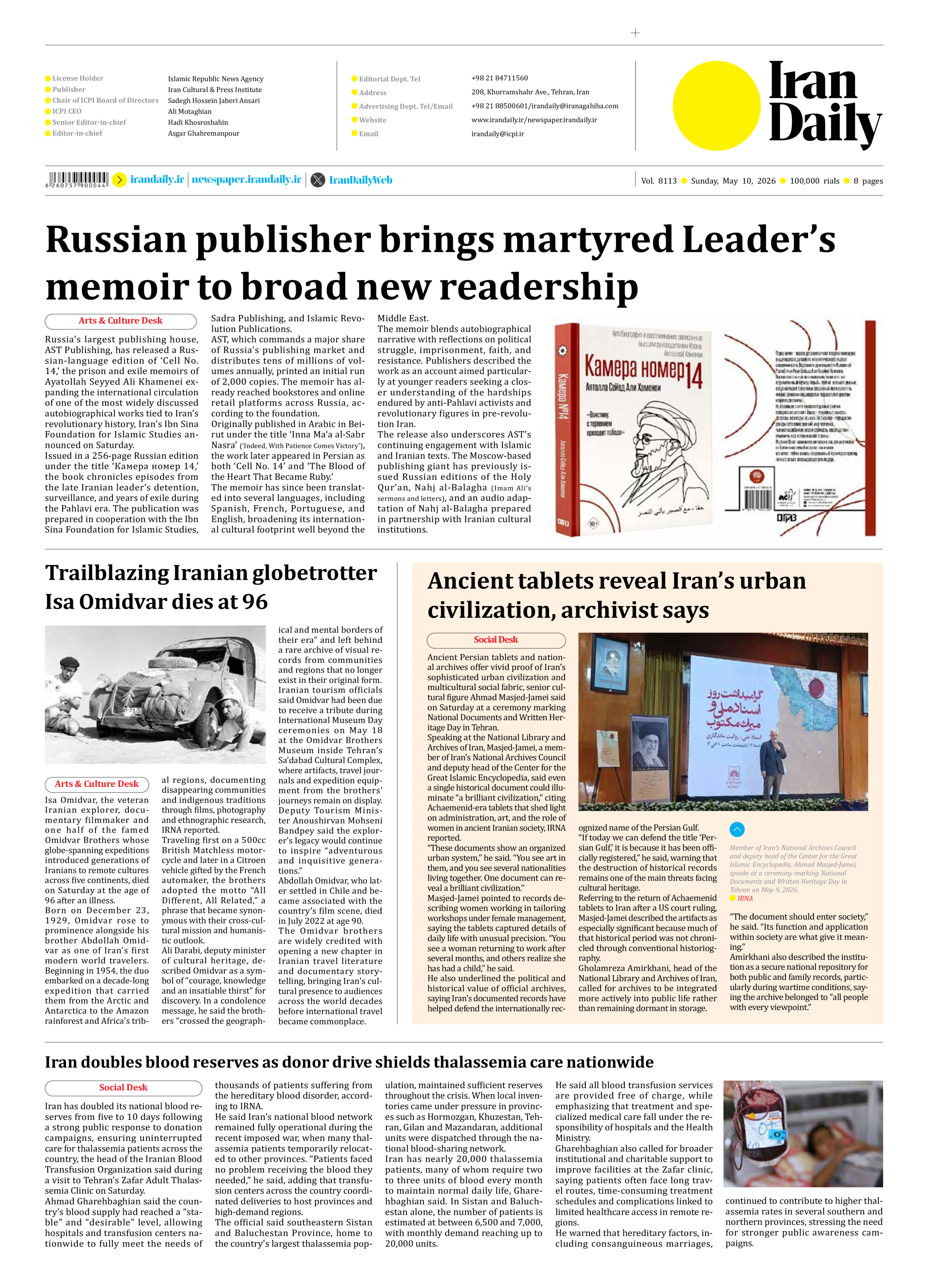
Iran has doubled its national blood reserves from five to 10 days following a strong public response to donation campaigns, ensuring uninterrupted care for thalassemia patients across the country, the head of the Iranian Blood Transfusion Organization said during a visit to Tehran’s Zafar Adult Thalassemia Clinic on Saturday.
Ahmad Gharehbaghian said the country’s blood supply had reached a “stable” and “desirable” level, allowing hospitals and transfusion centers nationwide to fully meet the needs of thousands of patients suffering from the hereditary blood disorder, according to IRNA.
He said Iran’s national blood network remained fully operational during the recent imposed war, when many thalassemia patients temporarily relocated to other provinces. “Patients faced no problem receiving the blood they needed,” he said, adding that transfusion centers across the country coordinated deliveries to host provinces and high-demand regions.
The official said southeastern Sistan and Baluchestan Province, home to the country’s largest thalassemia population, maintained sufficient reserves throughout the crisis. When local inventories came under pressure in provinces such as Hormozgan, Khuzestan, Tehran, Gilan and Mazandaran, additional units were dispatched through the national blood-sharing network.
Iran has nearly 20,000 thalassemia patients, many of whom require two to three units of blood every month to maintain normal daily life, Gharehbaghian said. In Sistan and Baluchestan alone, the number of patients is estimated at between 6,500 and 7,000, with monthly demand reaching up to 20,000 units.
He said all blood transfusion services are provided free of charge, while emphasizing that treatment and specialized medical care fall under the responsibility of hospitals and the Health Ministry.
Gharehbaghian also called for broader institutional and charitable support to improve facilities at the Zafar clinic, saying patients often face long travel routes, time-consuming treatment schedules and complications linked to limited healthcare access in remote regions.
He warned that hereditary factors, including consanguineous marriages, continued to contribute to higher thalassemia rates in several southern and northern provinces, stressing the need for stronger public awareness campaigns.