







Ancient tablets reveal Iran’s urban civilization, archivist says
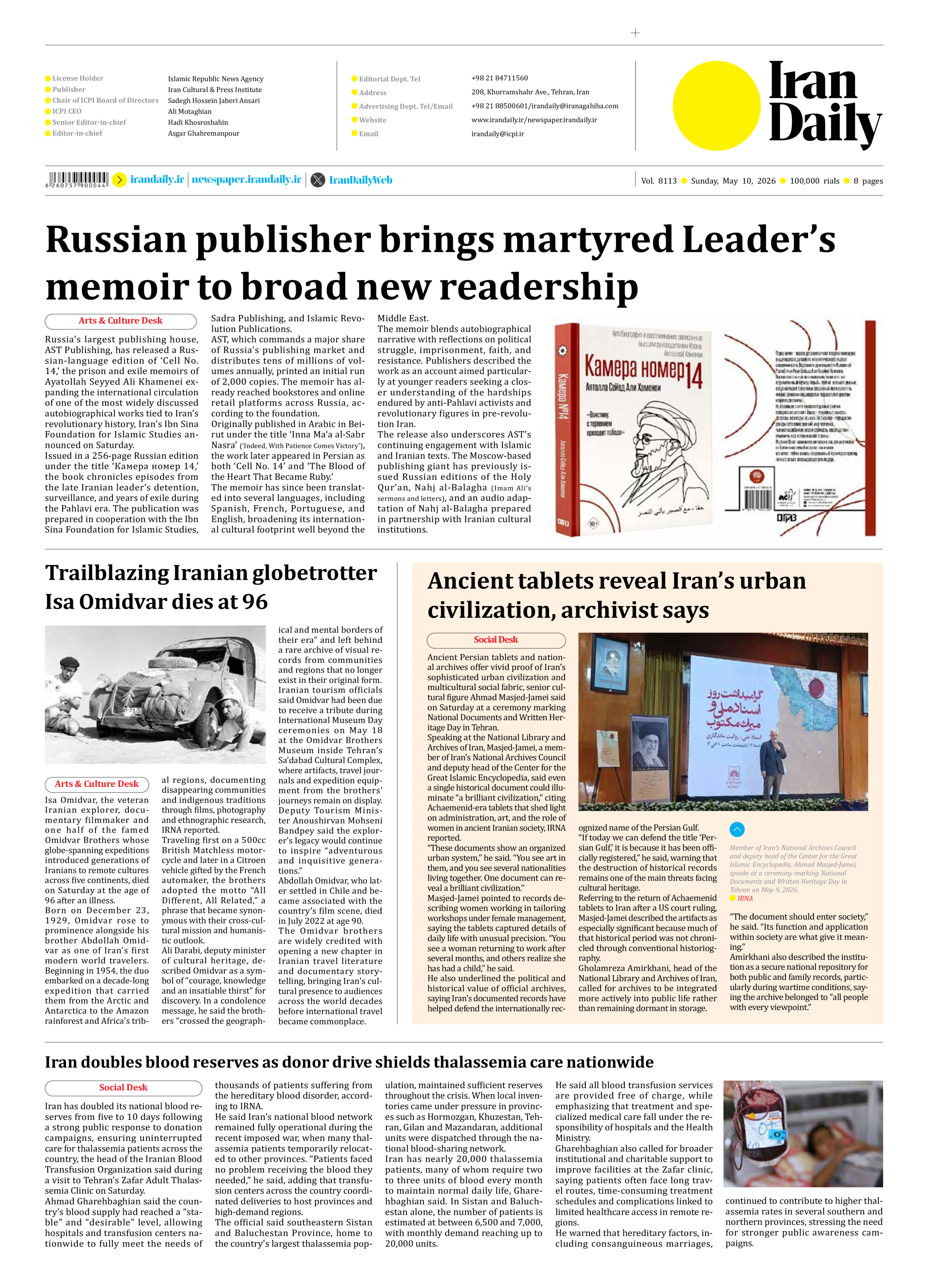
Ancient Persian tablets and national archives offer vivid proof of Iran’s sophisticated urban civilization and multicultural social fabric, senior cultural figure Ahmad Masjed-Jamei said on Saturday at a ceremony marking National Documents and Written Heritage Day in Tehran.
Speaking at the National Library and Archives of Iran, Masjed-Jamei, a member of Iran’s National Archives Council and deputy head of the Center for the Great Islamic Encyclopedia, said even a single historical document could illuminate “a brilliant civilization,” citing Achaemenid-era tablets that shed light on administration, art, and the role of women in ancient Iranian society, IRNA reported.
“These documents show an organized urban system,” he said. “You see art in them, and you see several nationalities living together. One document can reveal a brilliant civilization.”
Masjed-Jamei pointed to records describing women working in tailoring workshops under female management, saying the tablets captured details of daily life with unusual precision. “You see a woman returning to work after several months, and others realize she has had a child,” he said.
He also underlined the political and historical value of official archives, saying Iran’s documented records have helped defend the internationally recognized name of the Persian Gulf.
“If today we can defend the title ‘Persian Gulf,’ it is because it has been officially registered,” he said, warning that the destruction of historical records remains one of the main threats facing cultural heritage.
Referring to the return of Achaemenid tablets to Iran after a US court ruling, Masjed-Jamei described the artifacts as especially significant because much of that historical period was not chronicled through conventional historiography.
Gholamreza Amirkhani, head of the National Library and Archives of Iran, called for archives to be integrated more actively into public life rather than remaining dormant in storage.
“The document should enter society,” he said. “Its function and application within society are what give it meaning.”
Amirkhani also described the institution as a secure national repository for both public and family records, particularly during wartime conditions, saying the archive belonged to “all people with every viewpoint.”