





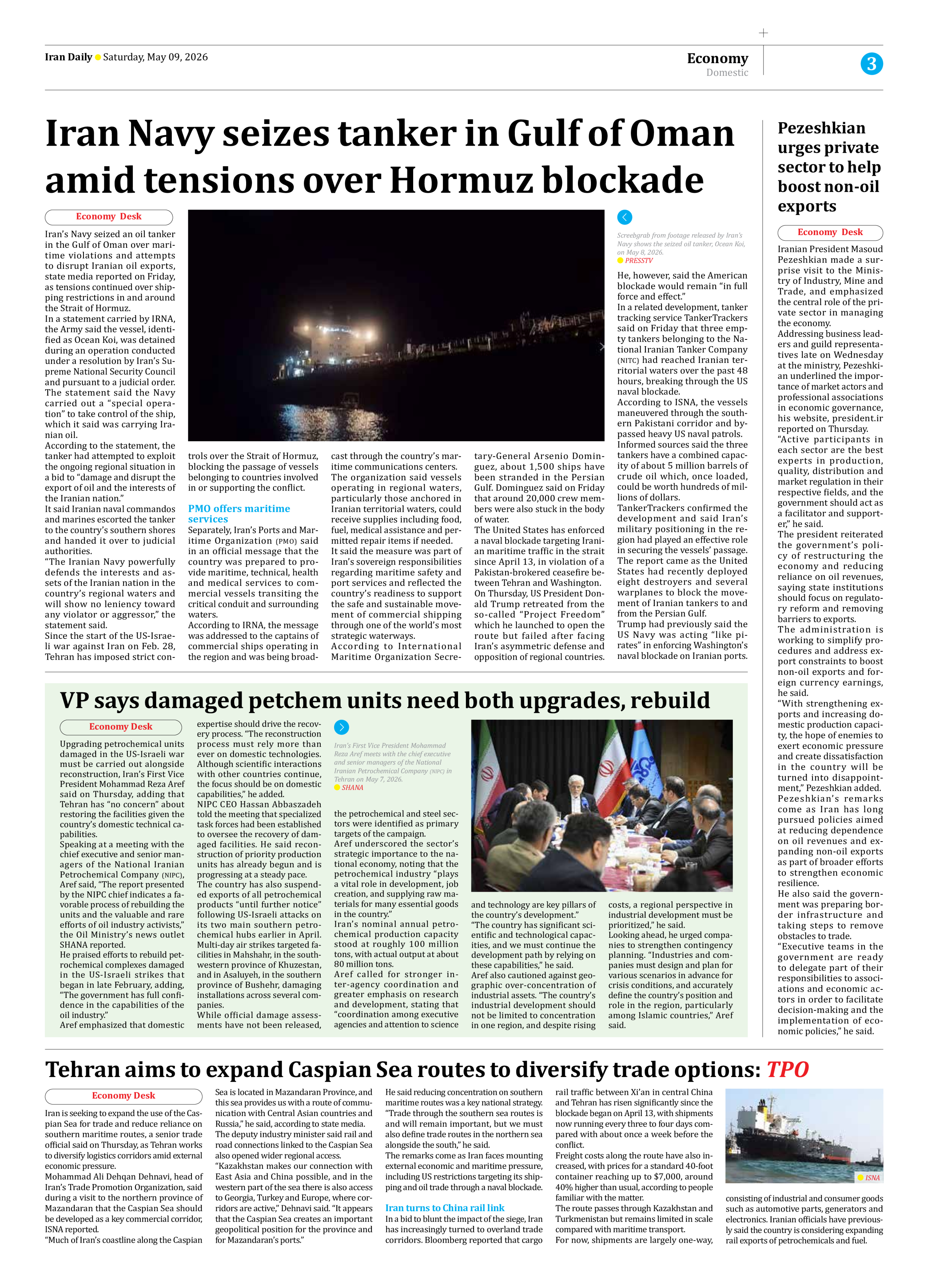


Iran Navy seizes tanker in Gulf of Oman amid tensions over Hormuz blockade
Iran’s Navy seized an oil tanker in the Gulf of Oman over maritime violations and attempts to disrupt Iranian oil exports, state media reported on Friday, as tensions continued over shipping restrictions in and around the Strait of Hormuz.
In a statement carried by IRNA, the Army said the vessel, identified as Ocean Koi, was detained during an operation conducted under a resolution by Iran’s Supreme National Security Council and pursuant to a judicial order.
The statement said the Navy carried out a “special operation” to take control of the ship, which it said was carrying Iranian oil.
According to the statement, the tanker had attempted to exploit the ongoing regional situation in a bid to “damage and disrupt the export of oil and the interests of the Iranian nation.”
It said Iranian naval commandos and marines escorted the tanker to the country’s southern shores and handed it over to judicial authorities.
“The Iranian Navy powerfully defends the interests and assets of the Iranian nation in the country’s regional waters and will show no leniency toward any violator or aggressor,” the statement said.
Since the start of the US-Israeli war against Iran on Feb. 28, Tehran has imposed strict controls over the Strait of Hormuz, blocking the passage of vessels belonging to countries involved in or supporting the conflict.
PMO offers maritime services
Separately, Iran’s Ports and Maritime Organization (PMO) said in an official message that the country was prepared to provide maritime, technical, health and medical services to commercial vessels transiting the critical conduit and surrounding waters.
According to IRNA, the message was addressed to the captains of commercial ships operating in the region and was being broadcast through the country’s maritime communications centers.
The organization said vessels operating in regional waters, particularly those anchored in Iranian territorial waters, could receive supplies including food, fuel, medical assistance and permitted repair items if needed.
It said the measure was part of Iran’s sovereign responsibilities regarding maritime safety and port services and reflected the country’s readiness to support the safe and sustainable movement of commercial shipping through one of the world’s most strategic waterways.
According to International Maritime Organization Secretary-General Arsenio Dominguez, about 1,500 ships have been stranded in the Persian Gulf. Dominguez said on Friday that around 20,000 crew members were also stuck in the body of water.
The United States has enforced a naval blockade targeting Iranian maritime traffic in the strait since April 13, in violation of a Pakistan-brokered ceasefire between Tehran and Washington.
On Thursday, US President Donald Trump retreated from the so-called “Project Freedom” which he launched to open the route but failed after facing Iran’s asymmetric defense and opposition of regional countries. He, however, said the American blockade would remain “in full force and effect.”
In a related development, tanker tracking service TankerTrackers said on Friday that three empty tankers belonging to the National Iranian Tanker Company (NITC) had reached Iranian territorial waters over the past 48 hours, breaking through the US naval blockade.
According to ISNA, the vessels maneuvered through the southern Pakistani corridor and bypassed heavy US naval patrols.
Informed sources said the three tankers have a combined capacity of about 5 million barrels of crude oil which, once loaded, could be worth hundreds of millions of dollars.
TankerTrackers confirmed the development and said Iran’s military positioning in the region had played an effective role in securing the vessels’ passage.
The report came as the United States had recently deployed eight destroyers and several warplanes to block the movement of Iranian tankers to and from the Persian Gulf.
Trump had previously said the US Navy was acting “like pirates” in enforcing Washington’s naval blockade on Iranian ports.