







Kan Gonbad site yields bronze age finds
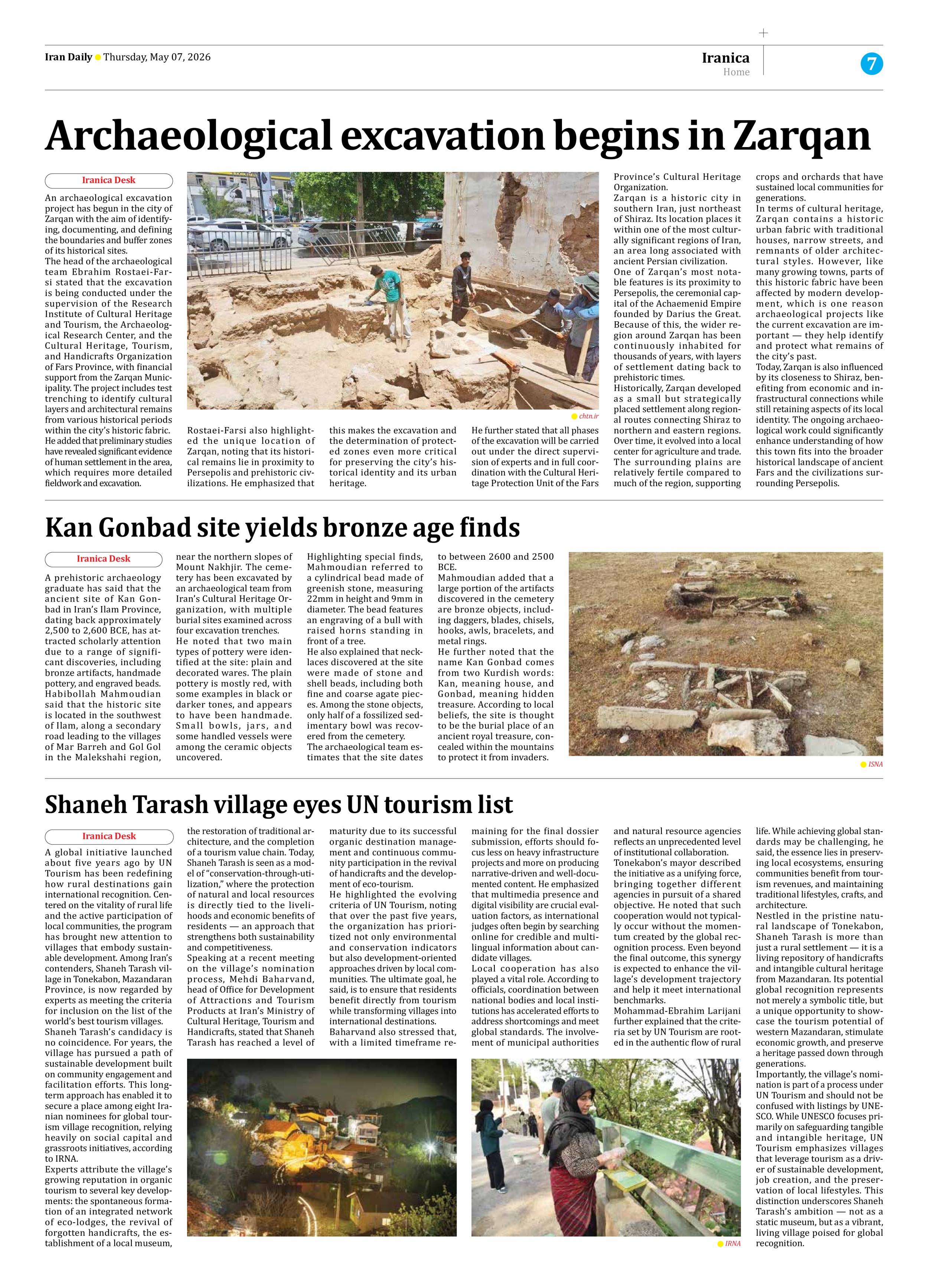
A prehistoric archaeology graduate has said that the ancient site of Kan Gonbad in Iran’s Ilam Province, dating back approximately 2,500 to 2,600 BCE, has attracted scholarly attention due to a range of significant discoveries, including bronze artifacts, handmade pottery, and engraved beads.
Habibollah Mahmoudian said that the historic site is located in the southwest of Ilam, along a secondary road leading to the villages of Mar Barreh and Gol Gol in the Malekshahi region, near the northern slopes of Mount Nakhjir. The cemetery has been excavated by an archaeological team from Iran’s Cultural Heritage Organization, with multiple burial sites examined across four excavation trenches.
He noted that two main types of pottery were identified at the site: plain and decorated wares. The plain pottery is mostly red, with some examples in black or darker tones, and appears to have been handmade. Small bowls, jars, and some handled vessels were among the ceramic objects uncovered.
Highlighting special finds, Mahmoudian referred to a cylindrical bead made of greenish stone, measuring 22mm in height and 9mm in diameter. The bead features an engraving of a bull with raised horns standing in front of a tree.
He also explained that necklaces discovered at the site were made of stone and shell beads, including both fine and coarse agate pieces. Among the stone objects, only half of a fossilized sedimentary bowl was recovered from the cemetery.
The archaeological team estimates that the site dates to between 2600 and 2500 BCE.
Mahmoudian added that a large portion of the artifacts discovered in the cemetery are bronze objects, including daggers, blades, chisels, hooks, awls, bracelets, and metal rings.
He further noted that the name Kan Gonbad comes from two Kurdish words: Kan, meaning house, and Gonbad, meaning hidden treasure. According to local beliefs, the site is thought to be the burial place of an ancient royal treasure, concealed within the mountains to protect it from invaders.