







Archaeological excavation begins in Zarqan
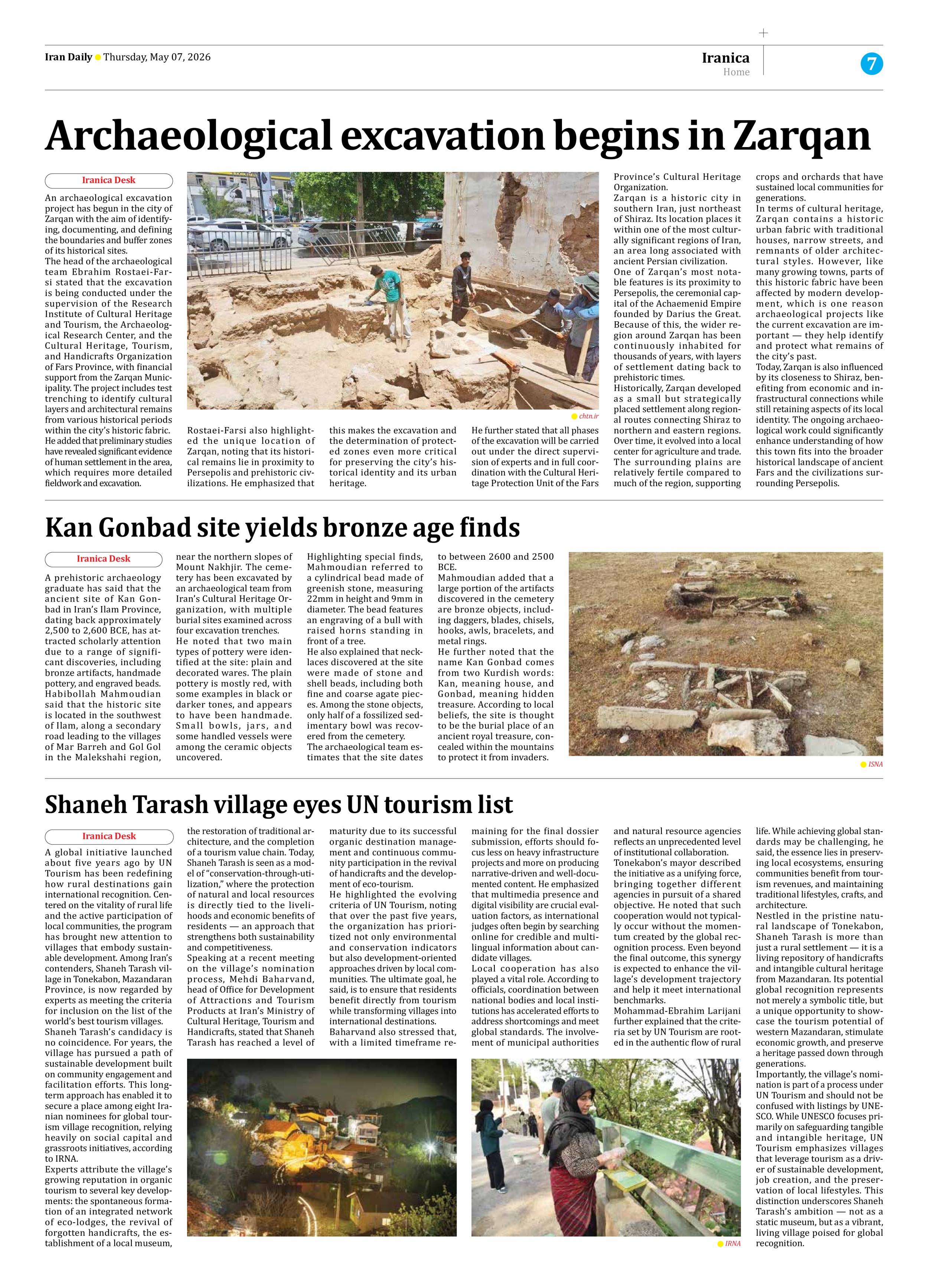
An archaeological excavation project has begun in the city of Zarqan with the aim of identifying, documenting, and defining the boundaries and buffer zones of its historical sites.
The head of the archaeological team Ebrahim Rostaei-Farsi stated that the excavation is being conducted under the supervision of the Research Institute of Cultural Heritage and Tourism, the Archaeological Research Center, and the Cultural Heritage, Tourism, and Handicrafts Organization of Fars Province, with financial support from the Zarqan Municipality. The project includes test trenching to identify cultural layers and architectural remains from various historical periods within the city’s historic fabric.
He added that preliminary studies have revealed significant evidence of human settlement in the area, which requires more detailed fieldwork and excavation.
Rostaei-Farsi also highlighted the unique location of Zarqan, noting that its historical remains lie in proximity to Persepolis and prehistoric civilizations. He emphasized that this makes the excavation and the determination of protected zones even more critical for preserving the city’s historical identity and its urban heritage.
He further stated that all phases of the excavation will be carried out under the direct supervision of experts and in full coordination with the Cultural Heritage Protection Unit of the Fars Province’s Cultural Heritage Organization.
Zarqan is a historic city in southern Iran, just northeast of Shiraz. Its location places it within one of the most culturally significant regions of Iran, an area long associated with ancient Persian civilization.
One of Zarqan’s most notable features is its proximity to Persepolis, the ceremonial capital of the Achaemenid Empire founded by Darius the Great. Because of this, the wider region around Zarqan has been continuously inhabited for thousands of years, with layers of settlement dating back to prehistoric times.
Historically, Zarqan developed as a small but strategically placed settlement along regional routes connecting Shiraz to northern and eastern regions. Over time, it evolved into a local center for agriculture and trade. The surrounding plains are relatively fertile compared to much of the region, supporting crops and orchards that have sustained local communities for generations.
In terms of cultural heritage, Zarqan contains a historic urban fabric with traditional houses, narrow streets, and remnants of older architectural styles. However, like many growing towns, parts of this historic fabric have been affected by modern development, which is one reason archaeological projects like the current excavation are important — they help identify and protect what remains of the city’s past.
Today, Zarqan is also influenced by its closeness to Shiraz, benefiting from economic and infrastructural connections while still retaining aspects of its local identity. The ongoing archaeological work could significantly enhance understanding of how this town fits into the broader historical landscape of ancient Fars and the civilizations surrounding Persepolis.