







Pezeshkian urged to restore stable Internet amid billion-dollar outages
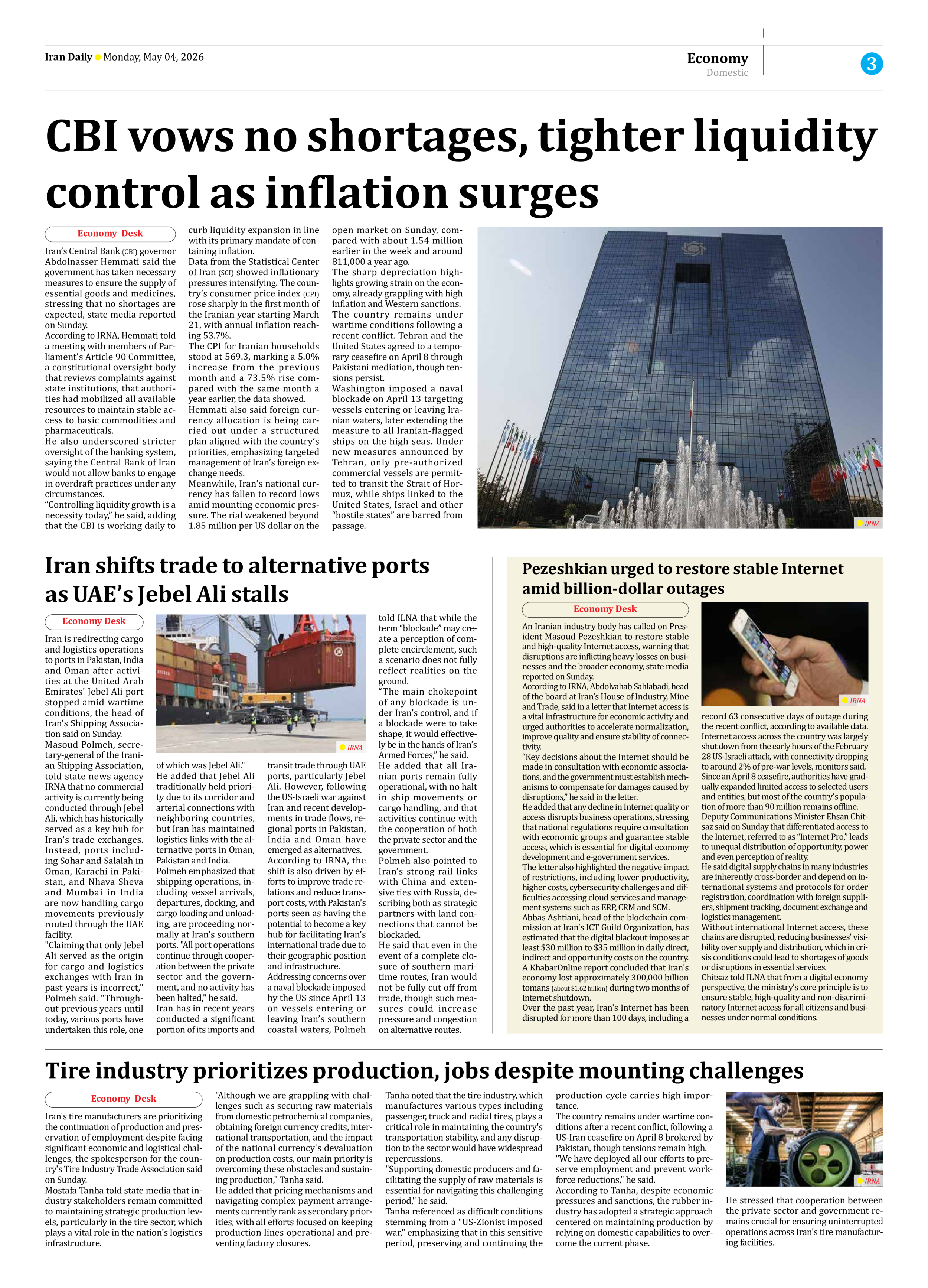
An Iranian industry body has called on President Masoud Pezeshkian to restore stable and high-quality Internet access, warning that disruptions are inflicting heavy losses on businesses and the broader economy, state media reported on Sunday.
According to IRNA, Abdolvahab Sahlabadi, head of the board at Iran’s House of Industry, Mine and Trade, said in a letter that Internet access is a vital infrastructure for economic activity and urged authorities to accelerate normalization, improve quality and ensure stability of connectivity.
“Key decisions about the Internet should be made in consultation with economic associations, and the government must establish mechanisms to compensate for damages caused by disruptions,” he said in the letter.
He added that any decline in Internet quality or access disrupts business operations, stressing that national regulations require consultation with economic groups and guarantee stable access, which is essential for digital economy development and e-government services.
The letter also highlighted the negative impact of restrictions, including lower productivity, higher costs, cybersecurity challenges and difficulties accessing cloud services and management systems such as ERP, CRM and SCM.
Abbas Ashtiani, head of the blockchain commission at Iran’s ICT Guild Organization, has estimated that the digital blackout imposes at least $30 million to $35 million in daily direct, indirect and opportunity costs on the country. A KhabarOnline report concluded that Iran's economy lost approximately 300,000 billion tomans (about $1.62 billion) during two months of Internet shutdown.
Over the past year, Iran's Internet has been disrupted for more than 100 days, including a record 63 consecutive days of outage during the recent conflict, according to available data. Internet access across the country was largely shut down from the early hours of the February 28 US-Israeli attack, with connectivity dropping to around 2% of pre-war levels, monitors said.
Since an April 8 ceasefire, authorities have gradually expanded limited access to selected users and entities, but most of the country’s population of more than 90 million remains offline.
Deputy Communications Minister Ehsan Chitsaz said on Sunday that differentiated access to the Internet, referred to as “Internet Pro,” leads to unequal distribution of opportunity, power and even perception of reality.
He said digital supply chains in many industries are inherently cross-border and depend on international systems and protocols for order registration, coordination with foreign suppliers, shipment tracking, document exchange and logistics management.
Without international Internet access, these chains are disrupted, reducing businesses’ visibility over supply and distribution, which in crisis conditions could lead to shortages of goods or disruptions in essential services.
Chitsaz told ILNA that from a digital economy perspective, the ministry’s core principle is to ensure stable, high-quality and non-discriminatory Internet access for all citizens and businesses under normal conditions.