





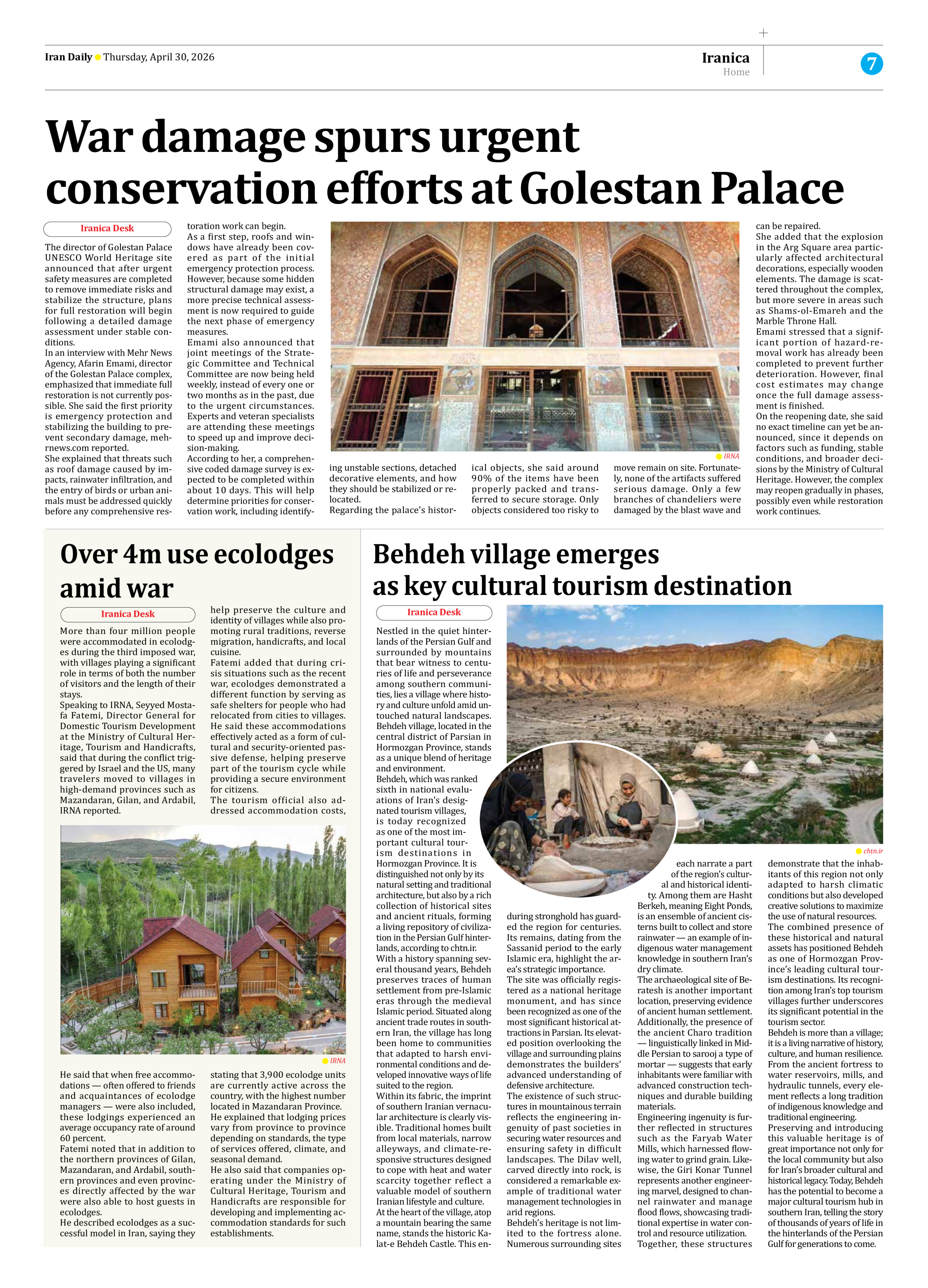


Over 4m use ecolodges amid war
More than four million people were accommodated in ecolodges during the third imposed war, with villages playing a significant role in terms of both the number of visitors and the length of their stays.
Speaking to IRNA, Seyyed Mostafa Fatemi, Director General for Domestic Tourism Development at the Ministry of Cultural Heritage, Tourism and Handicrafts, said that during the conflict triggered by Israel and the US, many travelers moved to villages in high-demand provinces such as Mazandaran, Gilan, and Ardabil, IRNA reported.
He said that when free accommodations — often offered to friends and acquaintances of ecolodge managers — were also included, these lodgings experienced an average occupancy rate of around 60 percent.
Fatemi noted that in addition to the northern provinces of Gilan, Mazandaran, and Ardabil, southern provinces and even provinces directly affected by the war were also able to host guests in ecolodges.
He described ecolodges as a successful model in Iran, saying they help preserve the culture and identity of villages while also promoting rural traditions, reverse migration, handicrafts, and local cuisine.
Fatemi added that during crisis situations such as the recent war, ecolodges demonstrated a different function by serving as safe shelters for people who had relocated from cities to villages. He said these accommodations effectively acted as a form of cultural and security-oriented passive defense, helping preserve part of the tourism cycle while providing a secure environment for citizens.
The tourism official also addressed accommodation costs, stating that 3,900 ecolodge units are currently active across the country, with the highest number located in Mazandaran Province.
He explained that lodging prices vary from province to province depending on standards, the type of services offered, climate, and seasonal demand.
He also said that companies operating under the Ministry of Cultural Heritage, Tourism and Handicrafts are responsible for developing and implementing accommodation standards for such establishments.