





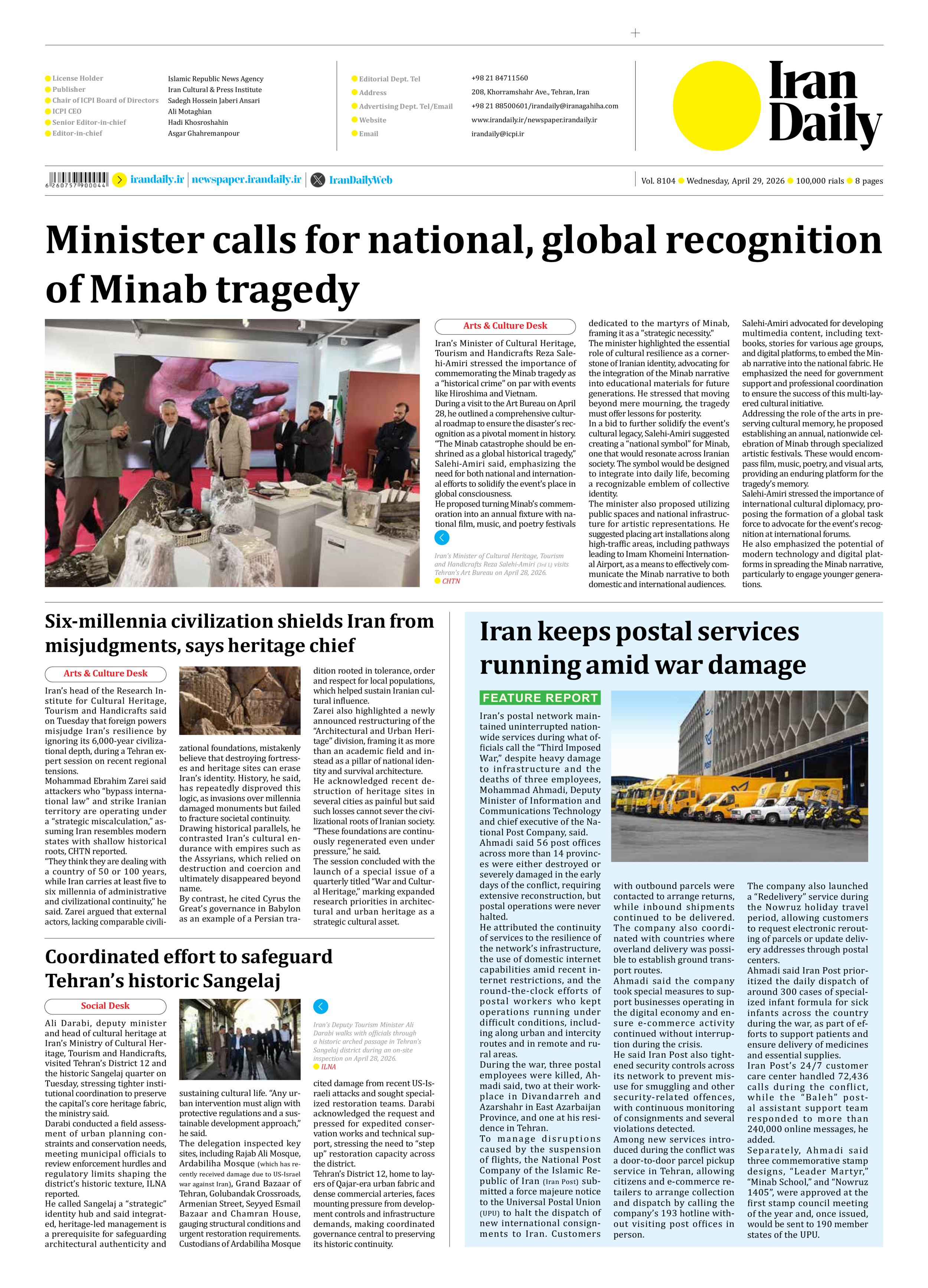


Coordinated effort to safeguard Tehran’s historic Sangelaj
Ali Darabi, deputy minister and head of cultural heritage at Iran’s Ministry of Cultural Heritage, Tourism and Handicrafts, visited Tehran’s District 12 and the historic Sangelaj quarter on Tuesday, stressing tighter institutional coordination to preserve the capital’s core heritage fabric, the ministry said.
Darabi conducted a field assessment of urban planning constraints and conservation needs, meeting municipal officials to review enforcement hurdles and regulatory limits shaping the district’s historic texture, ILNA reported.
He called Sangelaj a “strategic” identity hub and said integrated, heritage-led management is a prerequisite for safeguarding architectural authenticity and sustaining cultural life. “Any urban intervention must align with protective regulations and a sustainable development approach,” he said.
The delegation inspected key sites, including Rajab Ali Mosque, Ardabiliha Mosque (which has recently received damage due to US-Israel war against Iran), Grand Bazaar of Tehran, Golubandak Crossroads, Armenian Street, Seyyed Esmail Bazaar and Chamran House, gauging structural conditions and urgent restoration requirements.
Custodians of Ardabiliha Mosque cited damage from recent US-Israeli attacks and sought specialized restoration teams. Darabi acknowledged the request and pressed for expedited conservation works and technical support, stressing the need to “step up” restoration capacity across the district.
Tehran’s District 12, home to layers of Qajar-era urban fabric and dense commercial arteries, faces mounting pressure from development controls and infrastructure demands, making coordinated governance central to preserving its historic continuity.