







Tehran pushes digital cooperation at SCO, warns of cyber threats
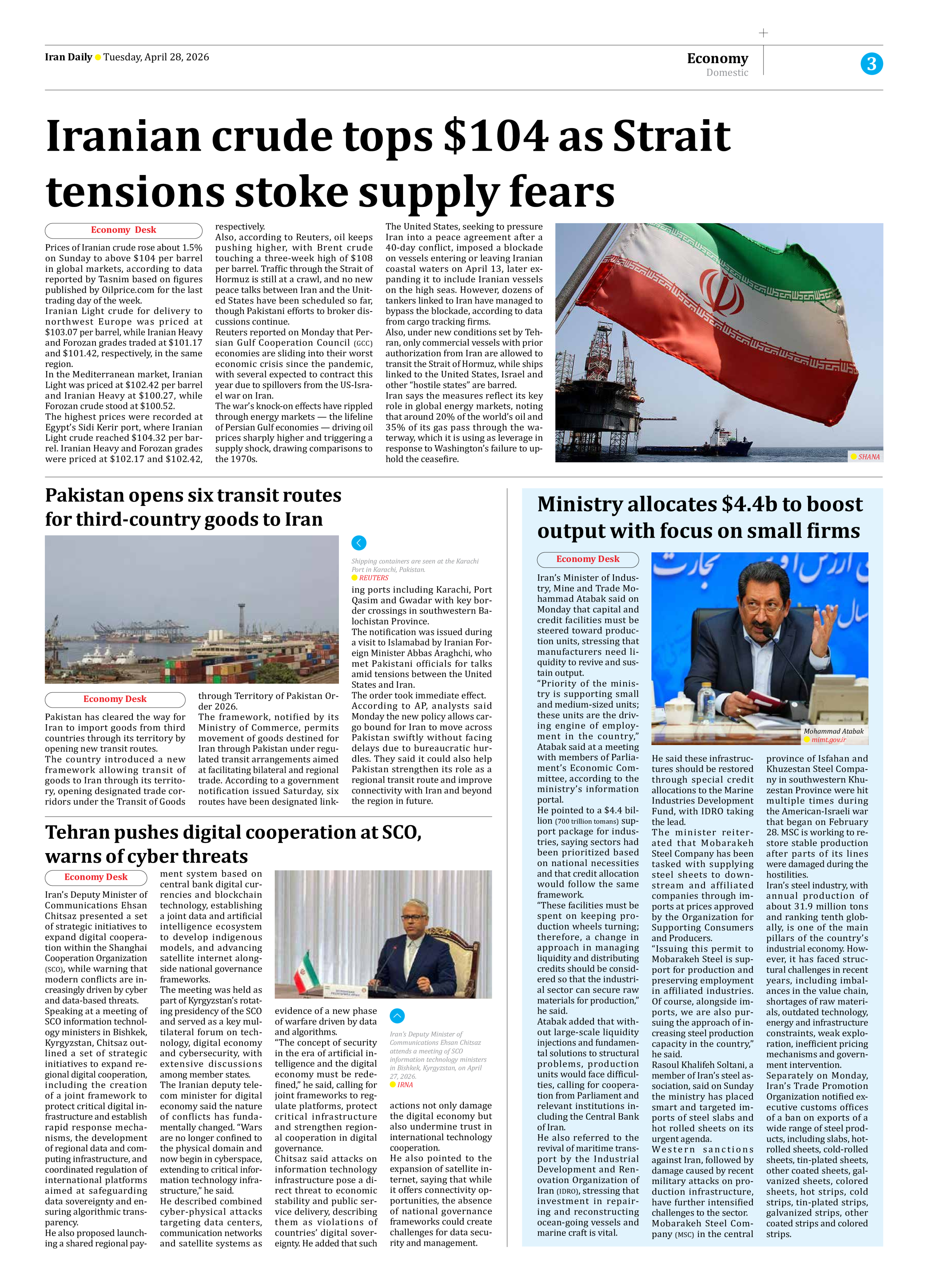
Iran’s Deputy Minister of Communications Ehsan Chitsaz presented a set of strategic initiatives to expand digital cooperation within the Shanghai Cooperation Organization (SCO), while warning that modern conflicts are increasingly driven by cyber and data-based threats.
Speaking at a meeting of SCO information technology ministers in Bishkek, Kyrgyzstan, Chitsaz outlined a set of strategic initiatives to expand regional digital cooperation, including the creation of a joint framework to protect critical digital infrastructure and establish rapid response mechanisms, the development of regional data and computing infrastructure, and coordinated regulation of international platforms aimed at safeguarding data sovereignty and ensuring algorithmic transparency.
He also proposed launching a shared regional payment system based on central bank digital currencies and blockchain technology, establishing a joint data and artificial intelligence ecosystem to develop indigenous models, and advancing satellite internet alongside national governance frameworks.
The meeting was held as part of Kyrgyzstan’s rotating presidency of the SCO and served as a key multilateral forum on technology, digital economy and cybersecurity, with extensive discussions among member states.
The Iranian deputy telecom minister for digital economy said the nature of conflicts has fundamentally changed. “Wars are no longer confined to the physical domain and now begin in cyberspace, extending to critical information technology infrastructure,” he said.
He described combined cyber-physical attacks targeting data centers, communication networks and satellite systems as evidence of a new phase of warfare driven by data and algorithms.
“The concept of security in the era of artificial intelligence and the digital economy must be redefined,” he said, calling for joint frameworks to regulate platforms, protect critical infrastructure and strengthen regional cooperation in digital governance.
Chitsaz said attacks on information technology infrastructure pose a direct threat to economic stability and public service delivery, describing them as violations of countries’ digital sovereignty. He added that such actions not only damage the digital economy but also undermine trust in international technology cooperation.
He also pointed to the expansion of satellite internet, saying that while it offers connectivity opportunities, the absence of national governance frameworks could create challenges for data security and management.