







Copy in clipboard...
Iran revises oil-for-goods mechanism, eyes FX unification
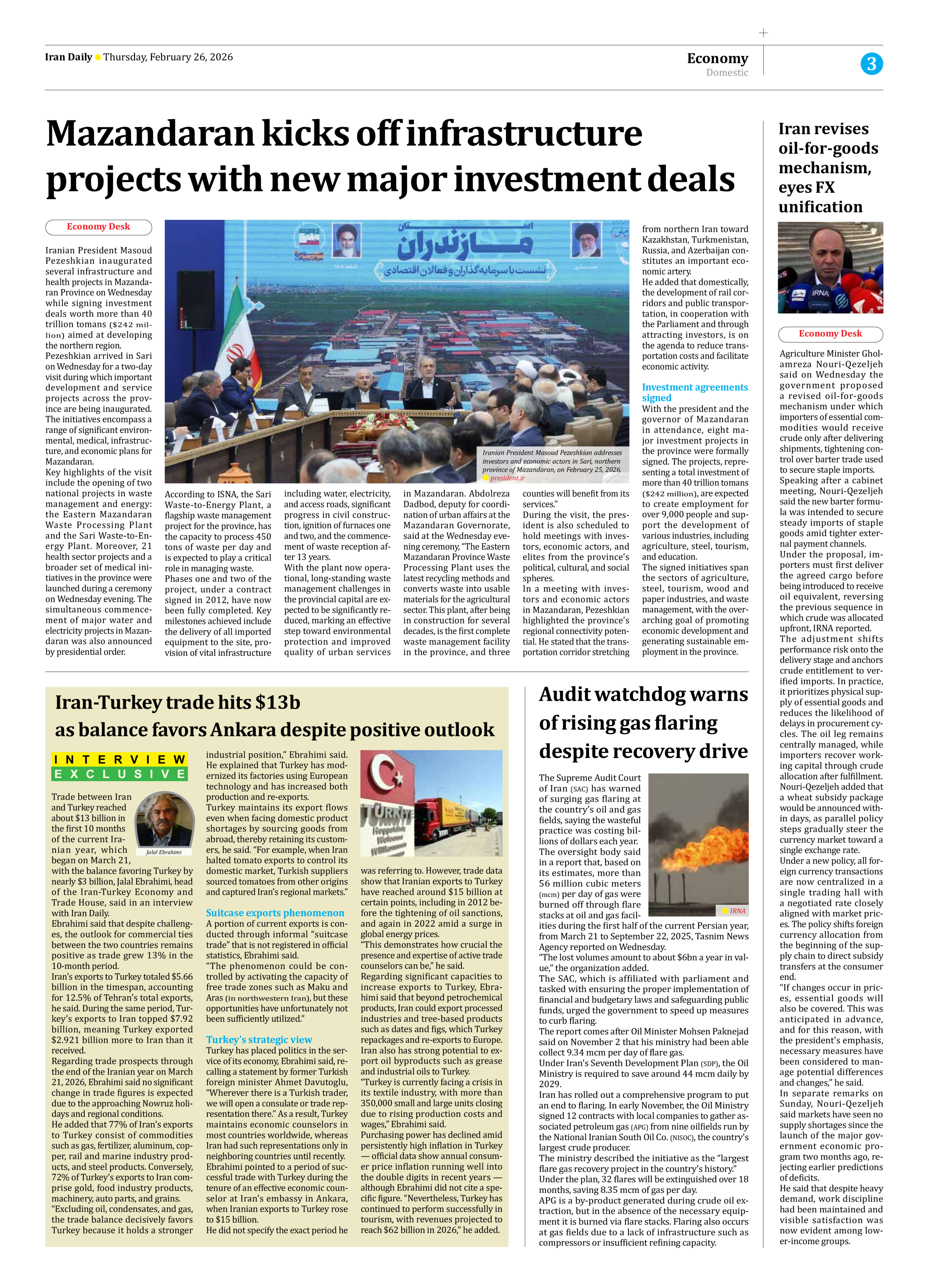
Speaking after a cabinet meeting, Nouri-Qezeljeh said the new barter formula was intended to secure steady imports of staple goods amid tighter external payment channels.
Under the proposal, importers must first deliver the agreed cargo before being introduced to receive oil equivalent, reversing the previous sequence in which crude was allocated upfront, IRNA reported.
The adjustment shifts performance risk onto the delivery stage and anchors crude entitlement to verified imports. In practice, it prioritizes physical supply of essential goods and reduces the likelihood of delays in procurement cycles. The oil leg remains centrally managed, while importers recover working capital through crude allocation after fulfillment.
Nouri-Qezeljeh added that a wheat subsidy package would be announced within days, as parallel policy steps gradually steer the currency market toward a single exchange rate.
Under a new policy, all foreign currency transactions are now centralized in a single trading hall with a negotiated rate closely aligned with market prices. The policy shifts foreign currency allocation from the beginning of the supply chain to direct subsidy transfers at the consumer end.
“If changes occur in prices, essential goods will also be covered. This was anticipated in advance, and for this reason, with the president's emphasis, necessary measures have been considered to manage potential differences and changes,” he said.
In separate remarks on Sunday, Nouri-Qezeljeh said markets have seen no supply shortages since the launch of the major government economic program two months ago, rejecting earlier predictions of deficits.
He said that despite heavy demand, work discipline had been maintained and visible satisfaction was now evident among lower-income groups.