







Copy in clipboard...
Audit watchdog warns of rising gas flaring despite recovery drive
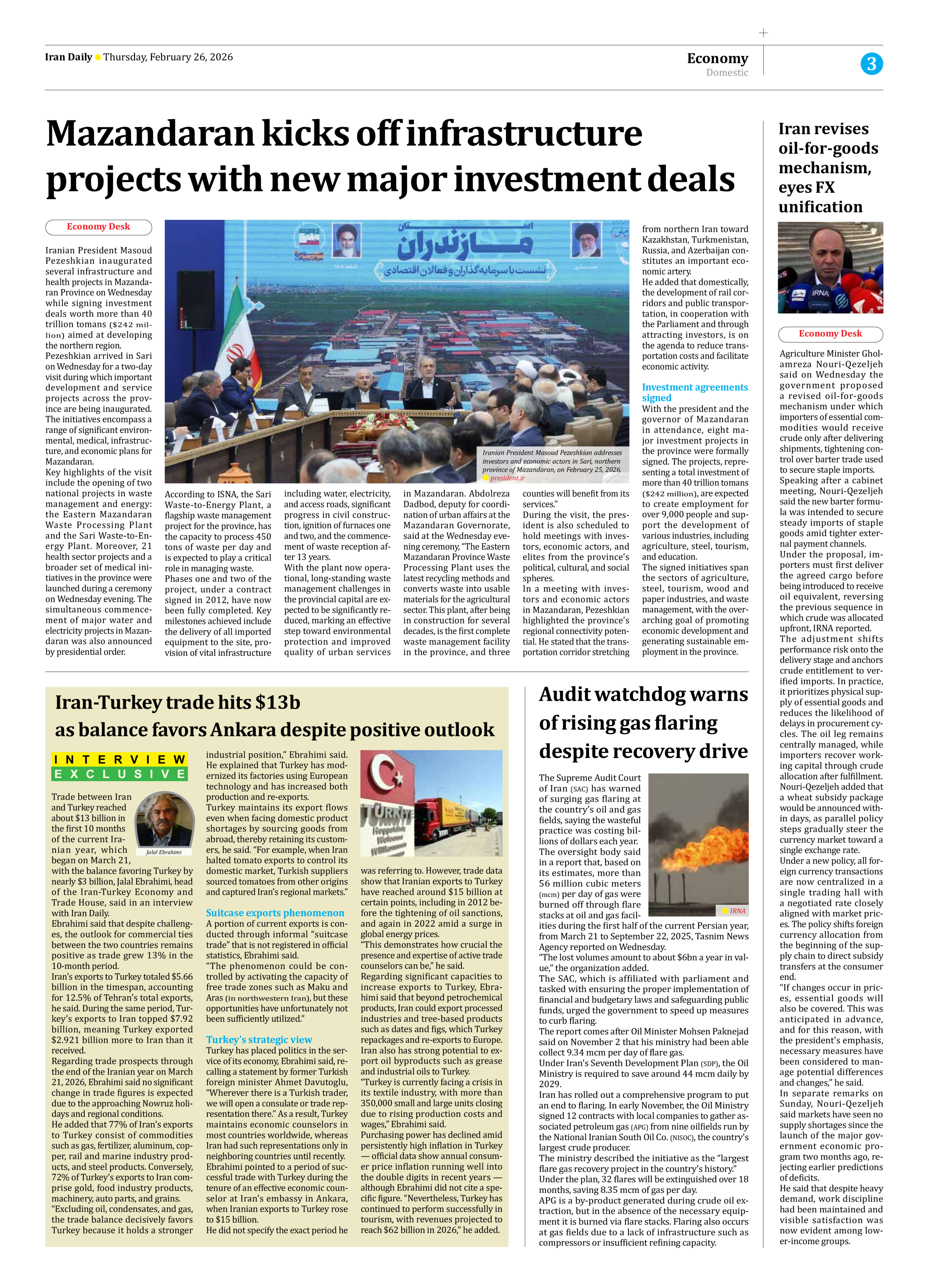
The oversight body said in a report that, based on its estimates, more than 56 million cubic meters (mcm) per day of gas were burned off through flare stacks at oil and gas facilities during the first half of the current Persian year, from March 21 to September 22, 2025, Tasnim News Agency reported on Wednesday.
“The lost volumes amount to about $6bn a year in value,” the organization added.
The SAC, which is affiliated with parliament and tasked with ensuring the proper implementation of financial and budgetary laws and safeguarding public funds, urged the government to speed up measures to curb flaring.
The report comes after Oil Minister Mohsen Paknejad said on November 2 that his ministry had been able collect 9.34 mcm per day of flare gas.
Under Iran’s Seventh Development Plan (SDP), the Oil Ministry is required to save around 44 mcm daily by 2029.
Iran has rolled out a comprehensive program to put an end to flaring. In early November, the Oil Ministry signed 12 contracts with local companies to gather associated petroleum gas (APG) from nine oilfields run by the National Iranian South Oil Co. (NISOC), the country’s largest crude producer.
The ministry described the initiative as the “largest flare gas recovery project in the country’s history.”
Under the plan, 32 flares will be extinguished over 18 months, saving 8.35 mcm of gas per day.
APG is a by-product generated during crude oil extraction, but in the absence of the necessary equipment it is burned via flare stacks. Flaring also occurs at gas fields due to a lack of infrastructure such as compressors or insufficient refining capacity.