







Copy in clipboard...
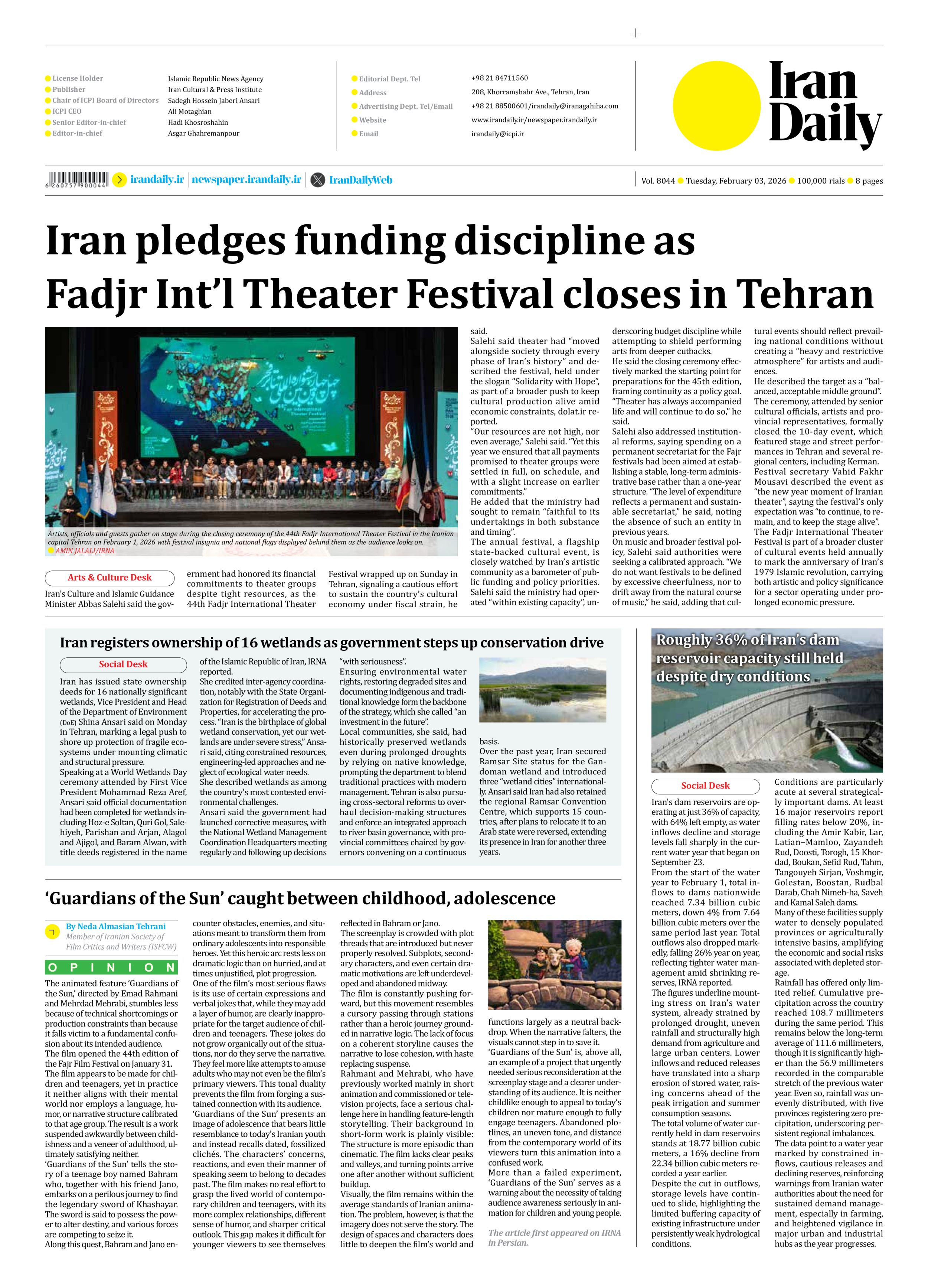
Roughly 36% of Iran’s dam reservoir capacity still held despite dry conditions
From the start of the water year to February 1, total inflows to dams nationwide reached 7.34 billion cubic meters, down 4% from 7.64 billion cubic meters over the same period last year. Total outflows also dropped markedly, falling 26% year on year, reflecting tighter water management amid shrinking reserves, IRNA reported.
The figures underline mounting stress on Iran’s water system, already strained by prolonged drought, uneven rainfall and structurally high demand from agriculture and large urban centers. Lower inflows and reduced releases have translated into a sharp erosion of stored water, raising concerns ahead of the peak irrigation and summer consumption seasons.
The total volume of water currently held in dam reservoirs stands at 18.77 billion cubic meters, a 16% decline from 22.34 billion cubic meters recorded a year earlier.
Despite the cut in outflows, storage levels have continued to slide, highlighting the limited buffering capacity of existing infrastructure under persistently weak hydrological conditions.
Conditions are particularly acute at several strategically important dams. At least 16 major reservoirs report filling rates below 20%, including the Amir Kabir, Lar, Latian–Mamloo, Zayandeh Rud, Doosti, Torogh, 15 Khordad, Boukan, Sefid Rud, Tahm, Tangouyeh Sirjan, Voshmgir, Golestan, Boostan, Rudbal Darab, Chah Nimeh-ha, Saveh and Kamal Saleh dams.
Many of these facilities supply water to densely populated provinces or agriculturally intensive basins, amplifying the economic and social risks associated with depleted storage.
Rainfall has offered only limited relief. Cumulative precipitation across the country reached 108.7 millimeters during the same period. This remains below the long-term average of 111.6 millimeters, though it is significantly higher than the 56.9 millimeters recorded in the comparable stretch of the previous water year. Even so, rainfall was unevenly distributed, with five provinces registering zero precipitation, underscoring persistent regional imbalances.
The data point to a water year marked by constrained inflows, cautious releases and declining reserves, reinforcing warnings from Iranian water authorities about the need for sustained demand management, especially in farming, and heightened vigilance in major urban and industrial hubs as the year progresses.