







Pezeshkian prioritizes mental health amid unrest, seeks medical reassurance
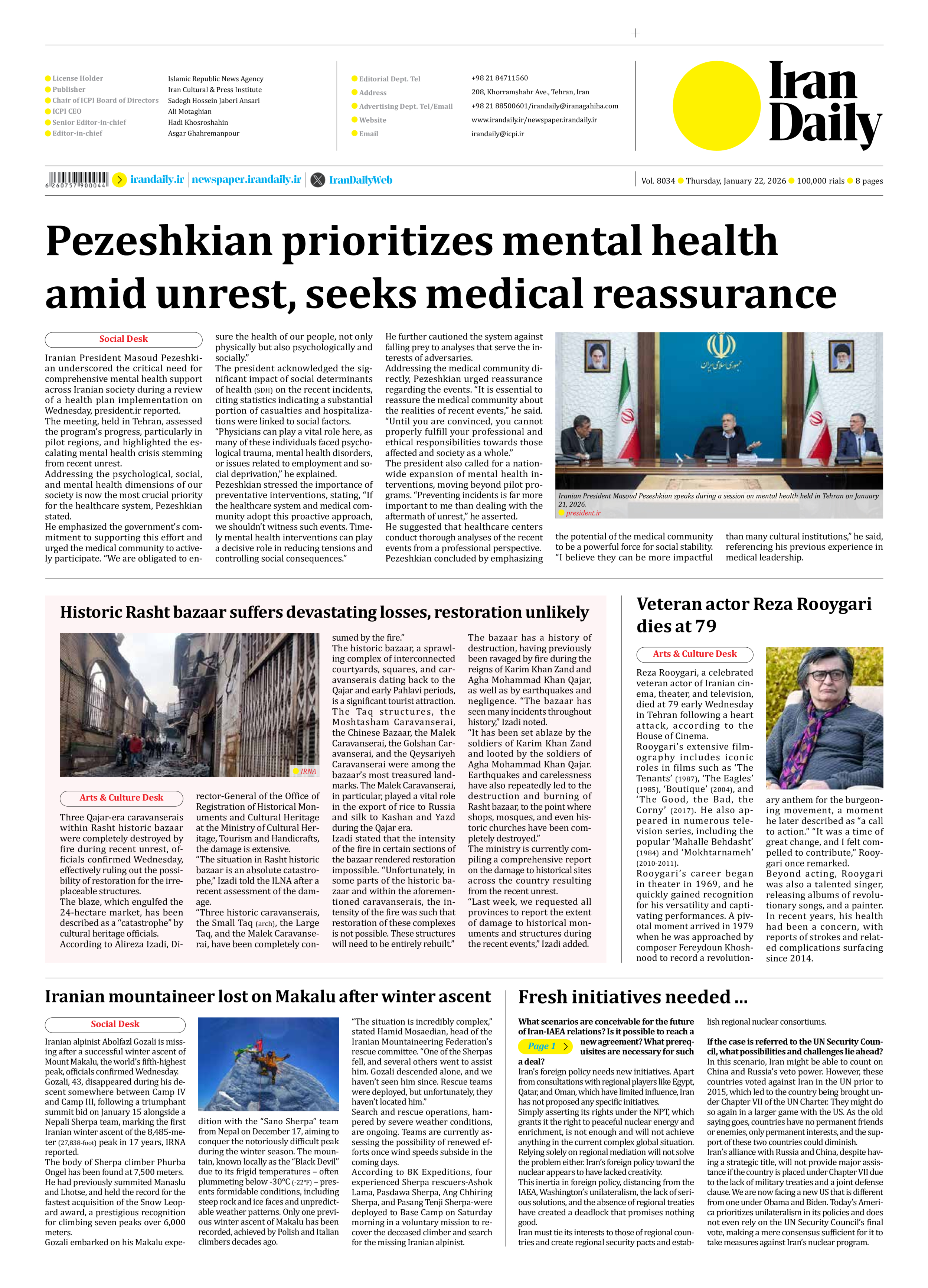
Iranian President Masoud Pezeshkian underscored the critical need for comprehensive mental health support across Iranian society during a review of a health plan implementation on Wednesday, president.ir reported.
The meeting, held in Tehran, assessed the program’s progress, particularly in pilot regions, and highlighted the escalating mental health crisis stemming from recent unrest.
Addressing the psychological, social, and mental health dimensions of our society is now the most crucial priority for the healthcare system, Pezeshkian stated.
He emphasized the government’s commitment to supporting this effort and urged the medical community to actively participate. “We are obligated to ensure the health of our people, not only physically but also psychologically and socially.”
The president acknowledged the significant impact of social determinants of health (SDH) on the recent incidents, citing statistics indicating a substantial portion of casualties and hospitalizations were linked to social factors.
“Physicians can play a vital role here, as many of these individuals faced psychological trauma, mental health disorders, or issues related to employment and social deprivation,” he explained.
Pezeshkian stressed the importance of preventative interventions, stating, “If the healthcare system and medical community adopt this proactive approach, we shouldn’t witness such events. Timely mental health interventions can play a decisive role in reducing tensions and controlling social consequences.”
He further cautioned the system against falling prey to analyses that serve the interests of adversaries.
Addressing the medical community directly, Pezeshkian urged reassurance regarding the events. “It is essential to reassure the medical community about the realities of recent events,” he said. “Until you are convinced, you cannot properly fulfill your professional and ethical responsibilities towards those affected and society as a whole.”
The president also called for a nationwide expansion of mental health interventions, moving beyond pilot programs. “Preventing incidents is far more important to me than dealing with the aftermath of unrest,” he asserted.
He suggested that healthcare centers conduct thorough analyses of the recent events from a professional perspective.
Pezeshkian concluded by emphasizing the potential of the medical community to be a powerful force for social stability.
“I believe they can be more impactful than many cultural institutions,” he said, referencing his previous experience in medical leadership.