







Introduction to the book:
The Architect and Architecture in the Social History of Iran
Patrons, builders, social order
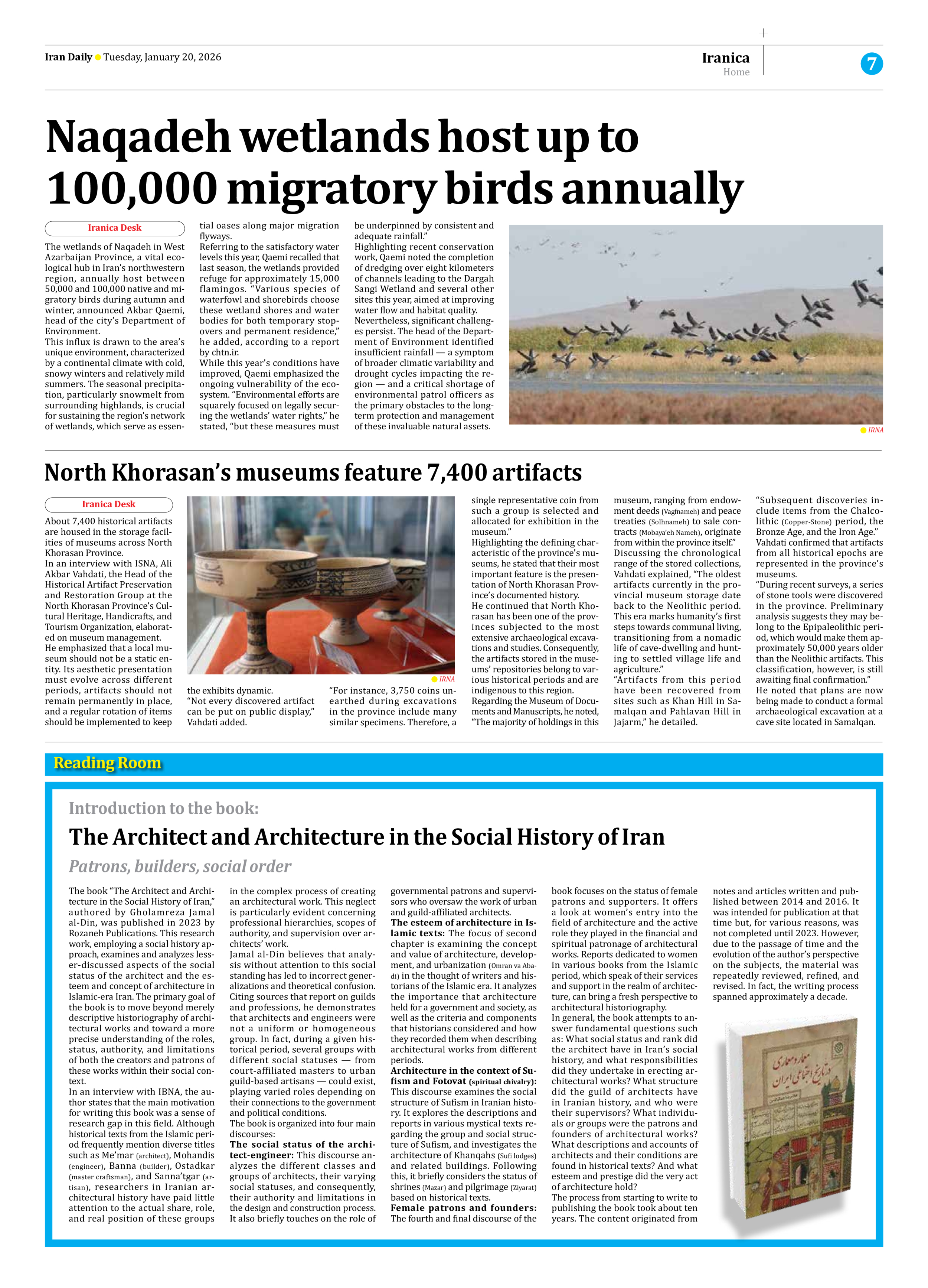
The book “The Architect and Architecture in the Social History of Iran,” authored by Gholamreza Jamal al-Din, was published in 2023 by Rozaneh Publications. This research work, employing a social history approach, examines and analyzes lesser-discussed aspects of the social status of the architect and the esteem and concept of architecture in Islamic-era Iran. The primary goal of the book is to move beyond merely descriptive historiography of architectural works and toward a more precise understanding of the roles, status, authority, and limitations of both the creators and patrons of these works within their social context.
In an interview with IBNA, the author states that the main motivation for writing this book was a sense of research gap in this field. Although historical texts from the Islamic period frequently mention diverse titles such as Me’mar (architect), Mohandis (engineer), Banna (builder), Ostadkar (master craftsman), and Sanna’tgar (artisan), researchers in Iranian architectural history have paid little attention to the actual share, role, and real position of these groups in the complex process of creating an architectural work. This neglect is particularly evident concerning professional hierarchies, scopes of authority, and supervision over architects’ work.
Jamal al-Din believes that analysis without attention to this social standing has led to incorrect generalizations and theoretical confusion. Citing sources that report on guilds and professions, he demonstrates that architects and engineers were not a uniform or homogeneous group. In fact, during a given historical period, several groups with different social statuses — from court-affiliated masters to urban guild-based artisans — could exist, playing varied roles depending on their connections to the government and political conditions.
The book is organized into four main discourses:
The social status of the architect-engineer: This discourse analyzes the different classes and groups of architects, their varying social statuses, and consequently, their authority and limitations in the design and construction process. It also briefly touches on the role of governmental patrons and supervisors who oversaw the work of urban and guild-affiliated architects.
The esteem of architecture in Islamic texts: The focus of second chapter is examining the concept and value of architecture, development, and urbanization (Omran va Abadi) in the thought of writers and historians of the Islamic era. It analyzes the importance that architecture held for a government and society, as well as the criteria and components that historians considered and how they recorded them when describing architectural works from different periods.
Architecture in the context of Sufism and Fotovat (spiritual chivalry): This discourse examines the social structure of Sufism in Iranian history. It explores the descriptions and reports in various mystical texts regarding the group and social structure of Sufism, and investigates the architecture of Khanqahs (Sufi lodges) and related buildings. Following this, it briefly considers the status of shrines (Mazar) and pilgrimage (Ziyarat) based on historical texts.
Female patrons and founders: The fourth and final discourse of the book focuses on the status of female patrons and supporters. It offers a look at women’s entry into the field of architecture and the active role they played in the financial and spiritual patronage of architectural works. Reports dedicated to women in various books from the Islamic period, which speak of their services and support in the realm of architecture, can bring a fresh perspective to architectural historiography.
In general, the book attempts to answer fundamental questions such as: What social status and rank did the architect have in Iran’s social history, and what responsibilities did they undertake in erecting architectural works? What structure did the guild of architects have in Iranian history, and who were their supervisors? What individuals or groups were the patrons and founders of architectural works? What descriptions and accounts of architects and their conditions are found in historical texts? And what esteem and prestige did the very act of architecture hold?
The process from starting to write to publishing the book took about ten years. The content originated from notes and articles written and published between 2014 and 2016. It was intended for publication at that time but, for various reasons, was not completed until 2023. However, due to the passage of time and the evolution of the author’s perspective on the subjects, the material was repeatedly reviewed, refined, and revised. In fact, the writing process spanned approximately a decade.