







Naqadeh wetlands host up to 100,000 migratory birds annually
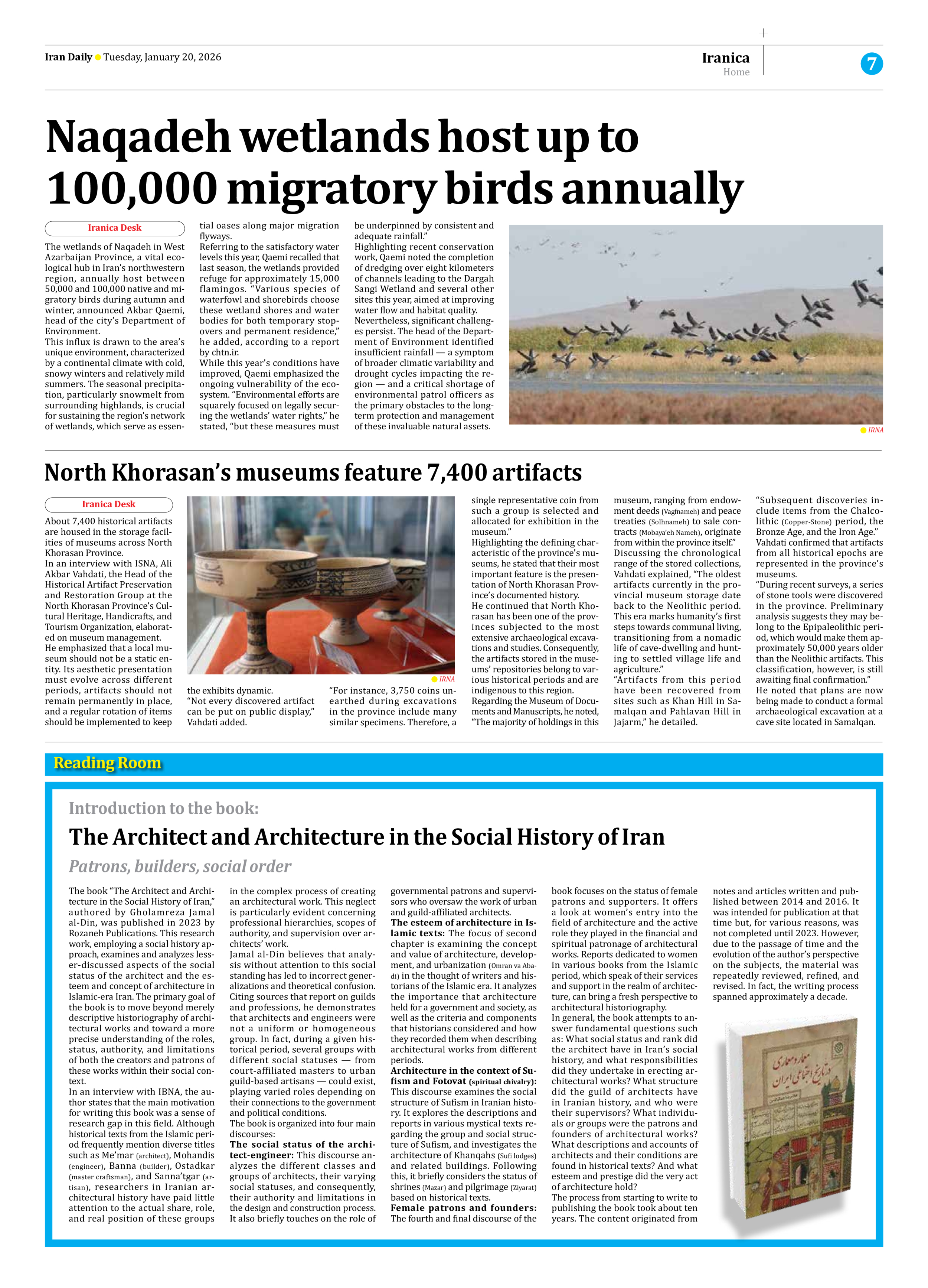
The wetlands of Naqadeh in West Azarbaijan Province, a vital ecological hub in Iran’s northwestern region, annually host between 50,000 and 100,000 native and migratory birds during autumn and winter, announced Akbar Qaemi, head of the city’s Department of Environment.
This influx is drawn to the area’s unique environment, characterized by a continental climate with cold, snowy winters and relatively mild summers. The seasonal precipitation, particularly snowmelt from surrounding highlands, is crucial for sustaining the region’s network of wetlands, which serve as essential oases along major migration flyways.
Referring to the satisfactory water levels this year, Qaemi recalled that last season, the wetlands provided refuge for approximately 15,000 flamingos. “Various species of waterfowl and shorebirds choose these wetland shores and water bodies for both temporary stopovers and permanent residence,” he added, according to a report by chtn.ir.
While this year’s conditions have improved, Qaemi emphasized the ongoing vulnerability of the ecosystem. “Environmental efforts are squarely focused on legally securing the wetlands’ water rights,” he stated, “but these measures must be underpinned by consistent and adequate rainfall.”
Highlighting recent conservation work, Qaemi noted the completion of dredging over eight kilometers of channels leading to the Dargah Sangi Wetland and several other sites this year, aimed at improving water flow and habitat quality.
Nevertheless, significant challenges persist. The head of the Department of Environment identified insufficient rainfall — a symptom of broader climatic variability and drought cycles impacting the region — and a critical shortage of environmental patrol officers as the primary obstacles to the long-term protection and management of these invaluable natural assets.