







University of Tehran maps targeted academic partnerships with Czech institutions
University of Tehran moved on January 4 to frame a targeted roadmap for academic and cultural cooperation with Czech higher education institutions, as the Czech Republic’s ambassador met the university’s international affairs chief in Tehran to scope priority fields for joint work.
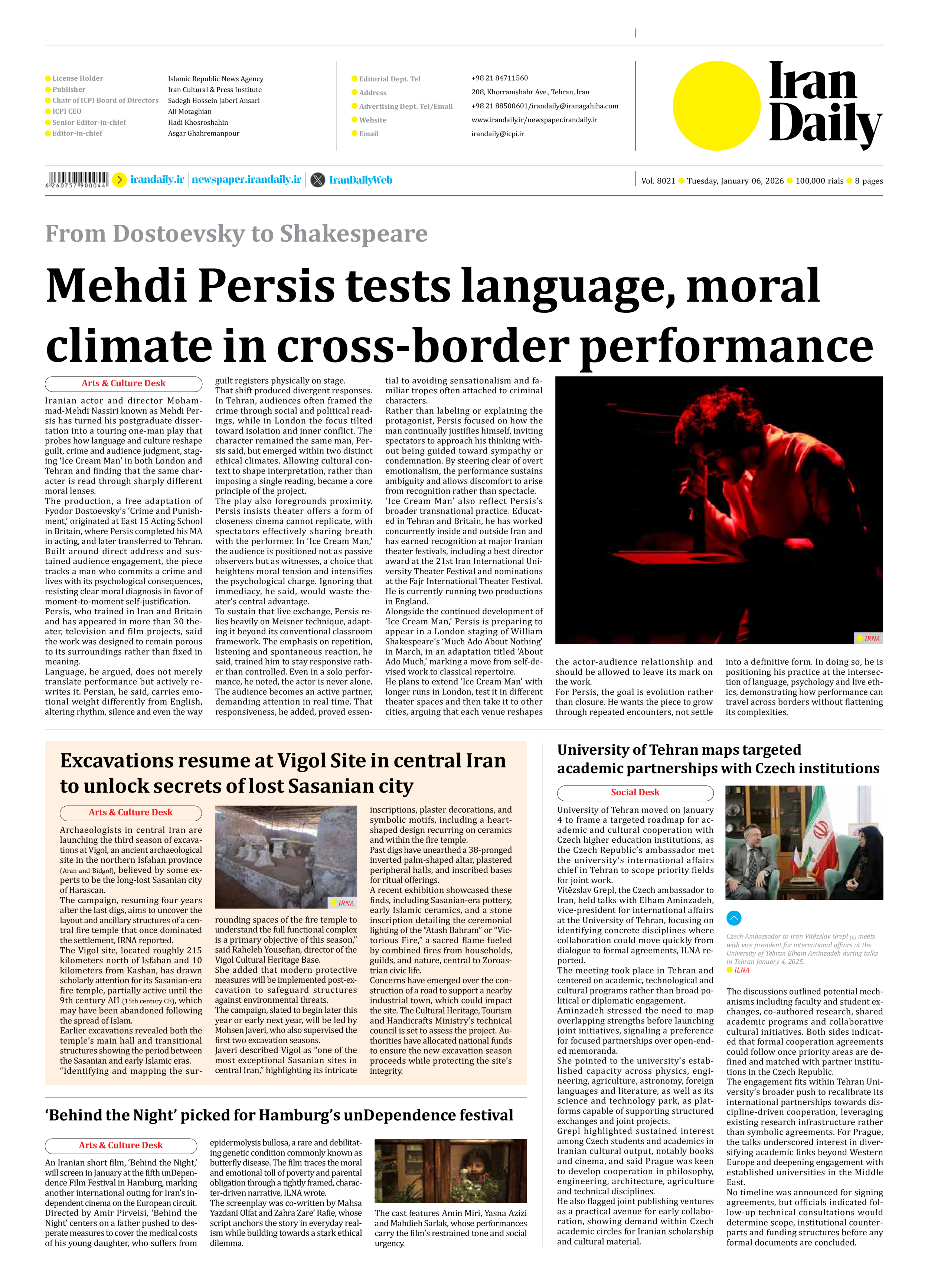
Vítězslav Grepl, the Czech ambassador to Iran, held talks with Elham Aminzadeh, vice-president for international affairs at the University of Tehran, focusing on identifying concrete disciplines where collaboration could move quickly from dialogue to formal agreements, ILNA reported.
The meeting took place in Tehran and centered on academic, technological and cultural programs rather than broad political or diplomatic engagement.
Aminzadeh stressed the need to map overlapping strengths before launching joint initiatives, signaling a preference for focused partnerships over open-ended memoranda.
She pointed to the university’s established capacity across physics, engineering, agriculture, astronomy, foreign languages and literature, as well as its science and technology park, as platforms capable of supporting structured exchanges and joint projects.
Grepl highlighted sustained interest among Czech students and academics in Iranian cultural output, notably books and cinema, and said Prague was keen to develop cooperation in philosophy, engineering, architecture, agriculture and technical disciplines.
He also flagged joint publishing ventures as a practical avenue for early collaboration, showing demand within Czech academic circles for Iranian scholarship and cultural material.
The discussions outlined potential mechanisms including faculty and student exchanges, co-authored research, shared academic programs and collaborative cultural initiatives. Both sides indicated that formal cooperation agreements could follow once priority areas are defined and matched with partner institutions in the Czech Republic.
The engagement fits within Tehran University’s broader push to recalibrate its international partnerships towards discipline-driven cooperation, leveraging existing research infrastructure rather than symbolic agreements. For Prague, the talks underscored interest in diversifying academic links beyond Western Europe and deepening engagement with established universities in the Middle East.
No timeline was announced for signing agreements, but officials indicated follow-up technical consultations would determine scope, institutional counterparts and funding structures before any formal documents are concluded.